Serving All Of Florida and Georgia
We build the underground half of commercial EV charging across Florida and Georgia: feeder conduit, panel-to-pad electrical pathways, and trenchless crossings under finished parking lots, all without closing the site.
The pedestal is the visible ten percent of an EV charging install. The rest is underground: feeder conduit from the panel or switchgear out to the stalls, data duct for networked chargers, and a path across a parking lot that was never designed to be dug up.
That underground half is what we do. Boring Bros bores and trenches the electrical pathways for EV charging under finished lots, drive lanes and landscaping, so the electrical contractor pulls wire into a clean, pull-ready system and the site never closes. For EV charging infrastructure installation, that means the underground conduit to every charger is bored or trenched, placed and left pull-ready before the electrician arrives.
The boring bros team are amazing! Thank you guys for getting my project done ahead of schedule, it’s been a pleasure working with you guys. I will be sure to use you guys on my next projects!

Boring Bros did an excellent job. They were punctual, cleaned up area upon completion and were reasonably priced. We would definitely recommend them.
Very professional and Levi is amazing!!
We’ve had the pleasure of working with Aron and his team on multiple boring and trenching projects supporting our ongoing electrical work, and the experience has been excellent every time. Their team is professional, responsive, hardworking, and always willing to go the extra mile to help keep projects moving smoothly and on schedule.From coordination to execution, they have consistently delivered quality work and great communication throughout the process. It’s hard to find reliable contractors in this industry, and Aron’s team has proven to be a dependable partner for our projects.We definitely recommend them to anyone looking for a trustworthy and experienced boring and trenching contractor. Looking forward to continuing to work together on future projects!
We have used Boring Bros LLC for a couple road boring jobs we have had. No muss No Fuss. They did an excellent professional job. They showed up and completed our jobs as scheduled and were neat in the process. We will definitely use Boring Bros for any future boring needs. Thanks guys!
Excellent company to work with. Aaron is professional, responsive & hands on. Highly recommend
Work with an underground construction contractor whose crews do this every day.
Modern rigs, locating gear and tooling maintained to keep bores accurate and schedules intact.
Our crews bring more than two decades of hands-on trade experience — running as Boring Bros LLC across Florida and Georgia since 2021.
We work ahead of the electrician. The route from the power source to every stall is bored or trenched, the conduit and data duct go in sized to the design, and the whole system is left pull-ready with string in place. Your electrical contractor lands the terminations, and nobody on either crew waits on the dirt. See our EV charging infrastructure service areas across Florida.
Three kinds of charging-site work fill this calendar, and almost all of it happens on finished, occupied property.
Nearly every commercial charging project shares the same problem. The chargers go where the cars are, the power lives in a building, and between them sits a finished parking lot that the business needs open. We solve it by boring. The feeder route runs under the asphalt, the drive lanes and the landscape islands, with entry and exit pits tucked where they block as little parking as possible.
That is how retail plazas, hotels, restaurants and dealerships get their conduit without trench scars across the lot, without repaving, and without the tenant complaints that come with a week of open cuts. The small areas we do open, meaning the pits and the pad locations, go back patched, compacted and restriped.
When a lot is due for repaving anyway, we flip the plan and trench ahead of the paving schedule instead. The cheapest conduit there is goes in just before new asphalt covers it.
A charging stall needs more than power. Networked chargers carry payment, load management and monitoring traffic, and the reliable installs give that data its own duct in the same corridor as the feeder conduit. We install both together on the same shot, with separation kept between power and communications and pull string left in everything.
Conduit is sized to whatever the electrical design calls for, because sizing belongs to the engineer or the EC and we build to their spec. Long feeder runs from a distant panel room are completely normal on retrofit sites. Boring turns that distance into a routing question instead of a demolition project.
Spare capacity is cheapest at install time, so we raise it on every quote. An extra duct bored on the same pass costs a fraction of a second mobilisation, and the sites that add stalls next year are always glad they took it. For fiber, data and communications pathways beyond the charging site, review our technology infrastructure boring service.
Fleet electrification is underground work at a different scale. Dozens of stalls arrive in phases across budget years, fed by trunk runs that deserve a real duct bank rather than a single conduit. We build depot corridors sized for the end state, so each phase pulls into existing duct and nothing gets dug twice.
Multifamily and HOA properties bring the occupied-site problem at its sharpest, because residents park there every night. Charger runs to garages, carports and guest stalls are bored under the drive aisles in hours rather than cut through them over days, and the community keeps parking where it always has.
DC fast charging concentrates serious power in one spot. That means bigger conduit, deeper runs, a switchgear pad and often a new utility service. We build the underground between the utility point of connection, the switchgear and the dispensers to the design’s spec, ready for the heavy pulls.
Four things make up nearly every EV charging pathway we build. Each is installed to the electrical design and left pull-ready for the contractor landing the terminations.
Power pathways from the panel, switchgear or new service out to every pedestal and dispenser, bored under finished surfaces and sized to the design.
Communications pathways for networked chargers, run in the same corridor with separation kept and pull string in place.
Extra duct placed on the same bore for the stalls the site will add later. It is the cheapest expansion the property will ever buy.
Charger pad and bollard coordination, then the surface put back: asphalt patched, base compacted, and stalls restriped.
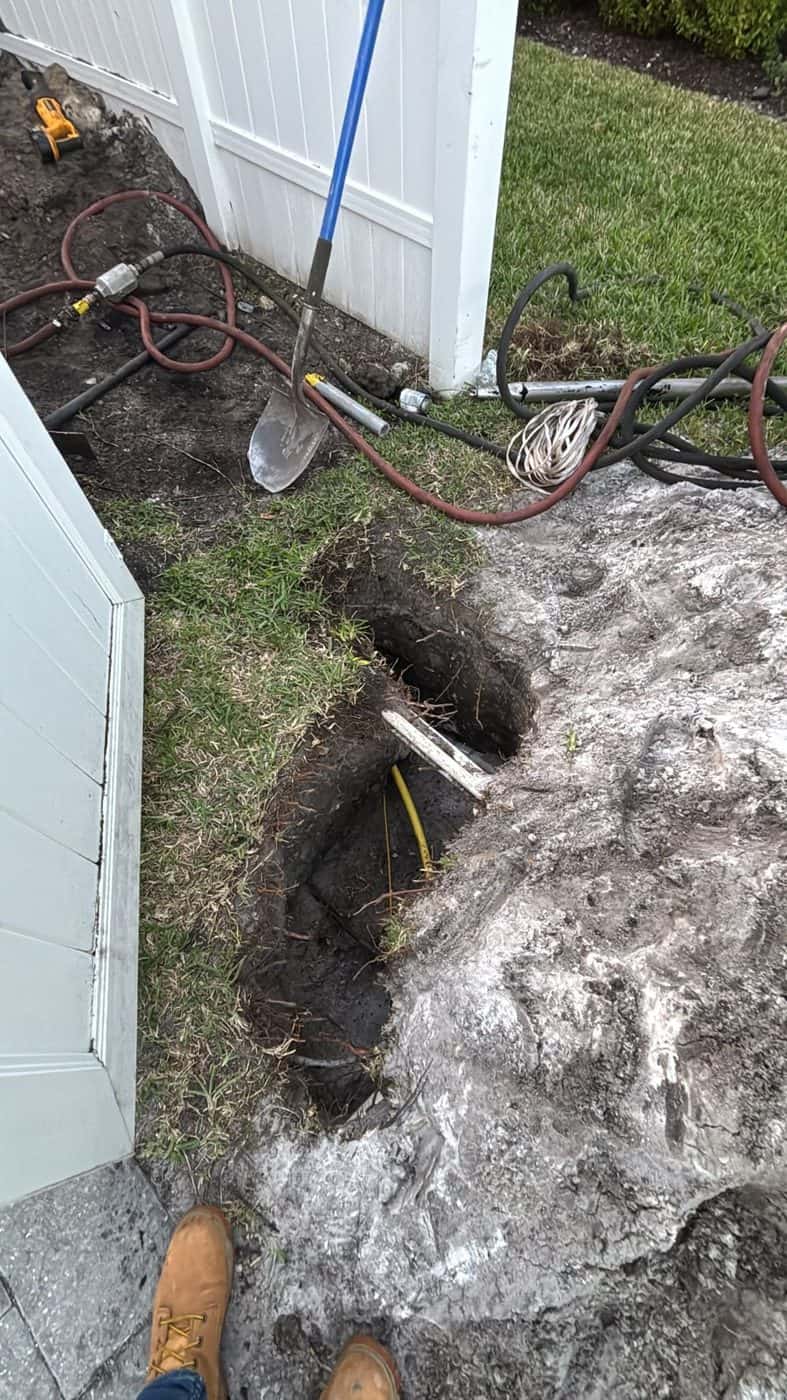
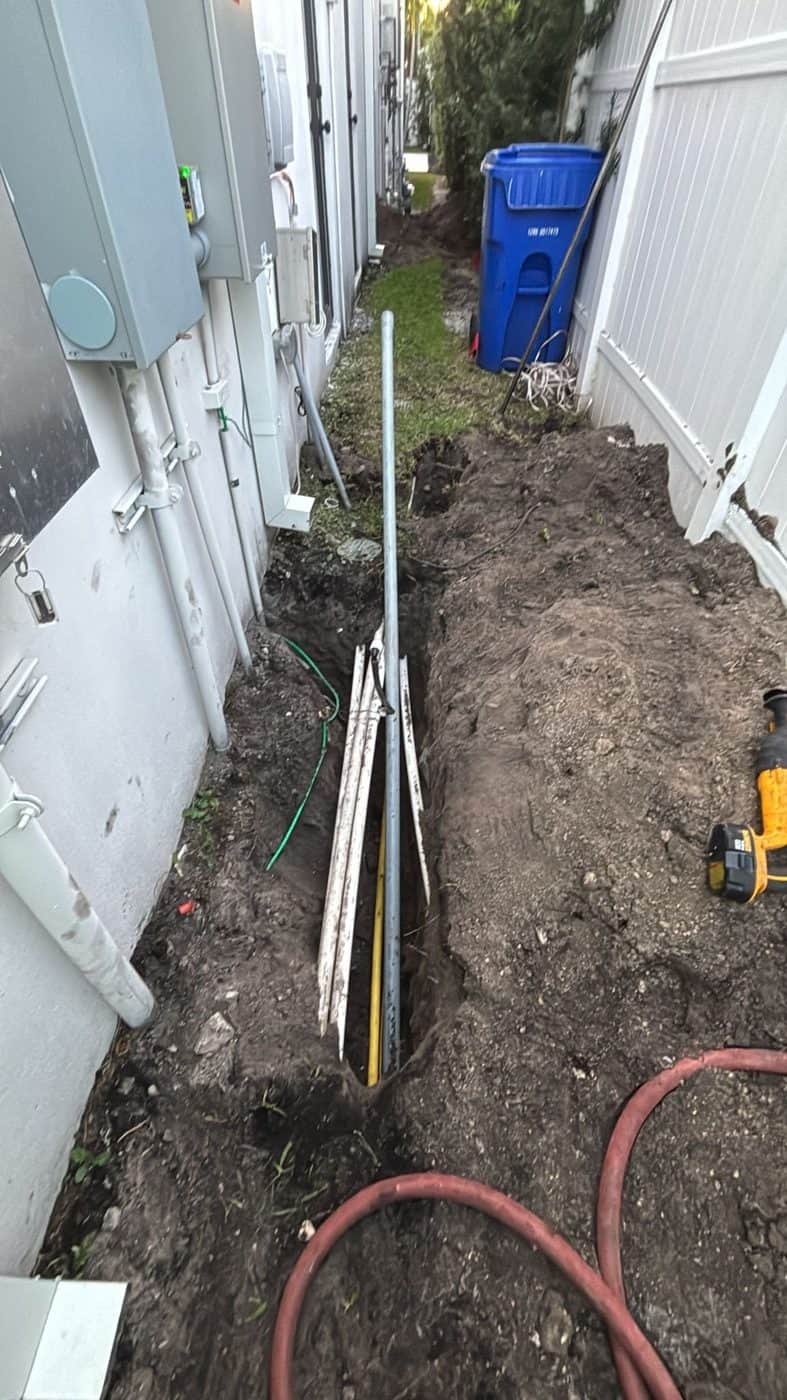
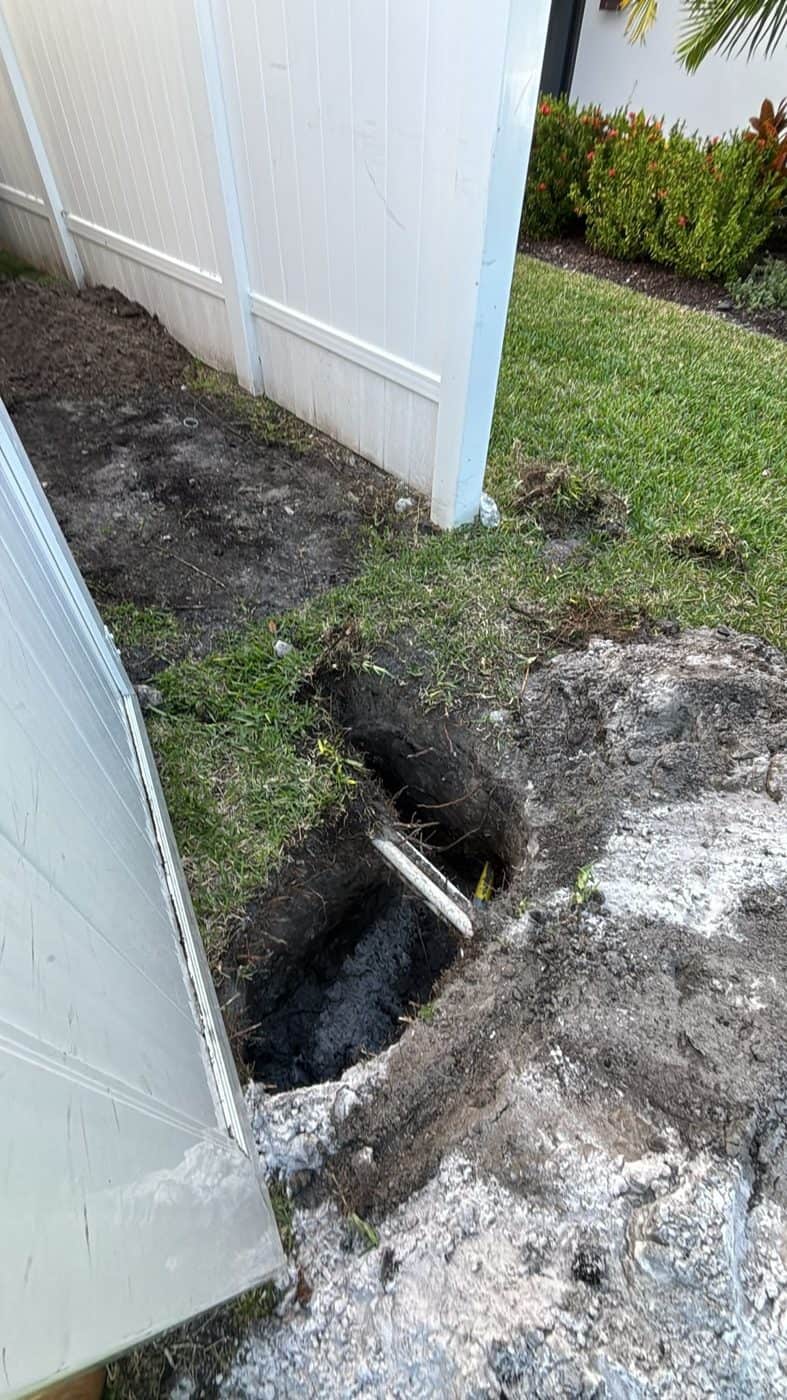
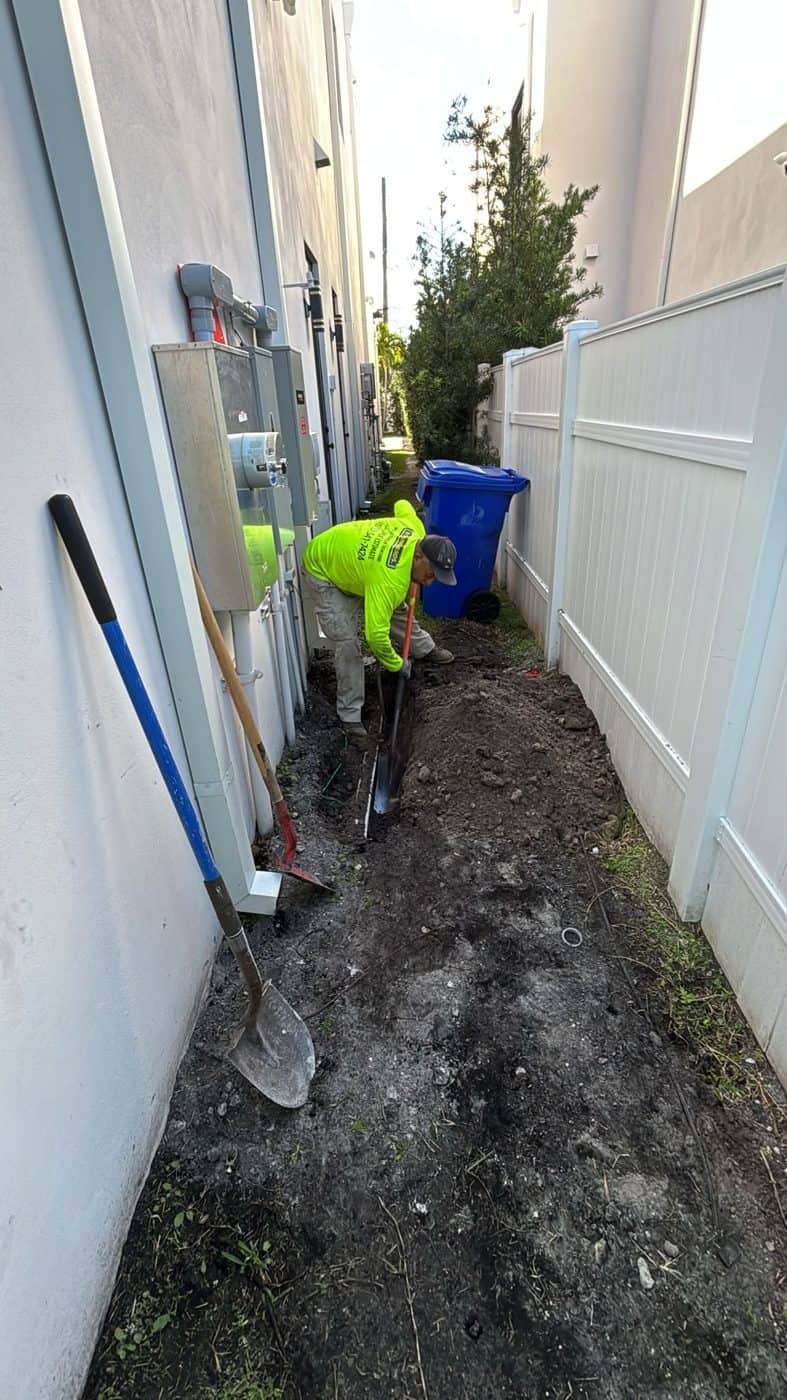
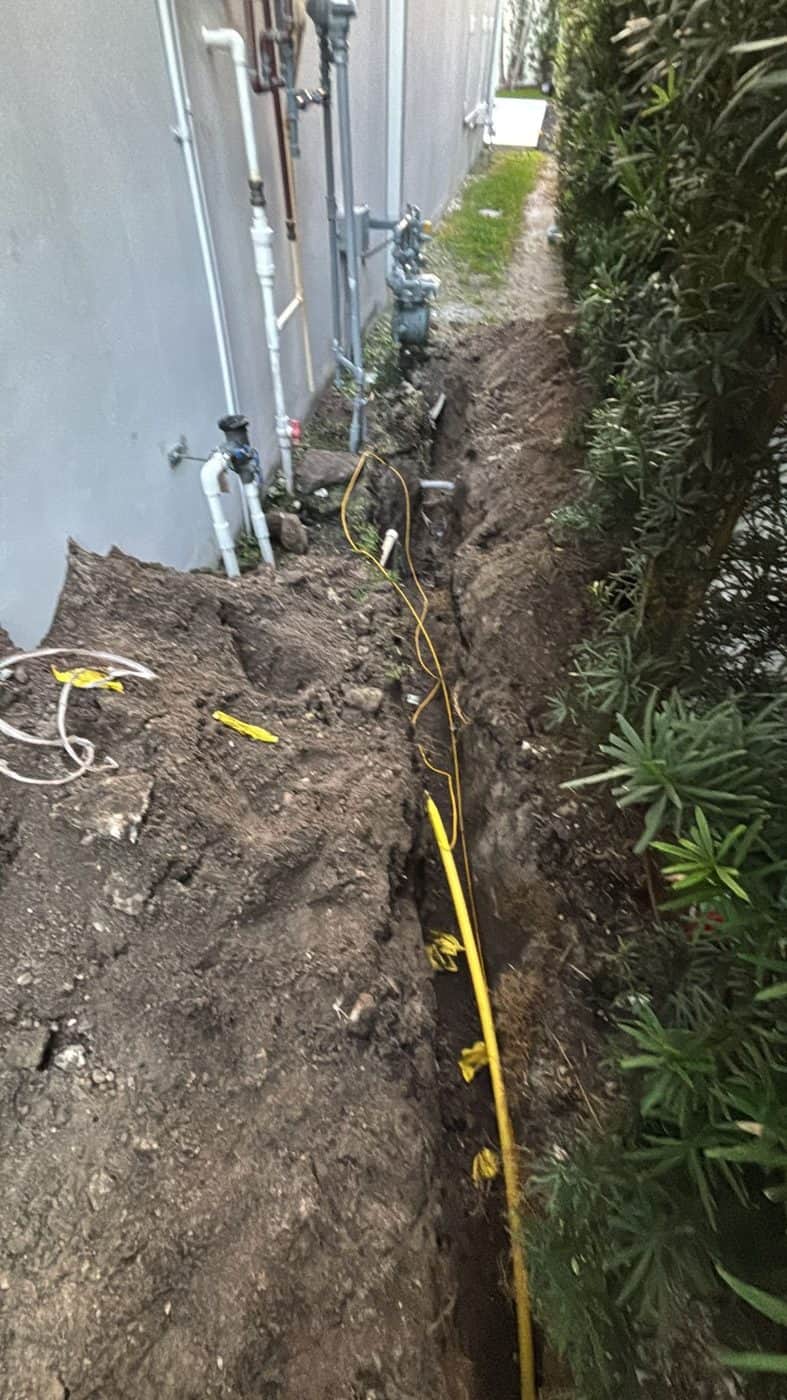
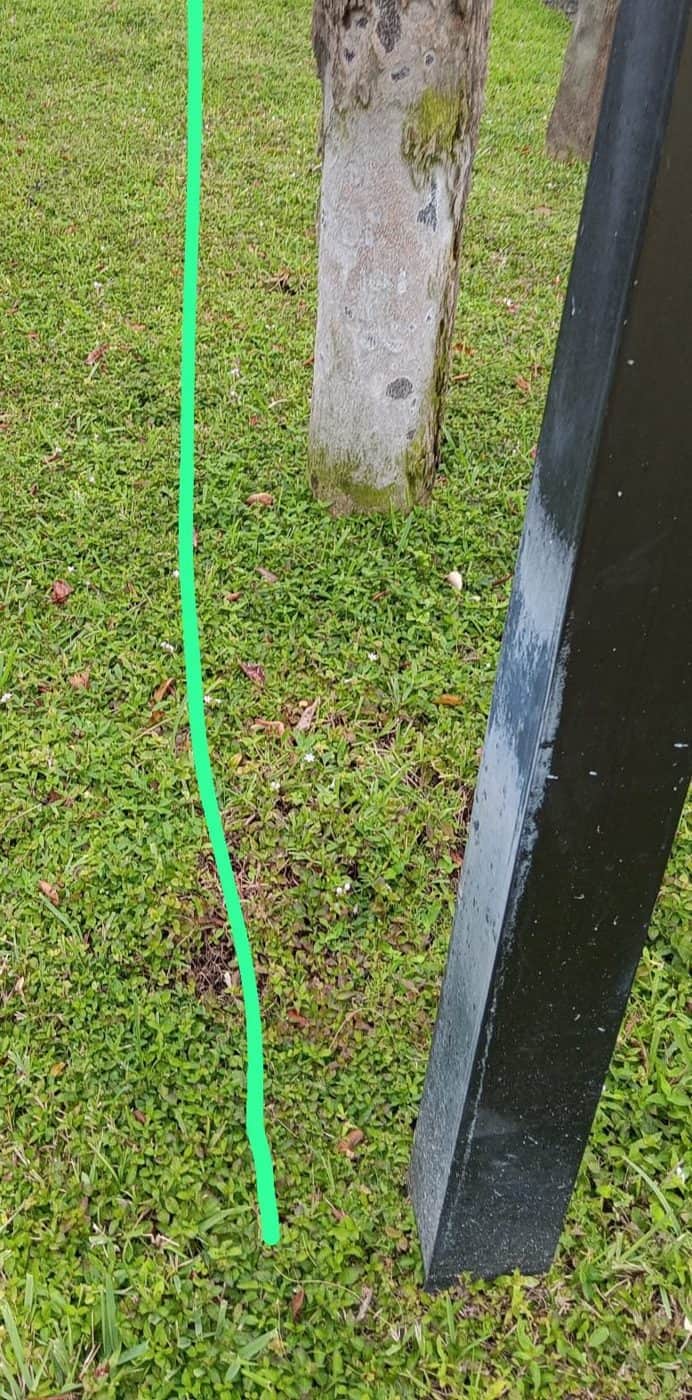
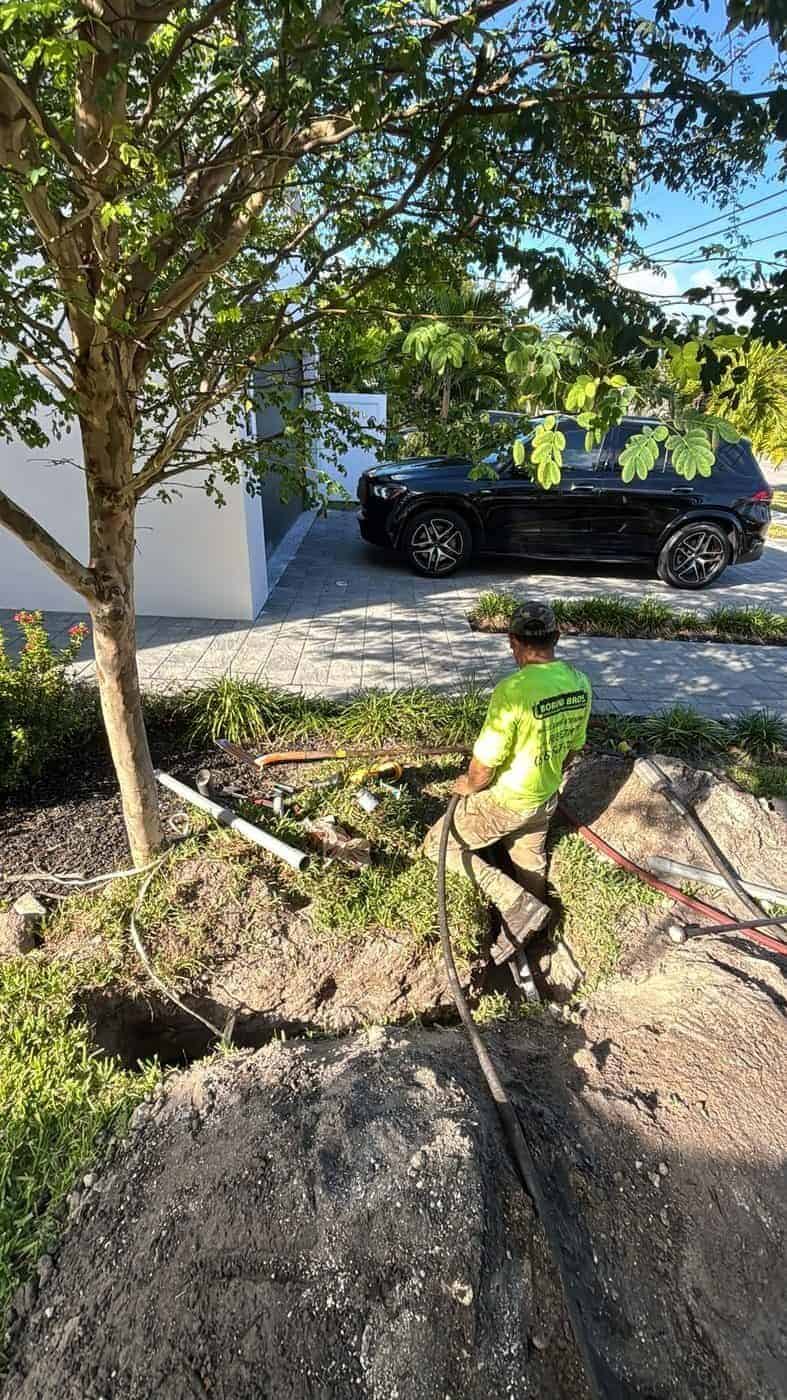
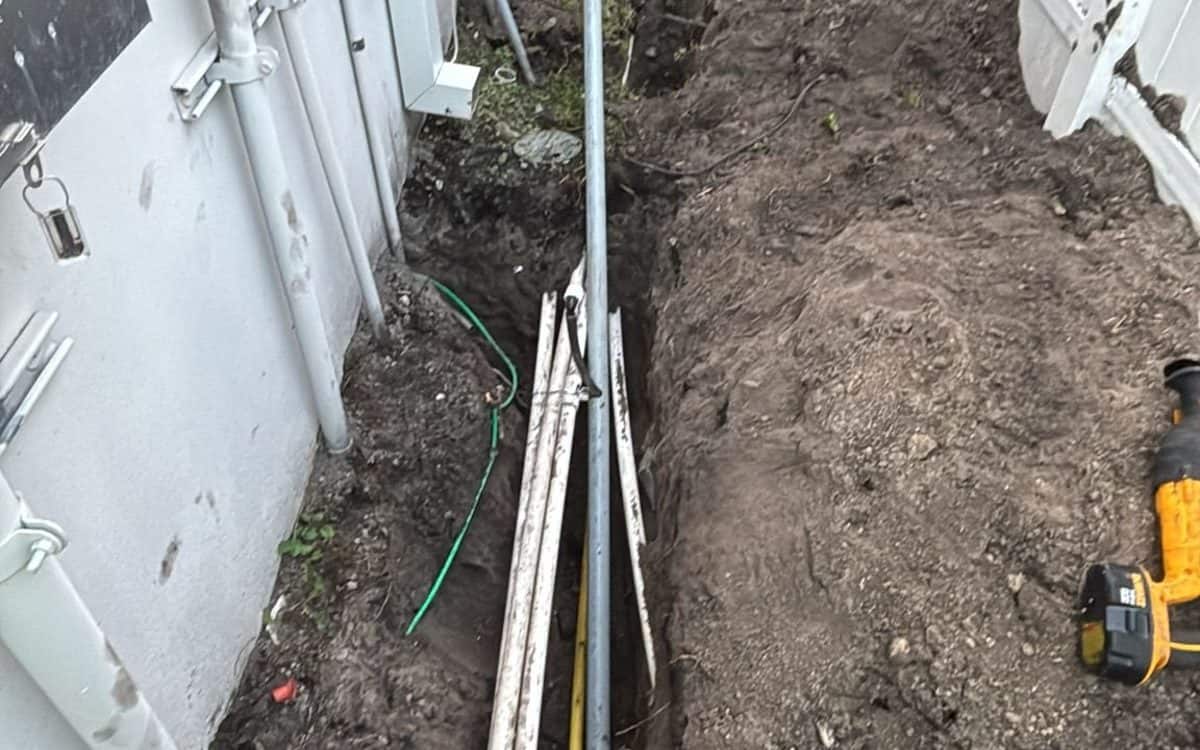
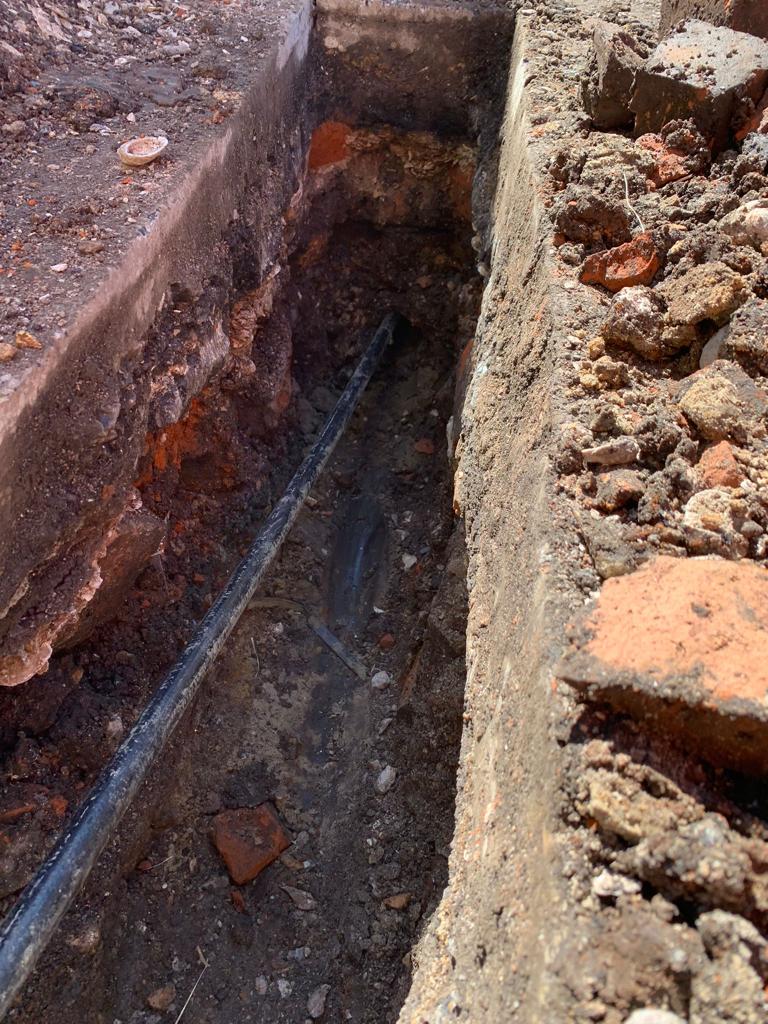
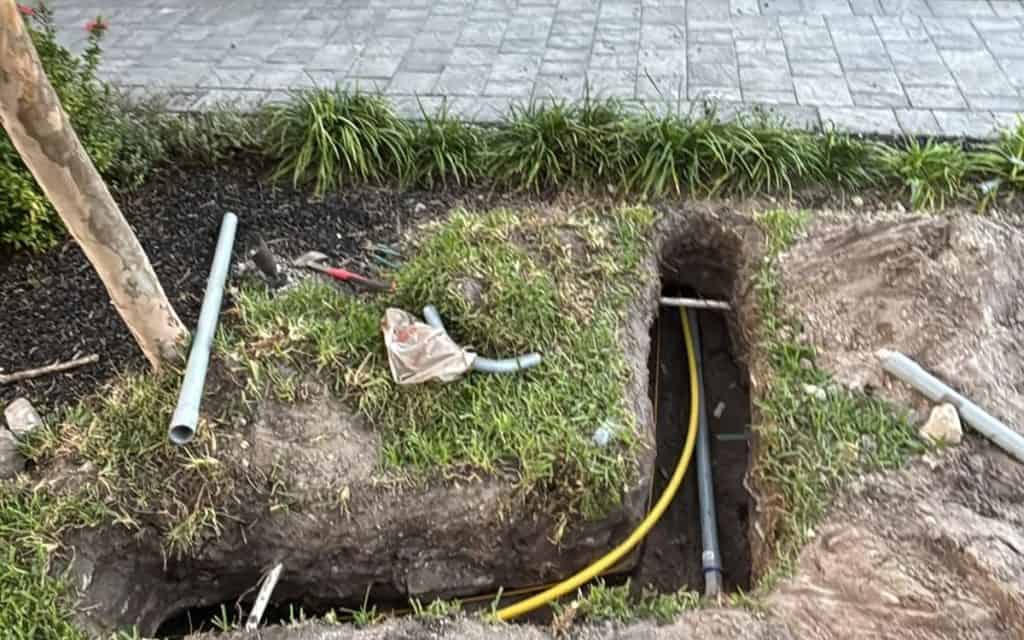
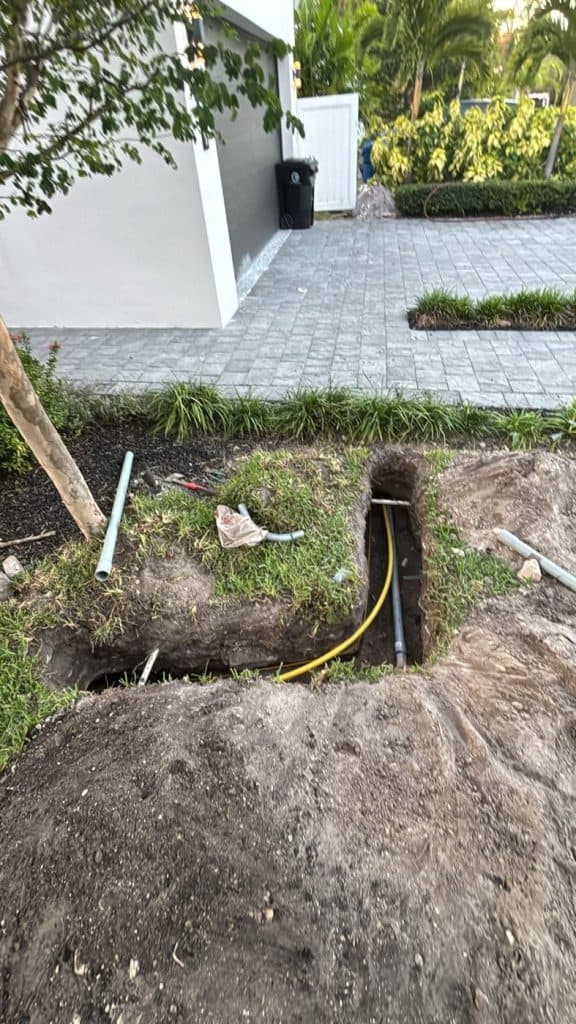
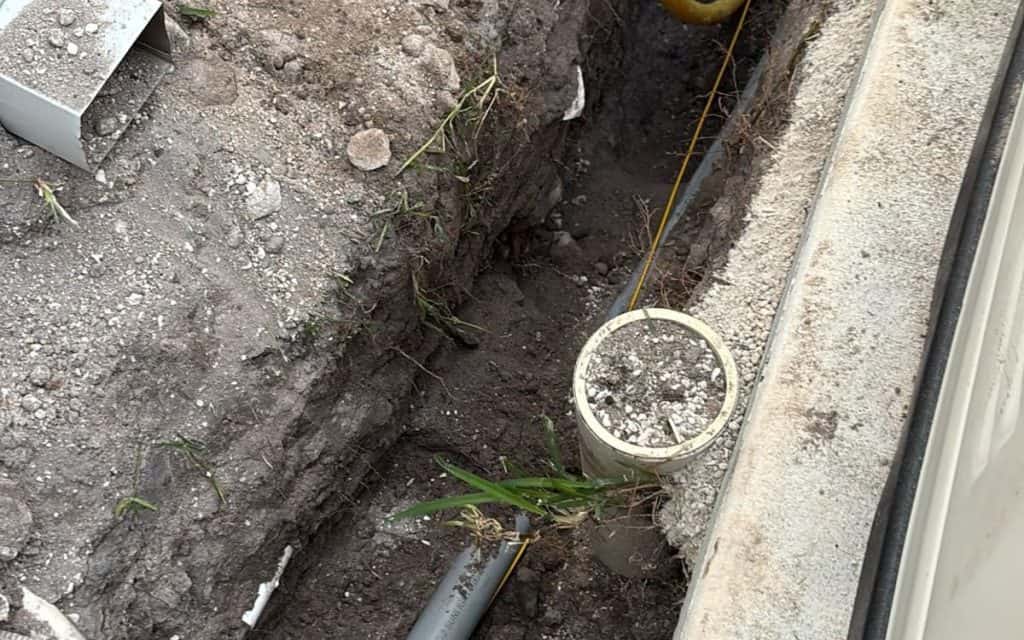
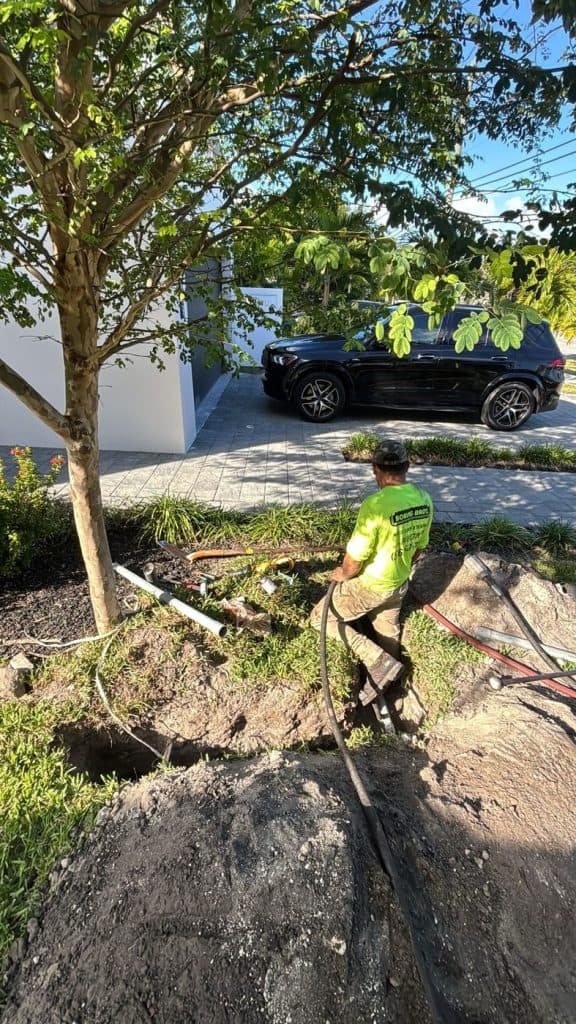
Real bores, real conduit and real lots that stayed open, photographed on our own job sites across Florida and Georgia. Nothing here is a stock photo. For projects north of the state line, see our EV charging infrastructure coverage in Georgia.
Tell us where the panel sits, how many stalls are planned, and what surface lies between them. You will get a real number from someone who has run the machine, usually the same day.
Every charging job follows the same four stages, planned around a site that keeps trading while we work.
We start by walking the route from the power source to every stall: where the panel or new service sits, where the pedestals land, and what the route has to cross. The method is split foot by foot, boring under the finished surfaces and trenching the soft ground, and the stall layout is agreed before anything is cut.
811 locates come first, then our own GPR sweep over the actual route, because retrofit lots hide decades of unrecorded services. Work windows are set around the business, with off-hours work where the drive lanes matter and pit locations phased so the parking is never all gone at once.
The drill rig runs the crossings while open trench picks up the landscape strips and unpaved ground. Feeder conduit and data duct go in together, spare duct rides the same pass wherever the client took that option, and everything gets pull string and tracer wire.
The system is handed to the electrical contractor pull-ready, with stub-ups at the pads and sweeps back to the panel. Then the pits are patched, the base is compacted and the stalls are restriped. The lot ends up looking like nothing happened, except for the chargers.
On charging sites this is the single biggest cost fork. The answer follows the surface and the schedule, and because we run both methods, it gets priced honestly foot by foot.
Bore it when…
The lot is finished and staying, with sound asphalt or concrete you would otherwise have to cut, patch and live with forever. Boring also wins when the business cannot lose its parking or its entrance for a week, when the route crosses drive lanes or fire lanes that must stay open, and when the run is long because the panel sits far from the stalls. A bore’s premium per foot beats hundreds of feet of cut-and-restore, which is why most retrofit charging sites end up trenchless.
Trench it when…
The site is being repaved or built new, because conduit placed ahead of fresh asphalt is the cheapest it will ever be, and we sequence directly with the paving contractor. Trenching also wins when the route can follow landscape strips, lawn or unpaved edges the whole way, and when a fleet build-out needs a true duct bank that an open cut places all at once. Greenfield and resurfacing projects usually split the route, trenching the open ground and boring the crossings.
Chargers get replaced, but the underground lasts for decades. These are the sites where getting the pathway right decides the whole project.
Plazas, hotels and restaurants add chargers without closing the lot that pays their rent, using bored crossings, off-hours pits and restriping by morning.
EV sales targets come with charger mandates. Dealer lots get service-lane and display-row conduit without interrupting a single delivery day.
Phased duct-bank infrastructure sized for the end-state fleet. It is built once, pulled into for years, and never dug twice.
Garage, carport and guest-stall runs across occupied communities, bored under the drive aisles while residents keep parking where they always have.
Six answers turn a rough range into a firm number. Send the site plan if you have one, and pin drops if you do not.
A site walk costs nothing and answers half of these questions on the spot. On charging projects it is usually the difference between a quote that holds and a change order.
You will usually reach an owner at Boring Bros — brothers Aaron and Levi Cohen run the company themselves. Every crew on your job is a licensed, insured contractor (Boring Bros LLC, Florida Doc. L21000515203; Georgia Control No. 25100779; certificate of insurance on request). We have run bore-and-trench crews across Florida and Georgia since 2021, backed by 20+ years of trade experience on the crew.
Years In The Trade
Family-Owned
70+ Google Reviews
Insured
No, and you actually want that split. The charger, its wiring and its terminations belong to a licensed electrical contractor. The underground pathway that gets power and data to it is ours. We work ahead of your EC, hand over a pull-ready conduit system, and stay out of the electrical scope, so everyone does the part they are licensed and insured for.
Yes, and that is the core of our EV work. The route is bored beneath the asphalt from small entry and exit pits, the drive lanes stay open, and the phases are scheduled so the business never loses more than a handful of stalls at a time. On most jobs, customers are parking over the finished bore the same week.
Whatever the electrical design calls for. Sizing belongs to the engineer or the EC, and we install to their spec, from a single Level 2 feeder up to the large raceways a DC fast dispenser needs. If the design is not finished yet, we rough the corridor for the planned load and confirm the sizes before conduit goes in.
Almost always. An extra duct on the same bore adds very little at install time, while boring the same route again in two years costs a full mobilisation. Sites that expect any growth take the spare, and the ones that expand are the ones who send us referrals.
Often, yes. Payment, load management and monitoring traffic either rides a wireless connection or wants its own communications duct, and the reliable installs choose the duct. We run it alongside the feeder conduit with separation kept, so the network side never becomes an afterthought bolted onto a finished lot.
A single-pedestal retail install is commonly one or two days of underground work. Multi-stall sites run a week or two depending on footage and phasing, and fleet depots sequence over the project schedule. The lot stays open throughout, which is the whole point of doing it trenchless.
On a bored route, the only surfaces we open are the entry pits, the exit pits and the pad excavations. Each goes back with compacted base, a clean saw-cut patch and restriping. On lots that are about to be repaved, we coordinate with the paving contractor so the patches disappear under the new surface.
Yes. Underground, a DC fast site is simply bigger everything: larger conduit, deeper cover, a switchgear pad, and often a new utility service with its own point of connection. We build the raceways between the utility connection, the switchgear and the dispensers to the design, and coordinate the utility side’s requirements as part of the job.
Constantly. Most of our charging work arrives as a subcontract scope from an EC or a turnkey EV installer who keeps their own crews on the electrical. We price the underground quickly, hit the work window, and hand back conduit their pullers can use the same day. Owners and property managers also hire us directly, usually alongside their chosen EC.
It is the normal case on retrofits, and it is a routing question rather than a blocker. Long feeder runs are bored in continuous shots under whatever sits between the power and the stalls, and the distance shows up as footage on the quote instead of demolition on your lot.
For the underground portion, yes. That includes right-of-way permits when the route touches public corridor and coordination with the local authority on anything they want inspected open. Electrical permits for the chargers themselves ride with the EC’s scope, which is one more reason the split of trades works.
We work across Florida and Georgia, with our home base in South Florida covering Broward, Miami-Dade and Palm Beach counties. Multi-site rollouts are welcome in both states, and fleet and franchise operators get one contractor and one standard across every location.
Tell us the footage, the product and the window — we will get you a real number, usually same day.