Serving All Of Florida and Georgia
Steerable, tracked bores with pipe up to 16 inches in diameter, serving Florida and Georgia. Water, gas, power and fiber go in under roads, rail and finished sites without opening the surface, and our HDPE fusion is done in-house from bore to tie-in.
Most HDD outfits top out around six-inch pipe. Our rigs place water, gas, electric and fiber lines up to 16 inches in diameter, which covers the municipal mains, force mains and transmission runs that smaller rigs have to walk away from. Every bore is steered and tracked along a planned profile from entry pit to exit pit.
When the product is HDPE, we fuse it ourselves instead of waiting on someone else’s fusion crew. That combination is why municipalities, utility contractors and GCs bring us the crossings that actually have consequences. That is what municipal directional drilling demands from a directional boring contractor: steered and tracked bores, in-house fusion, and as-builts that match the ground.
Boring Bros were great to work with. They went above and beyond to keep up with on the job scope of work changes as well as helping us out with all the admin and paper work needed to close out the project. Will definitely use again for more work in their area in the future.

Great service!
Have used Boring Brothers for several projects, and they always deliver. They are very professional and caring about your needs. They go that extra mile and make sure everything is satisfactory!
Professional, reliable, clean and great communication.As far as I am concerned they checked all boxes for us. We will definatly be using them again!
Excellent experience, great job Boring under the street.
Great experience and fairly priced. They got the work done in no time and saved me from trenching through 100’ of parking lot in a busy plaza. Would use them again if the need arises
Work with an underground construction contractor whose crews do this every day.
Modern rigs, locating gear and tooling maintained to keep bores accurate and schedules intact.
Our crews bring more than two decades of hands-on trade experience — running as Boring Bros LLC across Florida and Georgia since 2021.
One contractor carries the job from locates to pressure test. We plan the bore path, pull the permits, drill and ream to size, fuse and pull the product, and hand back the tie-ins, the test results and the as-builts. The utility owner, the engineer and the next crew all know exactly what went in the ground and where it sits.
Three kinds of work fill most of our HDD calendar for municipalities, utility contractors and GCs.
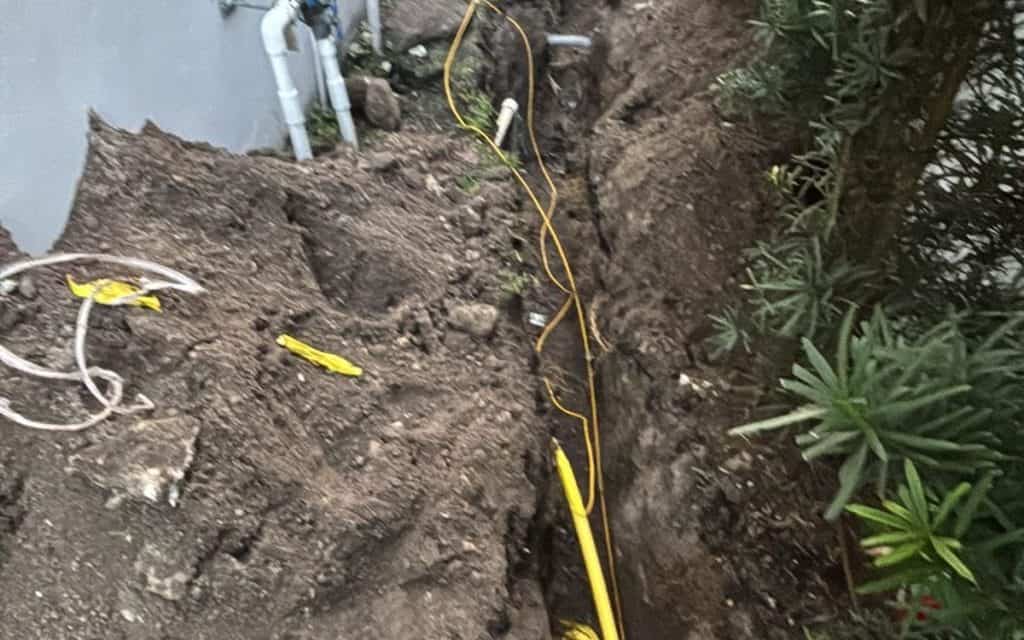
Large-diameter work is where directional drilling splits into two different trades. Placing a two-inch service and placing a sixteen-inch water main are not the same job. The second one takes heavier rigs, staged reaming, real fluid management and a crew that has done it before. Fewer than one in twenty HDD contractors work at that end of the range, and we built the company around it.
The typical scope covers municipal water mains and replacements, force mains between lift stations, fire suppression feeds, and high-volume transmission runs for industrial sites and large irrigation systems. The pilot bore follows the engineered profile, and then the hole is stepped up through successive reams until it carries the final pipe with proper clearance.
Pressure testing and tie-ins are part of the job rather than an extra. The main goes in, gets tested against its spec, and gets documented before we leave the site.
A bored HDPE line is only as good as its joints, which is why we never subcontract fusion. Our crews run butt fusion for pipe-to-pipe joins, electrofusion for fittings and saddles, and socket fusion on smaller diameters, using calibrated equipment with quality control on every weld. Fused correctly, HDPE becomes one continuous pipe with no gasketed joints to leak, shift or let roots in.
Keeping fusion in-house also protects the schedule in two ways. The pipe string is fused and staged while the bore is still being reamed, so pullback happens the day the hole is ready instead of the day a third-party fusion crew can mobilise. And when a tie-in changes on site, the same crew adjusts it on the spot.
Fusion capability is rare among drilling contractors. Most rent it or skip it entirely, and it is one of the main reasons utility contractors keep us on their bid lists.
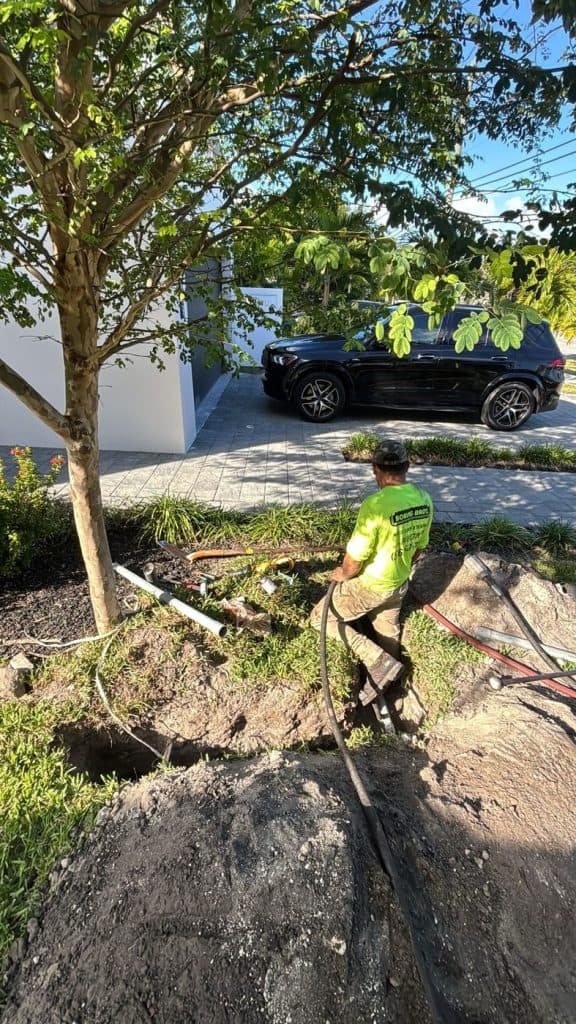
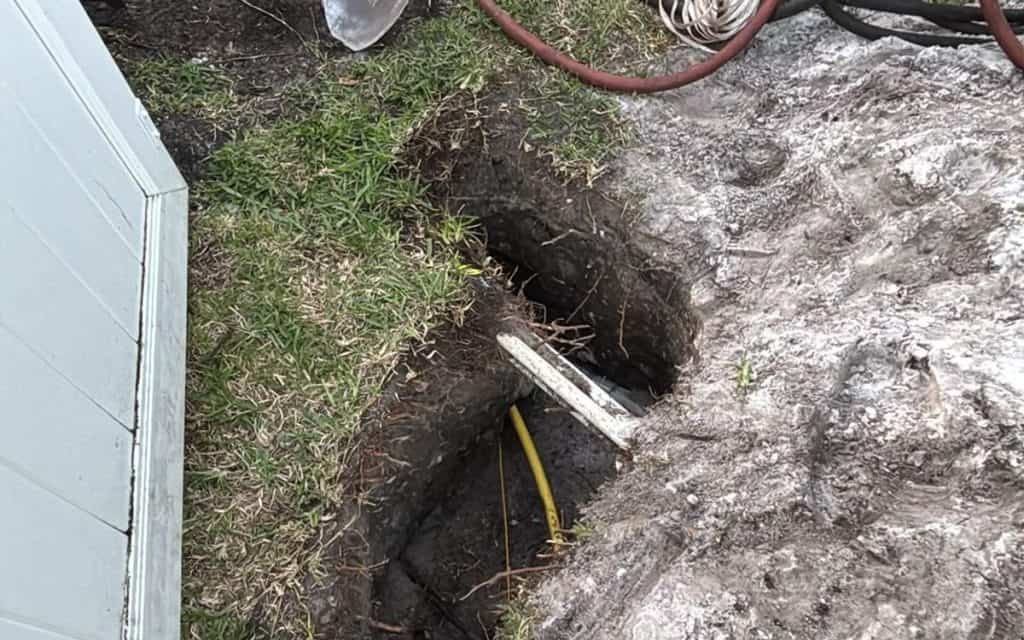
Crossings are the classic HDD job, because the obstacle on the surface is exactly the thing you cannot touch. We bore under state and county roads, rail corridors, canals and finished frontage while the traffic above never knows the work happened. Entry and exit pits sit outside the travelled way, and where traffic control is required, it runs to the approved plan.
Permits are part of our scope. We handle FDOT and county right-of-way permits, rail coordination, and the engineering backup those agencies ask for, including the bore profile, the depth of cover at the crossing and the fluid plan. South Florida adds its own specialty in canal crossings, where the bore has to hold profile under the waterway with the water table only a few feet down. Our crews do those routinely.
Every crossing closes out with as-built depth and alignment for the permit file, so the record matches the ground. See where our crews provide directional drilling services across Florida.
Four families of utility make up nearly everything we pull through a bore. Each one has its own codes, depths and testing, and the same crew handles all of them.
Service lines, distribution mains, force mains and fire lines from 2 to 16 inches, installed under roads, driveways and landscaping, then pressure-tested and tied in.
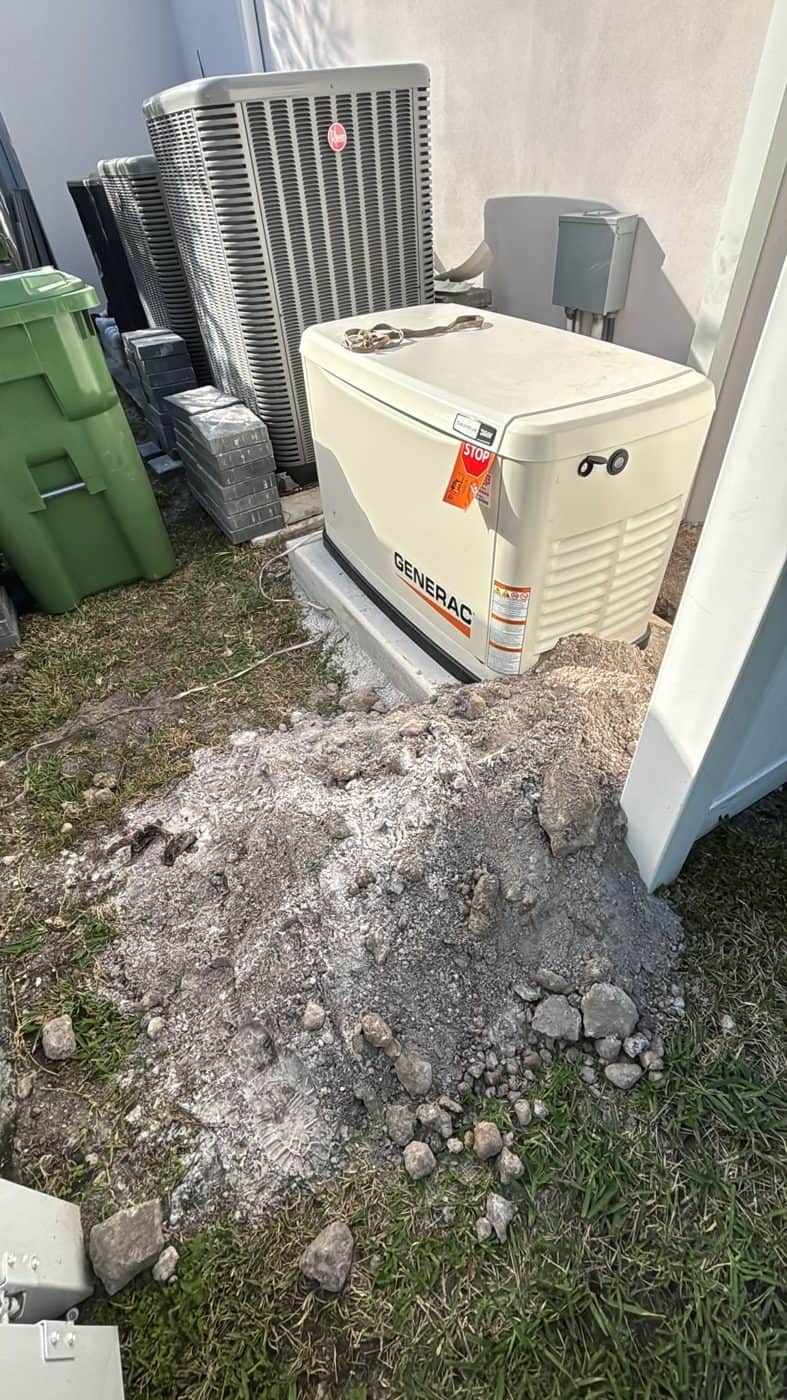
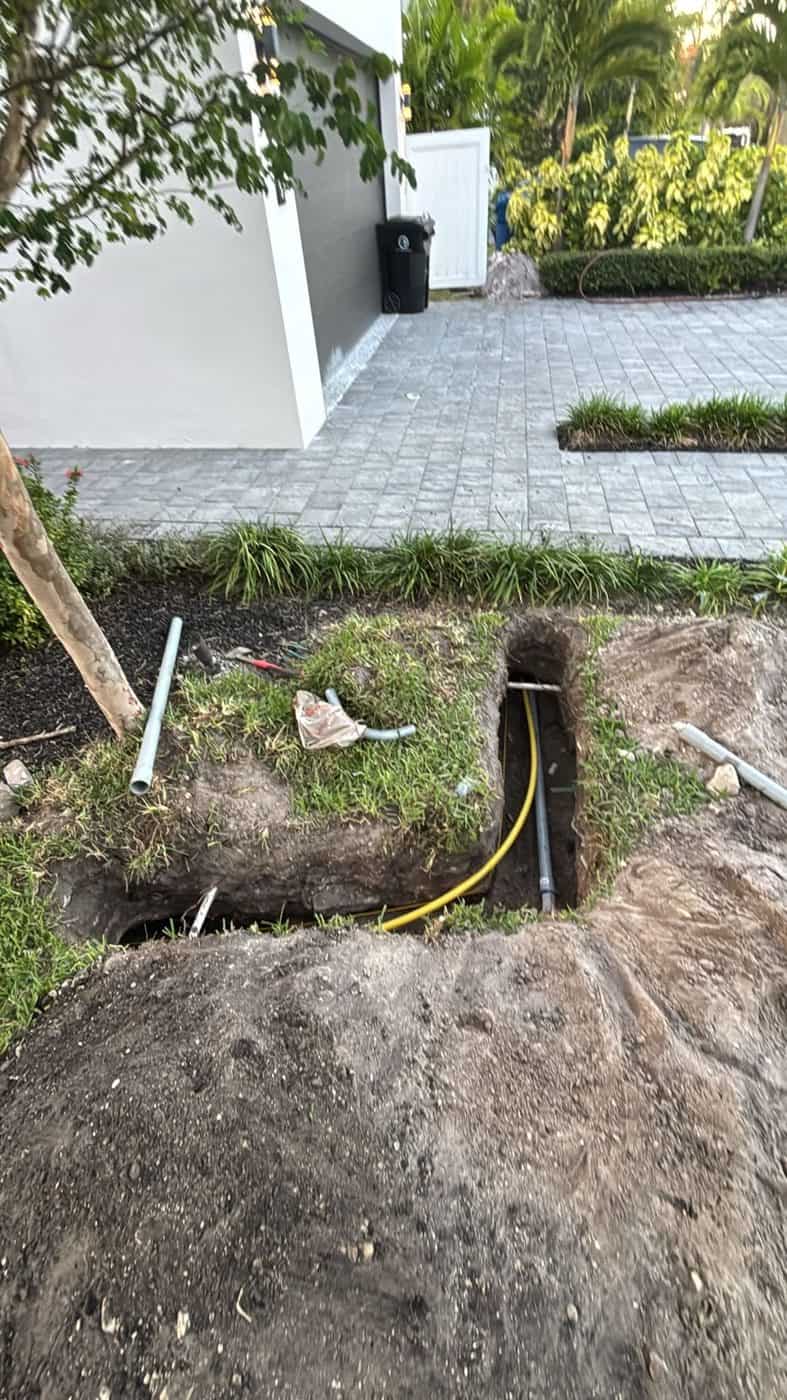
Natural gas services and distribution lines placed to code, with depth and alignment tracked through the whole bore. The generator gas runs we install every week are part of this work.
Electrical conduit and duct bank for street lighting, commercial services, transformer feeds and EV charging, bored to depth of cover with tracer wire in place.
Communications conduit and fiber duct for carriers, ISPs and campuses, covered in depth on our technology infrastructure boring page.
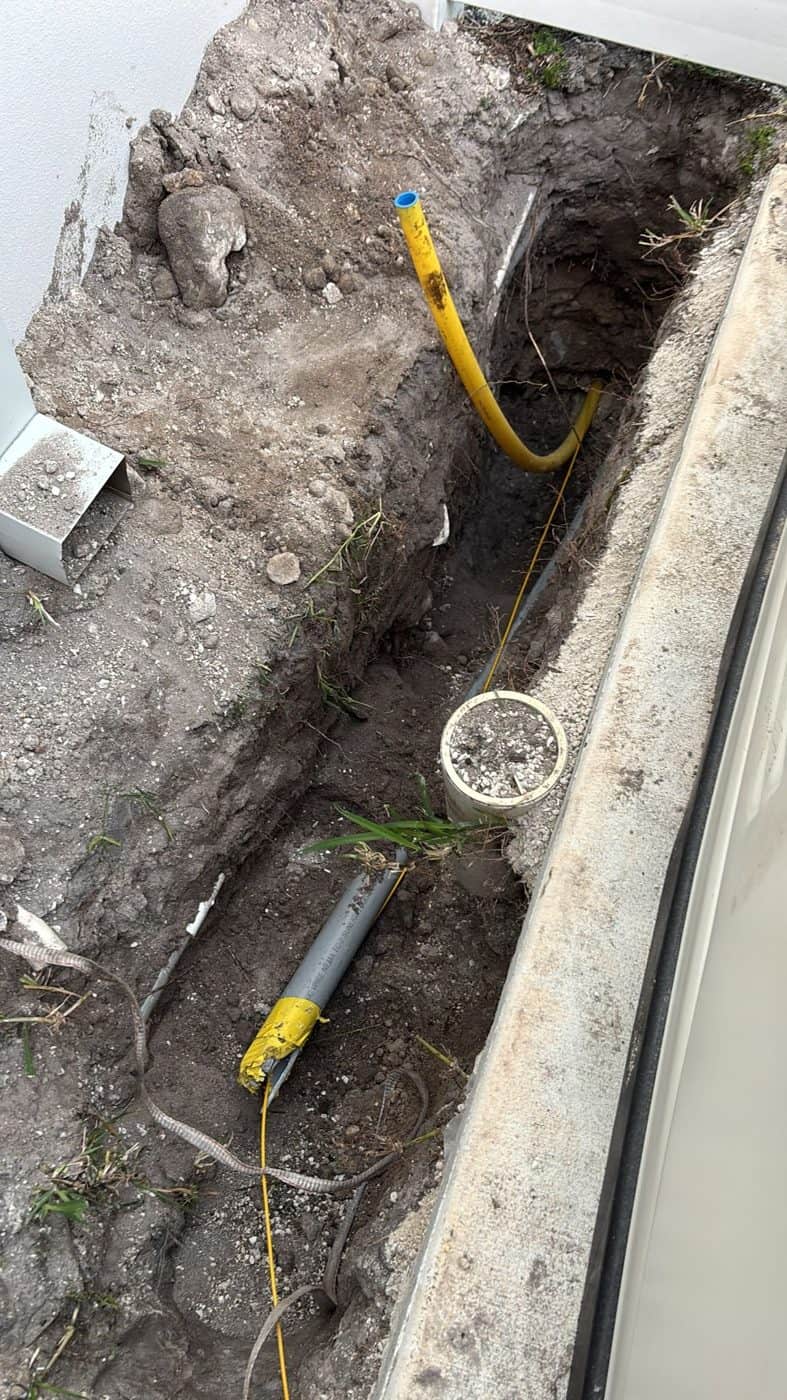
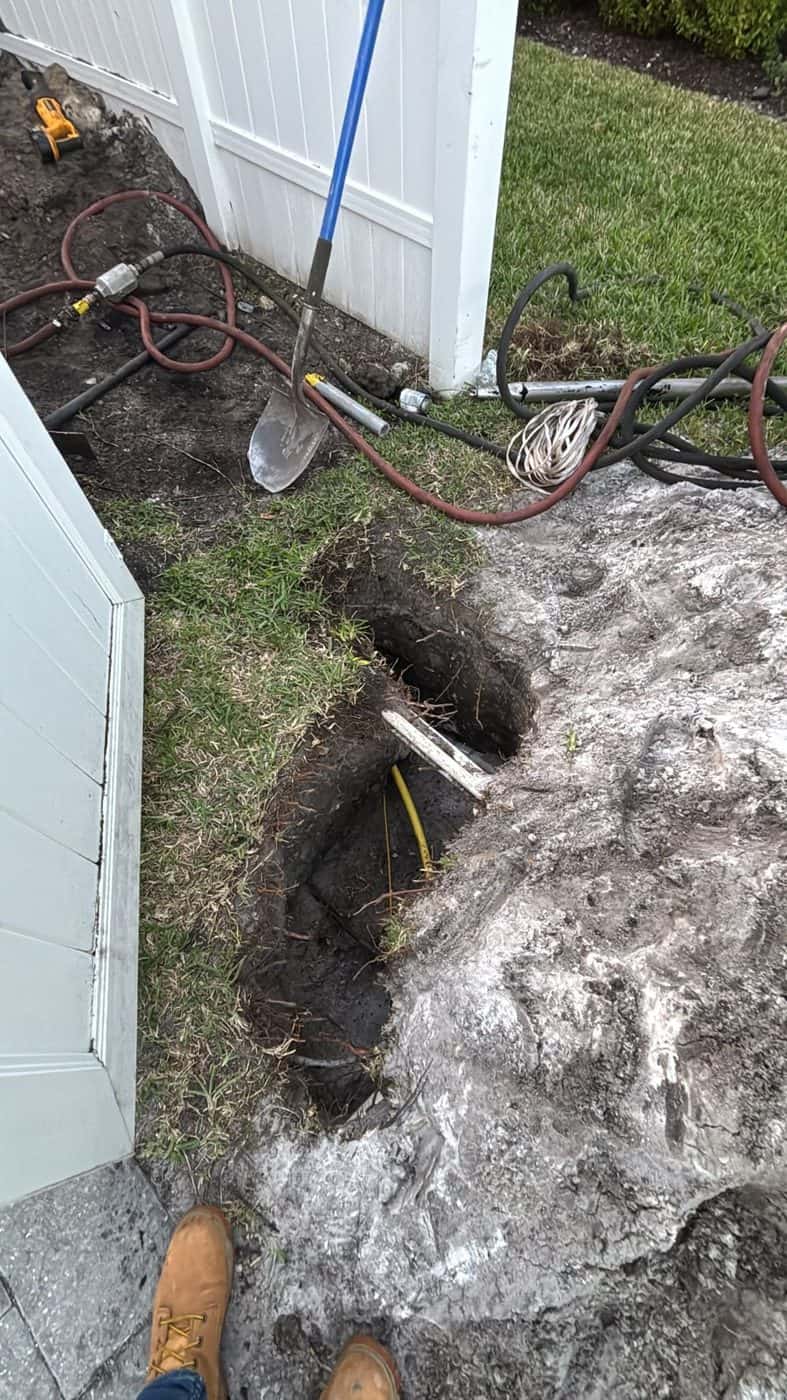
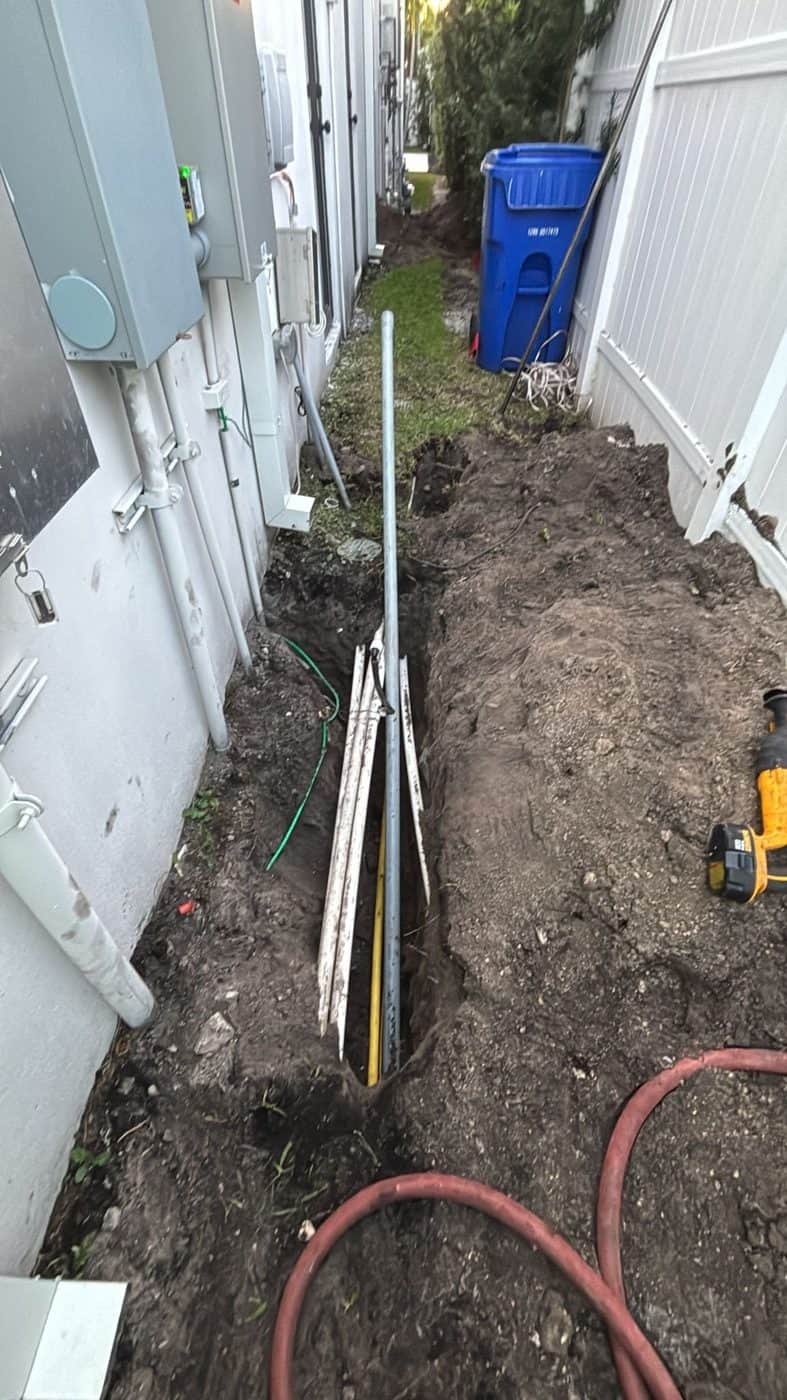
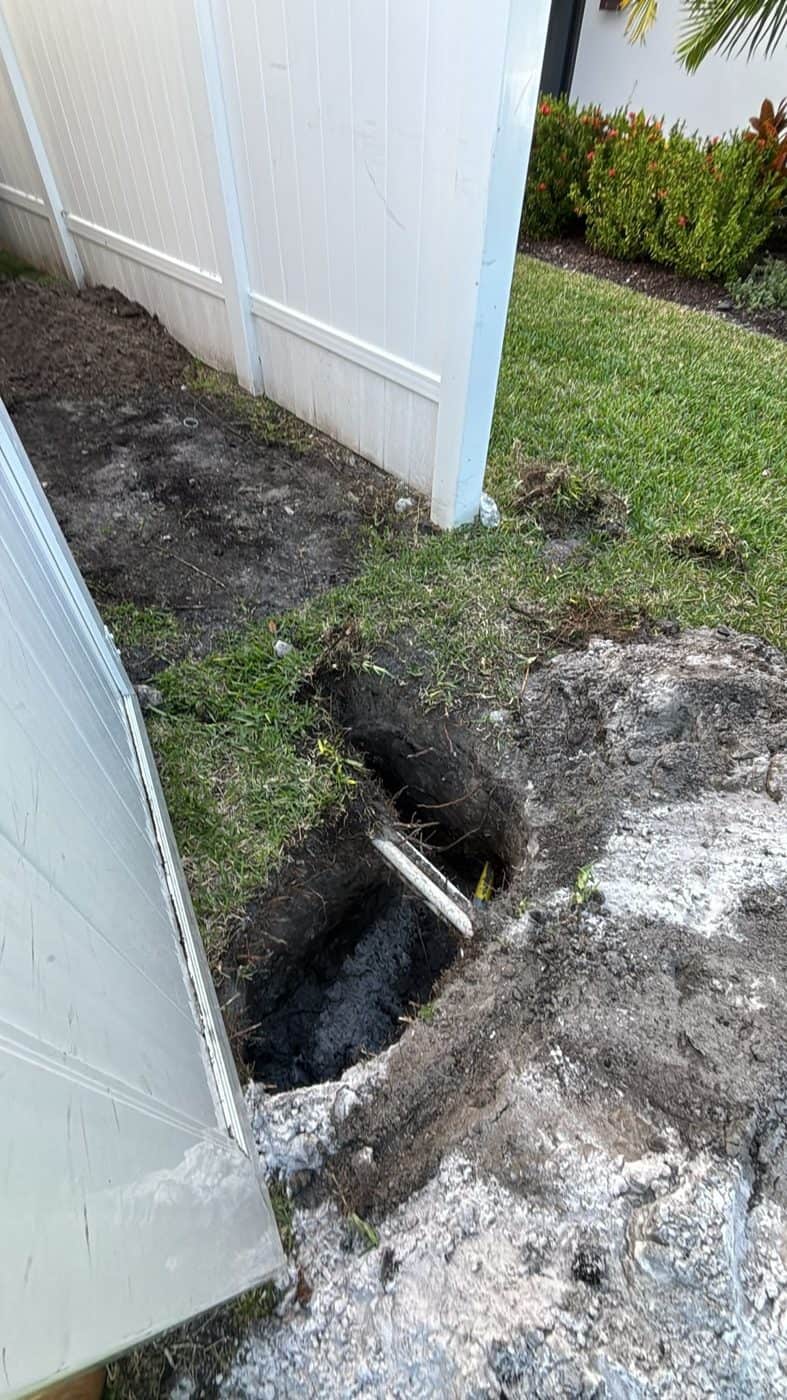
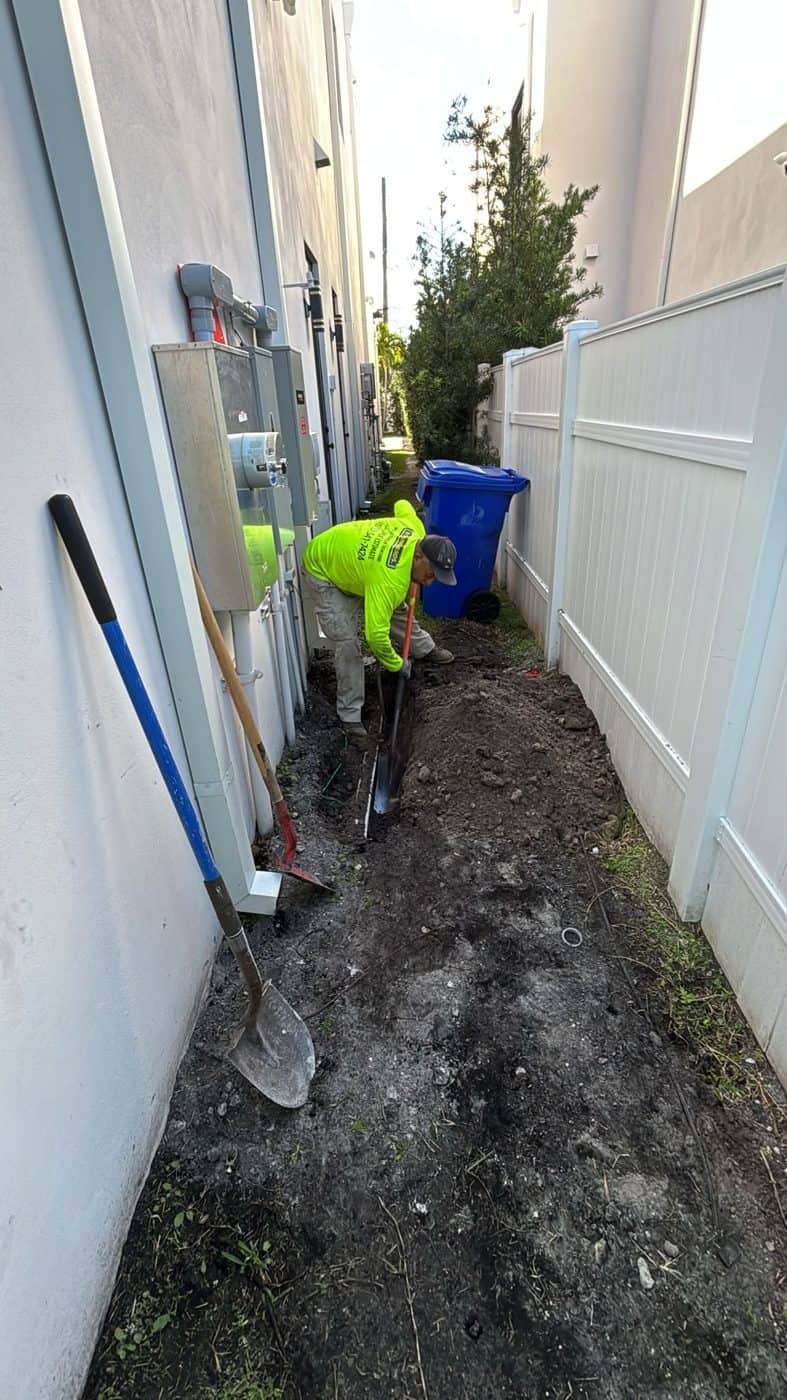
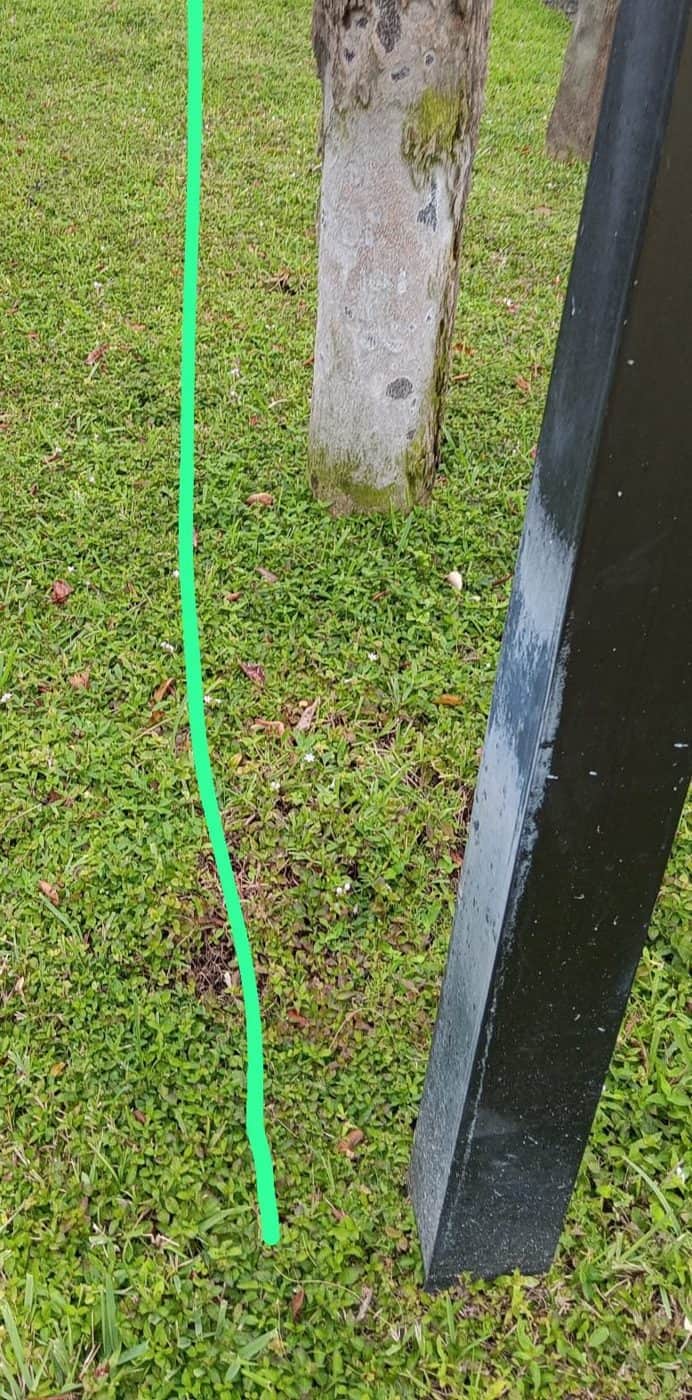
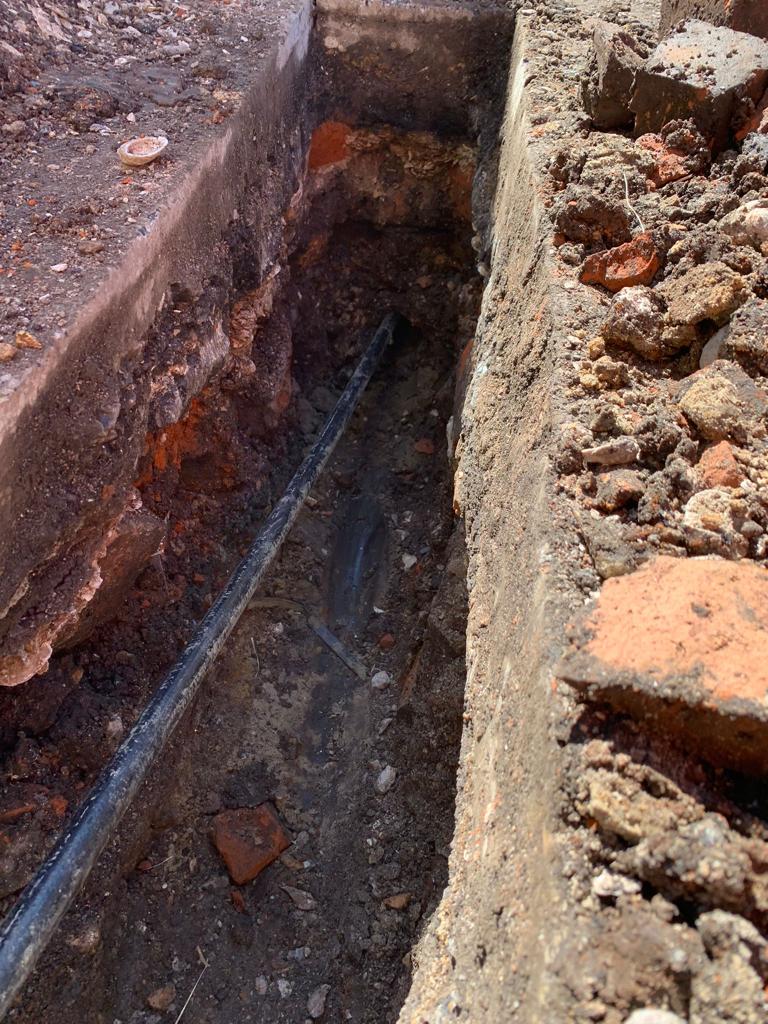
Real entry pits, real pipe and real crews, photographed on our own job sites across Florida and Georgia. Nothing here is a stock photo. For work north of the state line, review our directional drilling service areas in Georgia.
Tell us the footage, the product and the window. You will get a real number from someone who has run the machine, usually the same day.
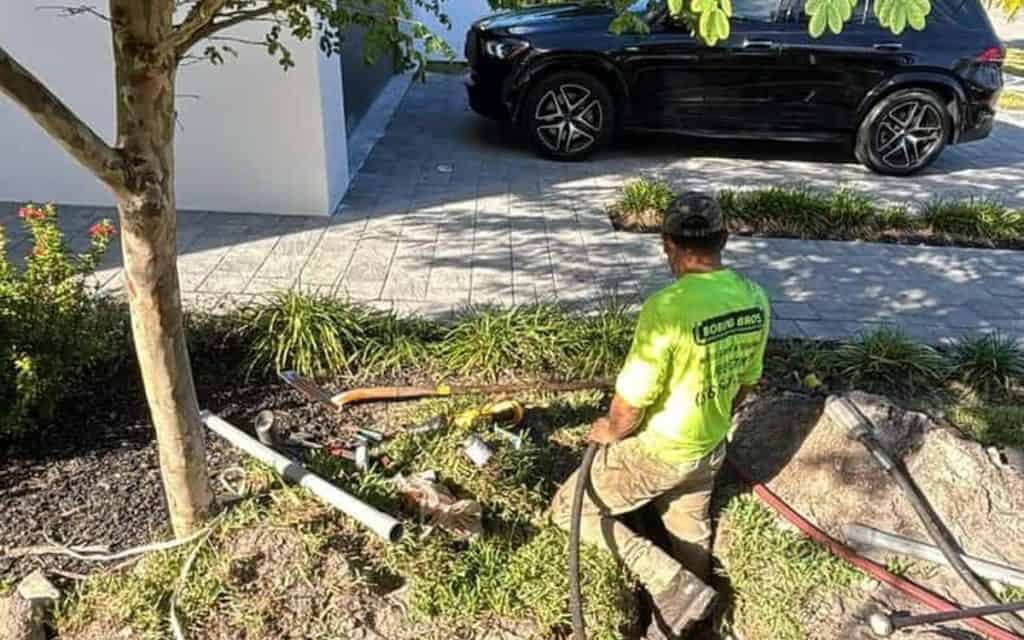
Every bore follows the same four stages. And when open-cut is genuinely the better answer, we say so and trench it instead.
The job starts with 811 locates, followed by our own GPR sweep and potholing to verify what is really down there. The bore profile is then designed around what we found, covering depth of cover, bend radius and the entry and exit angles. Permits go in for any road, rail or canal the path crosses.
A steerable drill head follows the planned profile while a walkover locator tracks it from the surface. The operator corrects pitch and direction foot by foot, so the bore arrives at the exit pit on line and on depth rather than somewhere close to it.
The pilot hole is opened with progressively larger reamers until it carries the product with proper clearance. Small conduit needs one pass, while large-diameter mains are stepped up through staged reams. The fused pipe string is then pulled back in one continuous run, with pull tension watched against the pipe’s rating.
Fusion tie-ins are made and pressure lines are tested against their spec. The entry and exit pits are backfilled, compacted and restored to grade, and the as-built depth and alignment go to the owner and the permit file.
We run both machines, so the answer is not a sales pitch. It is simply whichever method gets your product in the ground for the least money without compromising the install.
Run HDD when…
The bore is long, the pipe is large, or the path has to hold a designed profile, such as a specific depth under a road bed, a canal or a rail corridor. HDD is also the answer when the ground is congested and the drill head needs to be steered around existing utilities rather than fired past them, and when the product is fused HDPE, a duct bank, or anything above the small-service range. Permitted crossings usually require it too, because agencies want a tracked bore with an as-built profile, and an unsteered tool cannot provide one.
Missile bore it when…
The shot is short and straight, such as a driveway, a sidewalk or a narrow residential street, and the product is a small service line or a single conduit. There needs to be honest access for a pit on both sides, reasonably uniform ground, and nothing critical close enough to the path to demand steering. On that work a pneumatic missile is faster and cheaper than setting up a drill rig, which is exactly why we keep missiles on the trucks. Our missile boring page covers how those runs work. For that scope, see our dedicated missile boring contractor service.
The clients who call us over and over are the ones whose work is all consequences: live corridors, finished surfaces, and mains that cannot fail.
Water departments and sewer authorities use our large-diameter capability for main installations and replacements, without cutting the streets above them.
Electrical, gas and site-utility contractors sub their bores to us and keep their crews on the work they self-perform. We show up, drill, and get out of their schedule.
Subdivision and commercial-site infrastructure, from water and sewer to power and communications, installed under finished or occupied ground without wrecking the sitework.
Permitted crossings under FDOT and county roads, rail corridors and South Florida canals, engineered, tracked and documented end to end.
Six answers turn a rough range into a firm number. Send whatever you have, and we will tell you which blanks actually move the price.
Anything we cannot answer from a plan, we will come and look at. A walkthrough costs nothing, and it is the difference between a quote that holds and a change order.
Boring Bros is owner-operated by brothers Aaron and Levi Cohen, so most calls reach an owner rather than a call center. Every crew on your job is a licensed, insured contractor (Boring Bros LLC, Florida Doc. L21000515203; Georgia Control No. 25100779; certificate of insurance on request). We have run bore-and-trench crews across Florida and Georgia since 2021, backed by 20+ years of trade experience on the crew.
Years In The Trade
Family-Owned
70+ Google Reviews
Insured
It is a trenchless method of installing pipe and conduit underground. A steerable drill head bores a tracked pilot hole along a planned profile, the hole is enlarged with reamers, and the product pipe is pulled back through it in one continuous run. Everything happens from two pits, and the surface between them is never opened.
Up to 16 inches in diameter, which covers municipal mains, force mains and transmission lines. Most HDD contractors max out near six inches, because large-diameter work takes heavier rigs and staged reaming. It is the end of the trade we specifically built for, and fewer than one in twenty drilling outfits work at that range.
As deep as the crossing requires. Depth of cover is set by whoever owns the surface, so a county road, an FDOT right-of-way and a rail corridor each carry their own standard, and canal crossings run deeper still to hold profile under the waterway. The as-built records the true depth for whoever digs there next.
HDPE is the workhorse, fused in-house into one continuous string. We also pull restrained-joint PVC, steel casing, and standard electrical or communications conduit. The product dictates the reaming plan and the pull tension limits, so tell us the spec and we plan the bore around it.
Fusion heat-welds HDPE ends together into a single continuous pipe, with no gaskets and no joints to leak. We run butt fusion, electrofusion and socket fusion with calibrated equipment and quality control on every weld. Because it is in-house, the pipe string is ready when the hole is, and a changed tie-in gets fixed on the spot instead of waiting on a third-party crew.
Yes. FDOT and county right-of-way permits, rail coordination, and the engineering backup those agencies require, including the bore profile, cover depth, fluid plan and traffic control, are all part of our scope. Every crossing closes out with as-builts for the permit file.
Drilling fluid is a bentonite-and-water slurry that stabilises the hole, cools the drill head and carries cuttings back to the pit. It is contained at the entry and exit pits, recycled through the job, and vacuumed off at the end rather than left on site. We plan fluid pressure against the soil conditions, which is why returns outside the pits are rare on our bores.
No, and that is the point of the method. Surface disturbance is limited to the entry and exit pits, and both are restored to grade and compacted when the bore is done. The driveways, landscaping, parking and pavement along the bore path are never opened.
Yes, it is our home ground. Sandy soil drills fast but demands a disciplined fluid plan to keep the hole stable, and South Florida’s high water table and canal crossings are routine conditions for our crews. Georgia’s heavier soils drill differently, and the fluid plan simply changes with them.
Small-conduit shots commonly run hundreds of feet. Large-diameter bores are planned around soil, depth and pull force rather than a fixed number, and long routes are staged as multiple bores with pits at planned intervals. The honest answer comes from the site, so we give it after a walkthrough instead of guessing.
Most of our drilling is exactly that. We run bores for utility contractors, electrical contractors, GCs and site developers who keep their own crews on the surface work. We quote fast, hit the drill window, and hand back a documented, pull-ready installation.
When the run is long, open and unobstructed, open trench is cheaper and we will tell you so. When the shot is short and small, a pneumatic missile bore beats mobilising a rig. We run all three methods, so the recommendation follows the job rather than the equipment we happen to own.
Tell us the footage, the product and the window — we will get you a real number, usually same day.