Serving All Of Florida and Georgia
Fiber, power and data run underground now — and someone has to put them there without wrecking what is above. Boring Bros bores and trenches those pathways across Florida and Georgia.
Fiber, power, data and signal all live underground now, and every one of them needs a pathway to run in. Boring Bros installs those pathways — fiber conduit, power duct, communications runs and low-voltage sleeves — placed by trenchless bore beneath roads, parking lots, rail corridors and finished sites across Florida and Georgia. Carriers, ISPs, general contractors and municipalities bring us in when the surface above the route has to stay open for business, and when what goes in the ground has to last decades without anyone opening it up again. Fiber conduit installation is most of that work, usually as a subcontractor to network cabling contractors and ISP outside-plant crews, with pull tape and tracer wire in every run.
Boring Bros were great to work with. They went above and beyond to keep up with on the job scope of work changes as well as helping us out with all the admin and paper work needed to close out the project. Will definitely use again for more work in their area in the future.

Great service!
Have used Boring Brothers for several projects, and they always deliver. They are very professional and caring about your needs. They go that extra mile and make sure everything is satisfactory!
Professional, reliable, clean and great communication.As far as I am concerned they checked all boxes for us. We will definatly be using them again!
Excellent experience, great job Boring under the street.
Great experience and fairly priced. They got the work done in no time and saved me from trenching through 100’ of parking lot in a busy plaza. Would use them again if the need arises
Work with an underground construction contractor whose crews do this every day.
Modern rigs, locating gear and tooling maintained to keep bores accurate and schedules intact.
Our crews bring more than two decades of hands-on trade experience — running as Boring Bros LLC across Florida and Georgia since 2021.
Boring Bros is your one-stop shop for technology infrastructure — fiber, power, telecom and data pathways installed underground by bore or trench. We plan routes around your existing architecture so the network you build today can scale tomorrow. See our technology infrastructure boring service areas across Florida.
Three of the jobs our crews run most for carriers, contractors and municipalities.
Most of our fiber work is subcontract — a network cabling contractor, an ISP’s outside-plant crew, or a GC who needs a path under something that cannot be cut. We install HDPE conduit, innerduct and microduct for single-mode and multimode runs: dark fiber laterals, FTTH distribution, small-cell backhaul, and building entrance from the right-of-way in to the demarc.
Every shot goes in with pull string or mule tape already inside and tracer wire on the duct, so the cabling crew can pull the same week and the next contractor can locate the path instead of guessing. Where the design calls for spare capacity we bore multiple ducts on a single shot — adding a spare duct for future use costs a fraction of a second mobilisation later.
We size conduit to whatever the client specifies. On a fiber run the constraints that actually matter are sweeps, bend radius and pull tension, so we set entry and exit angles to keep the bore path inside the cable’s minimum bend radius rather than simply taking the shortest line between two points.
Handhole and pull-box setting, surface restoration, and as-built dimensions taken off permanent references all come with the bore.
Campus and data centre work is really about separation. Two circuits sharing one trench are one backhoe away from being one circuit, so where a design calls for diverse path we bore the second route physically apart from the first — different entry point, different corridor, and documented so it stays that way.
Typical scope is duct between buildings, a run from a meet-me room or MPOE out to a second point of presence, or backbone between existing plant and a new build. On an occupied campus the hard constraint is usually not the ground — it is that nothing can go offline and nothing can close. We bore under drives, quads, parking and utility corridors while the site keeps operating, siting entry and exit pits where they will not block access.
Before a drill turns we locate and pothole what is already down there. On a built-out campus that means decades of unrecorded electrical, chilled water, irrigation and abandoned duct. Daylighting the crossings is slower than trusting an old drawing, and it is the reason we are not the crew that hits something.
You get as-builts at the end that the facilities team can actually use the next time somebody digs.
Signal and ITS conduit gets bored between cabinets, poles, mast arms and cameras without dropping a lane. On a working intersection the job is scheduled around the corridor rather than the other way round: entry and exit pits sit behind the curb line, the drill runs off-peak where the permit requires it, and traffic control follows the approved MOT plan.
We run conduit for signal interconnect, ITS and camera backhaul, detection feeding the cabinet, and fiber between controllers where a municipality is bringing its signals onto one network. Road crossings are the routine piece — boring under an arterial avoids the cut, the patch, and the pavement-warranty argument that follows it.
Municipal work gets inspected, so it is built to the spec sheet: cover depth to the agency standard, approved duct, tracer wire throughout, and pull boxes set to grade instead of left proud. We pull the permits and coordinate with the traffic department, the county or FDOT depending on whose road it is.
Sign-off comes with as-builts and locate-ready tracer, so the next crew into that corridor is not drilling blind.
Networks live or die on the pathway they run in. We install the conduit, duct bank and cable that carry fiber, power, data and signal — without opening the surface above them.
Single-mode and multimode fiber pulled through HDPE conduit, innerduct and microduct — dark fiber routes, FTTH builds and 5G small-cell backhaul for carriers and ISPs.
Duct banks and smart-grid conduit feeding substations, switchgear and transformer pads — placed to depth of cover with tracer wire and warning tape. Duct banks are placed to the separation and cover the utility owner specifies, with tracer wire and warning tape so the next crew finds them.
Secure underground pathways for surveillance, access control and campus low-voltage — including hardened runs for defense and critical facilities. Runs are kept physically separate from power to avoid interference, and sleeved where they pass beneath drive lanes.
Conduit for traffic signals, intelligent transportation systems, IoT sensors and roadside detection — installed without closing the corridor. Signal and sensor conduit is bored between cabinets, poles and mast arms without dropping a lane or interrupting the intersection.
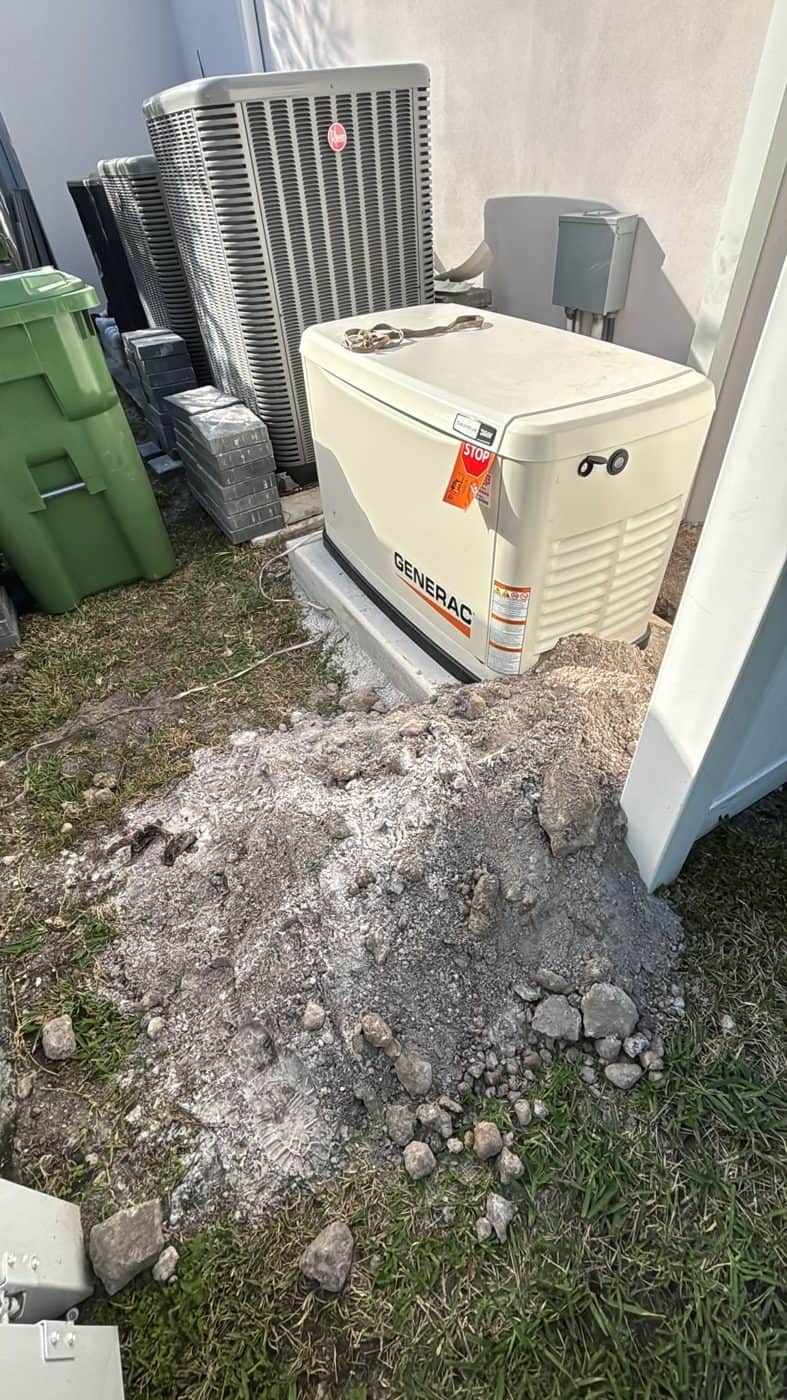
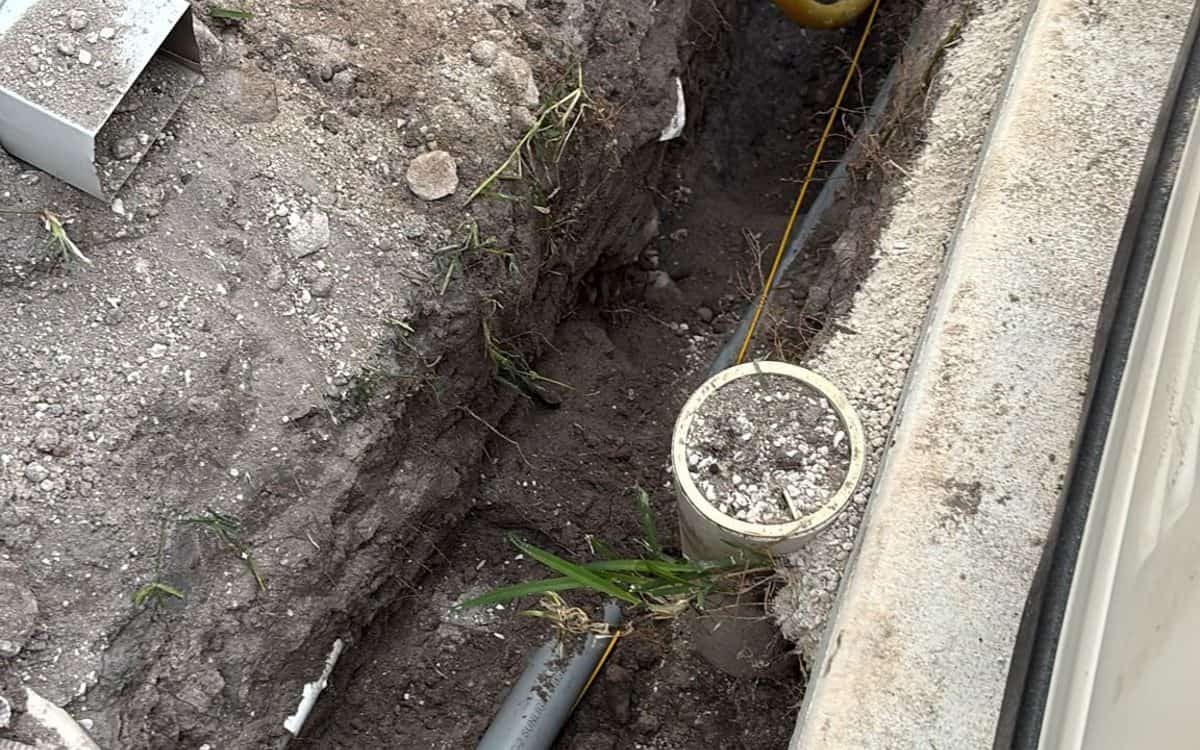
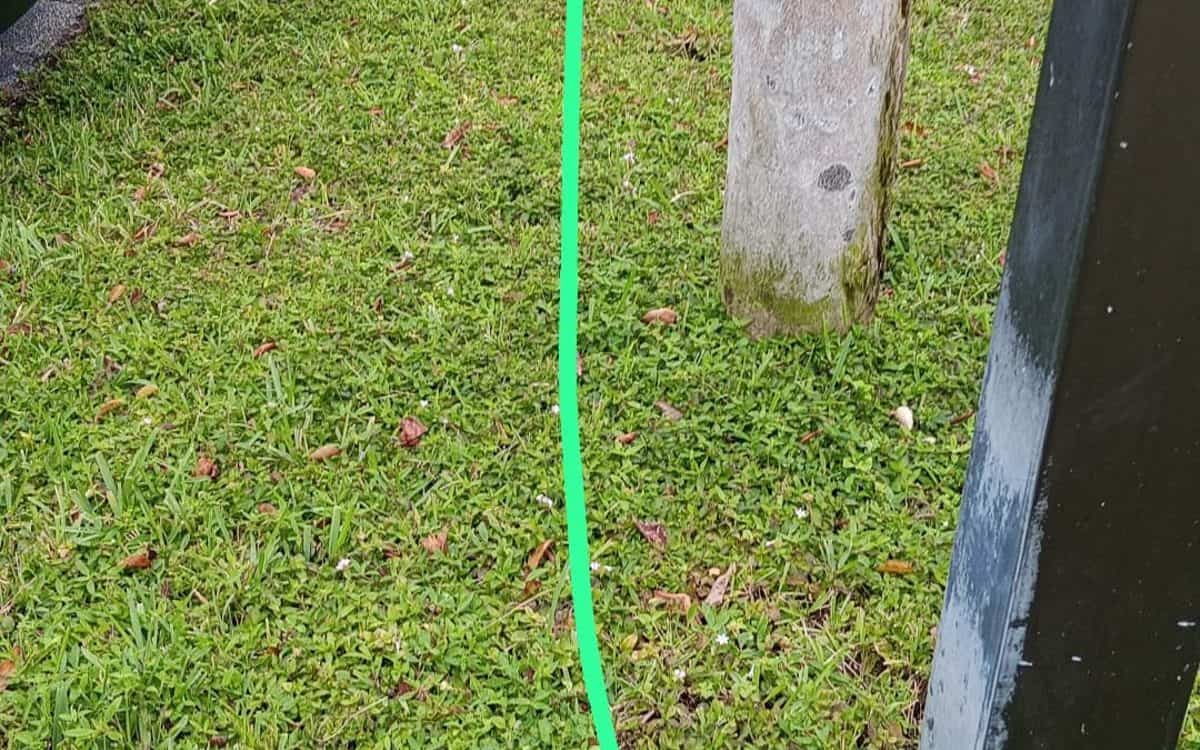
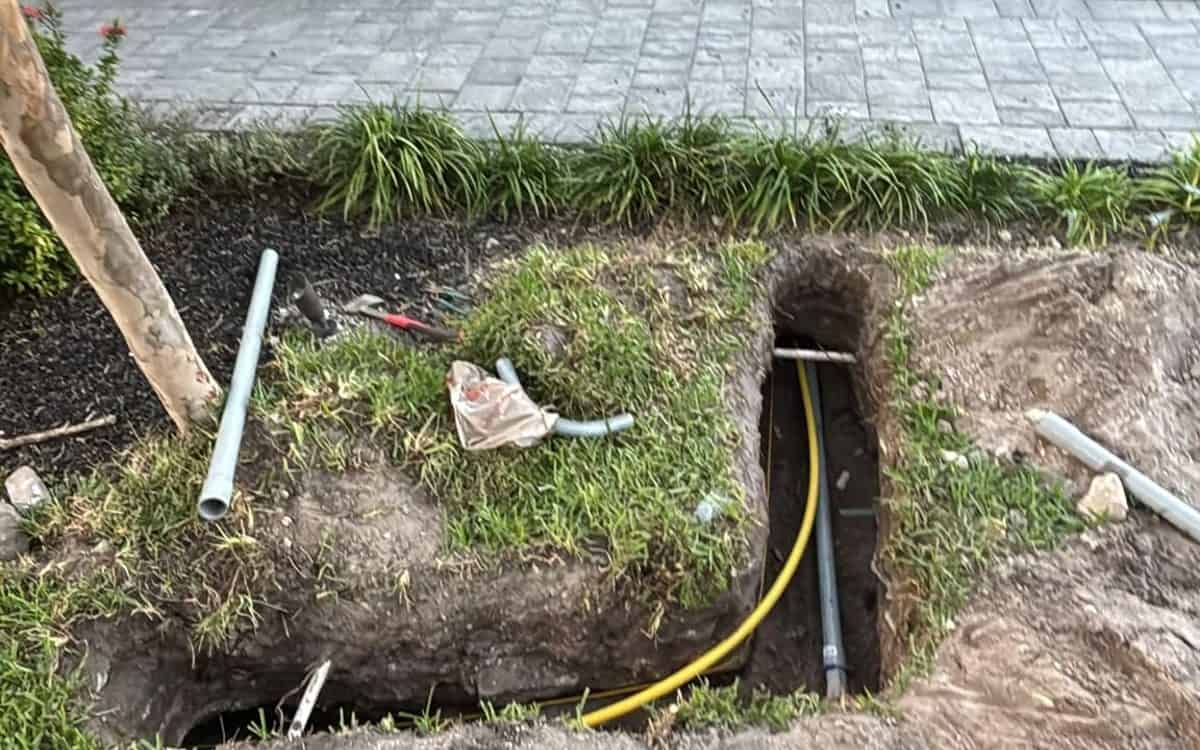
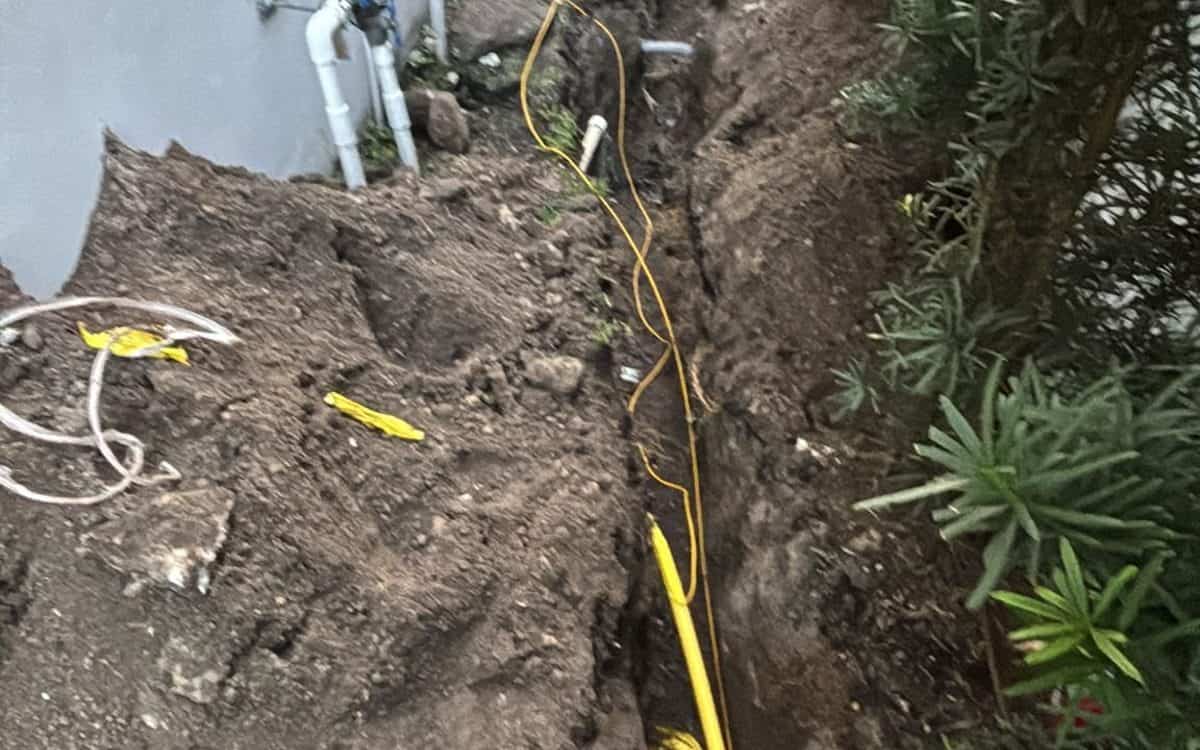
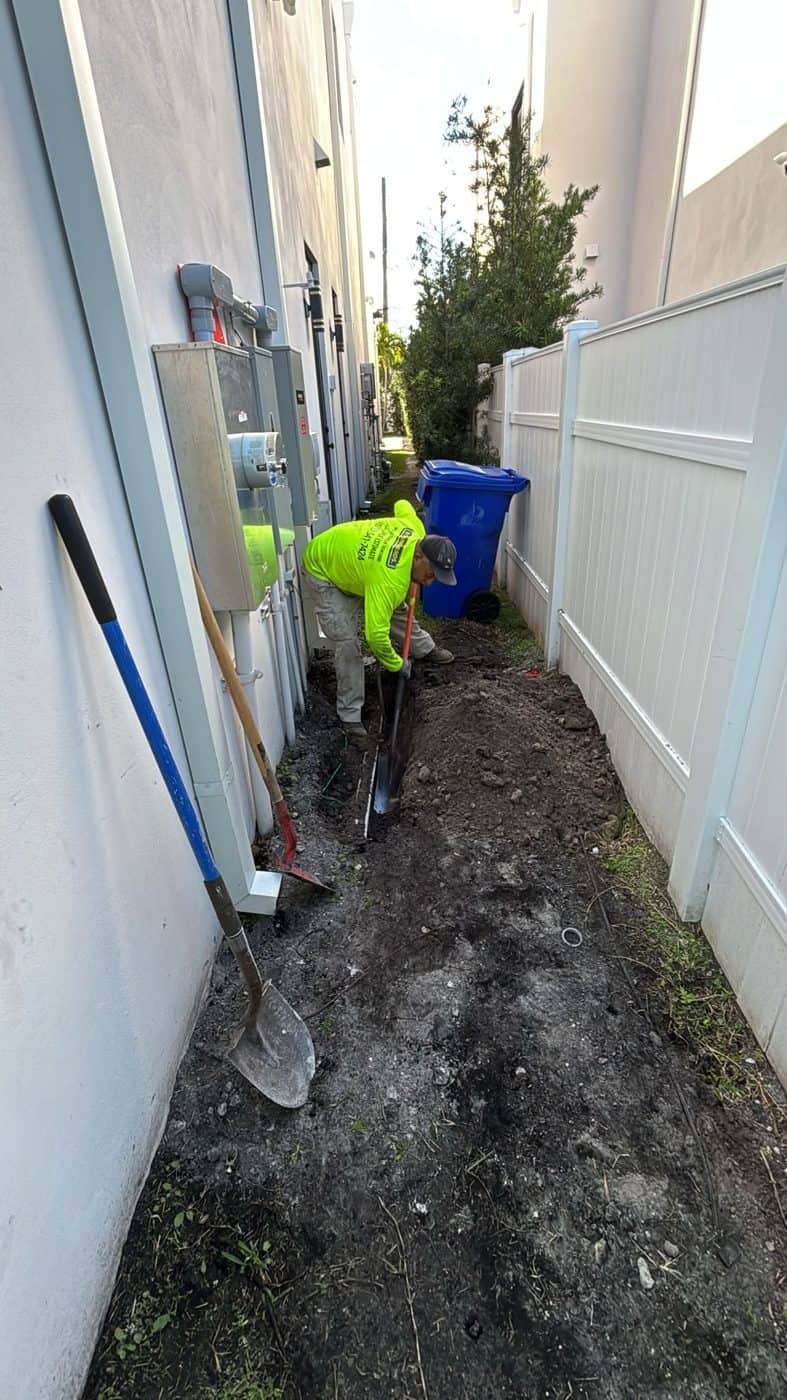
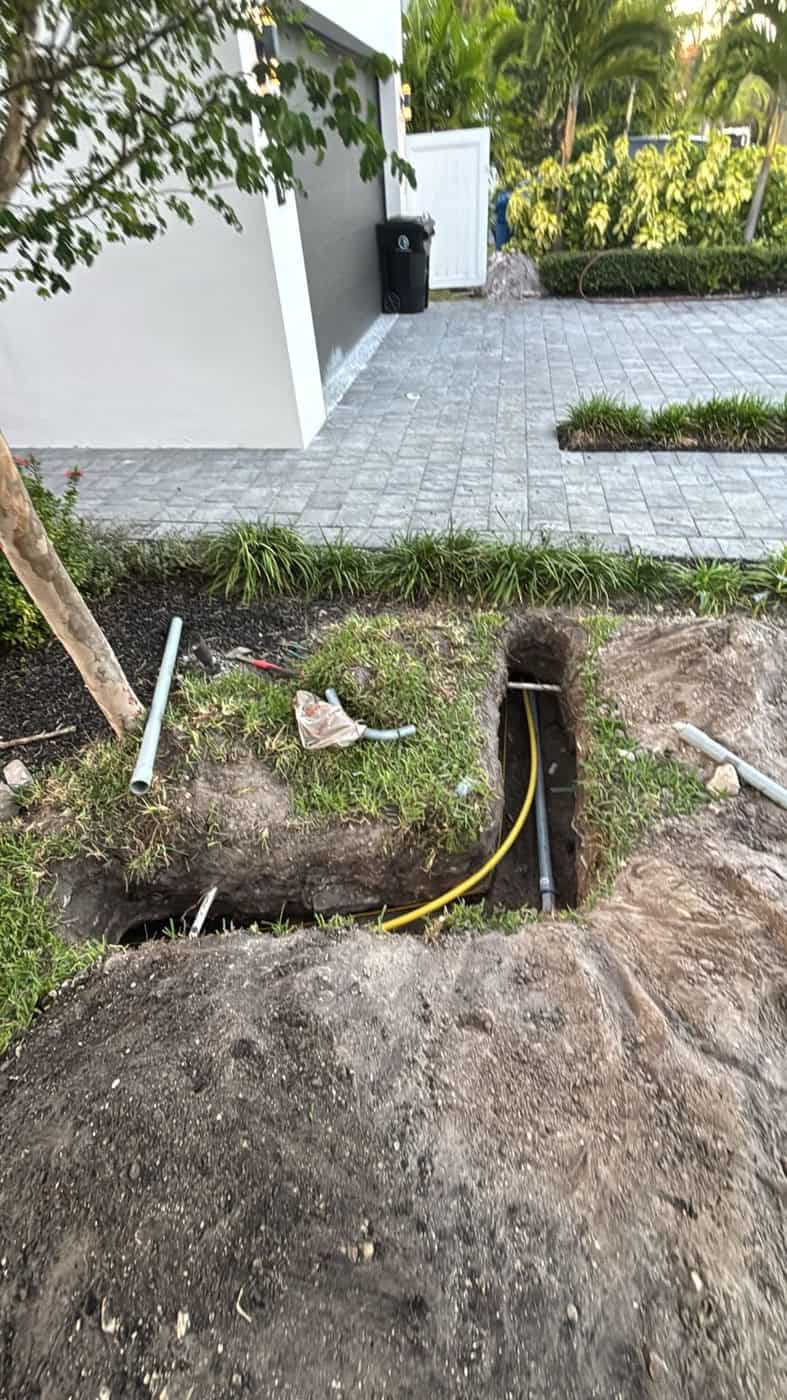
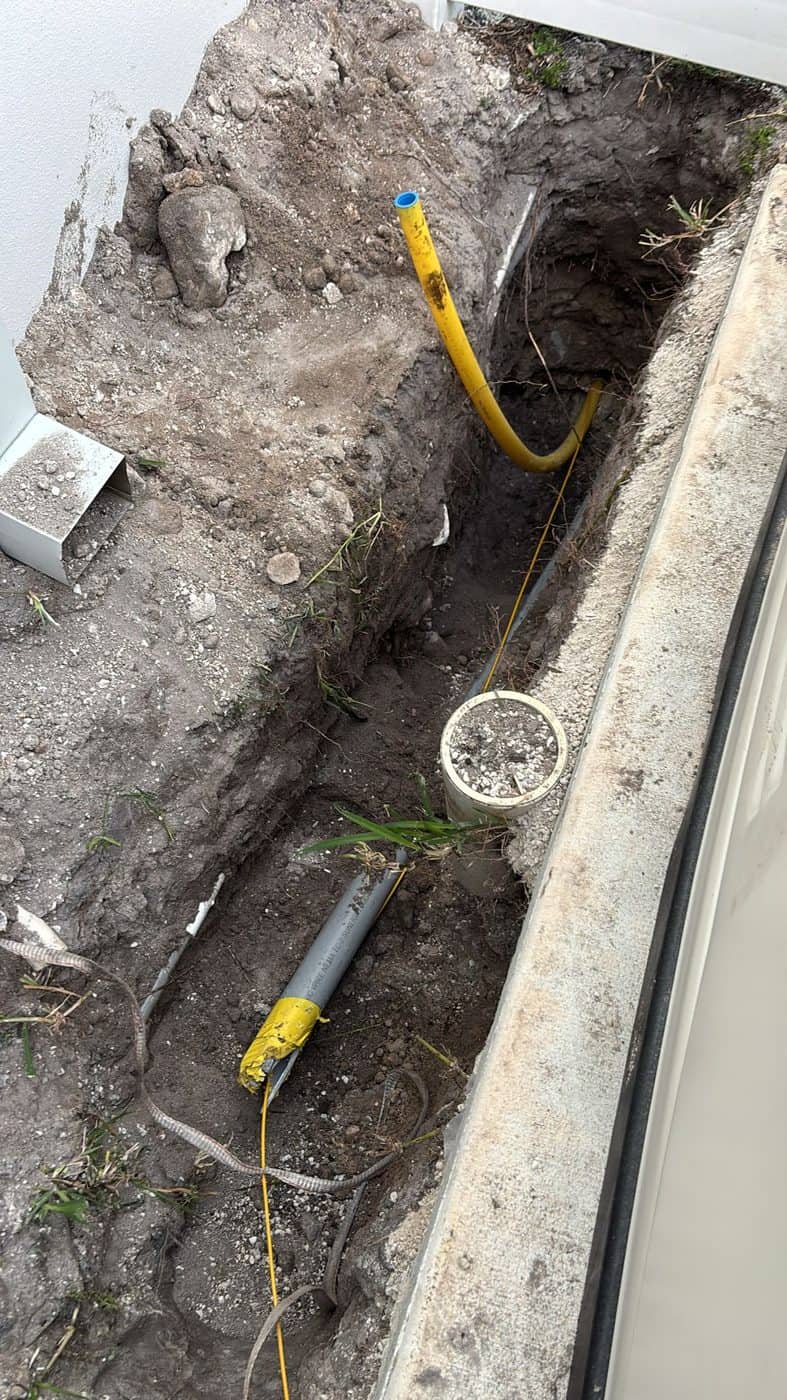
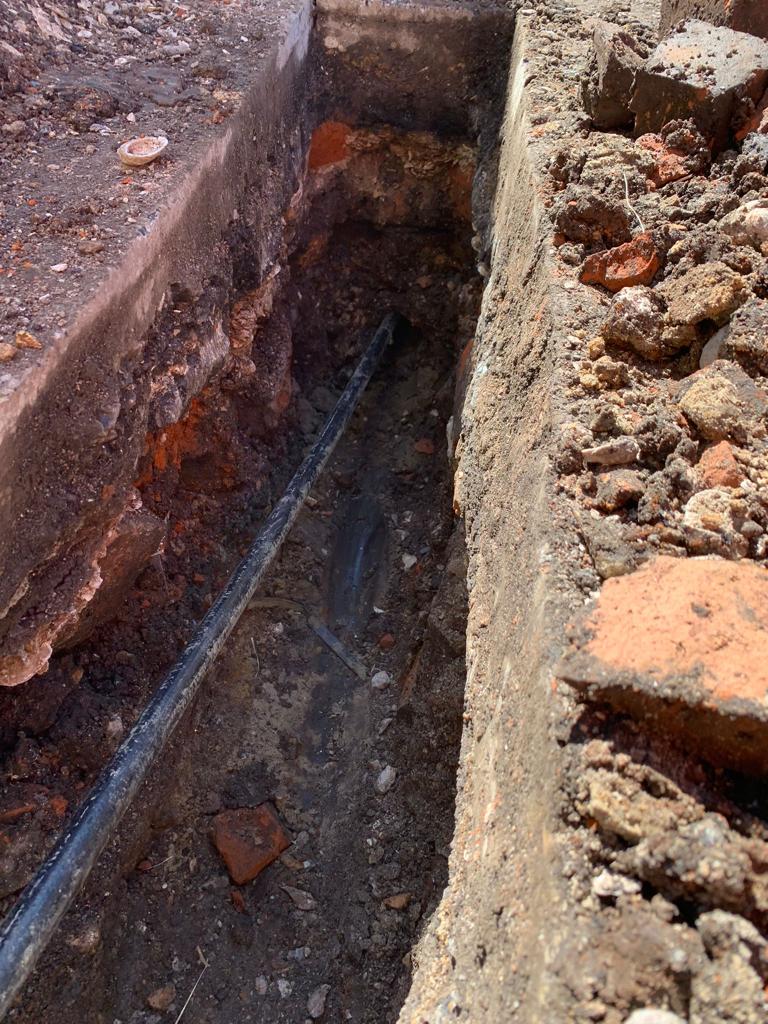
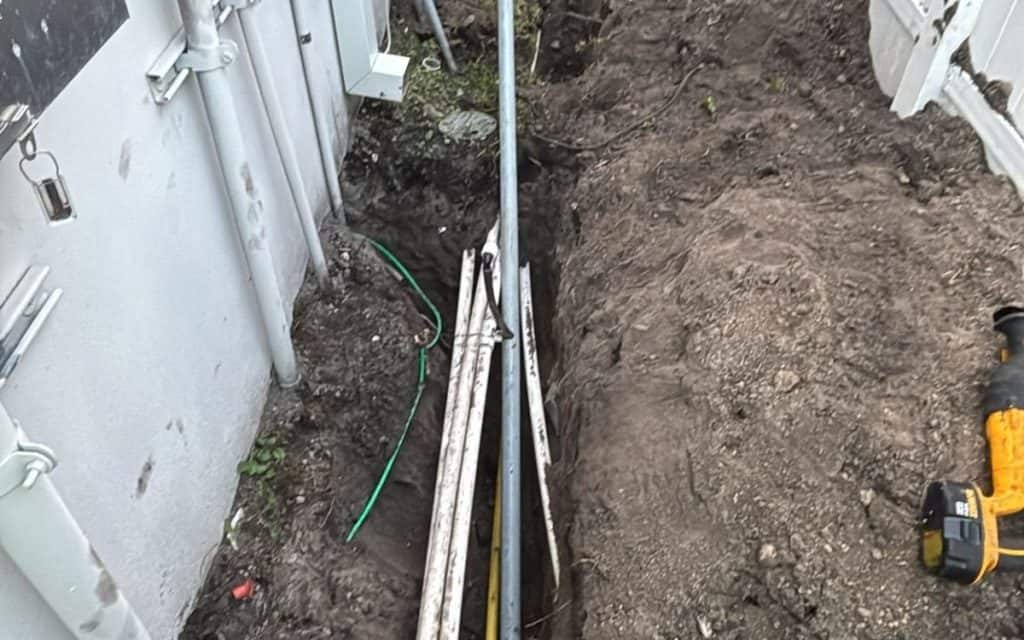
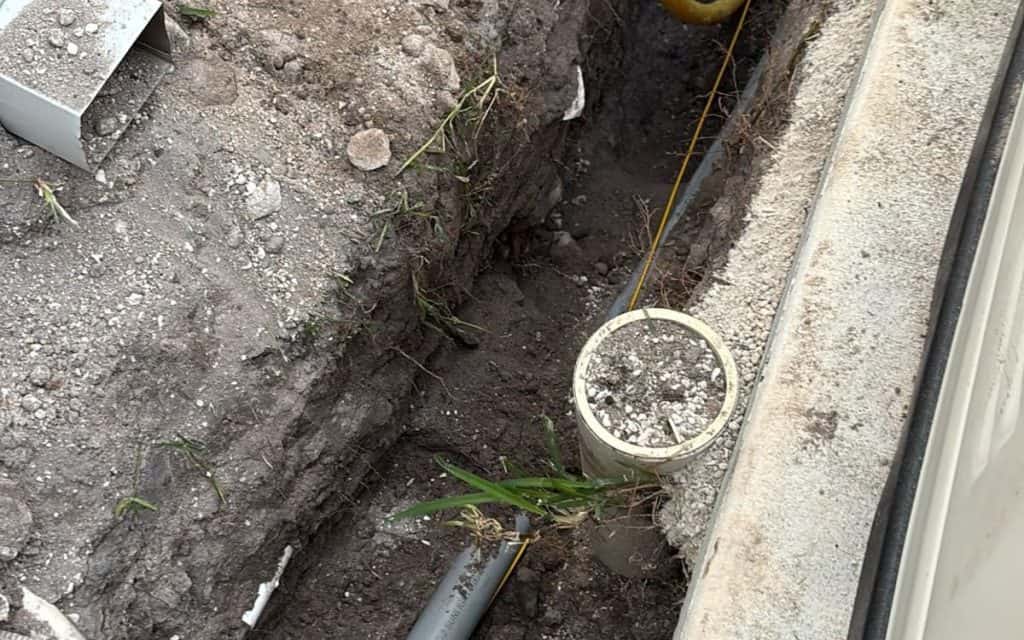
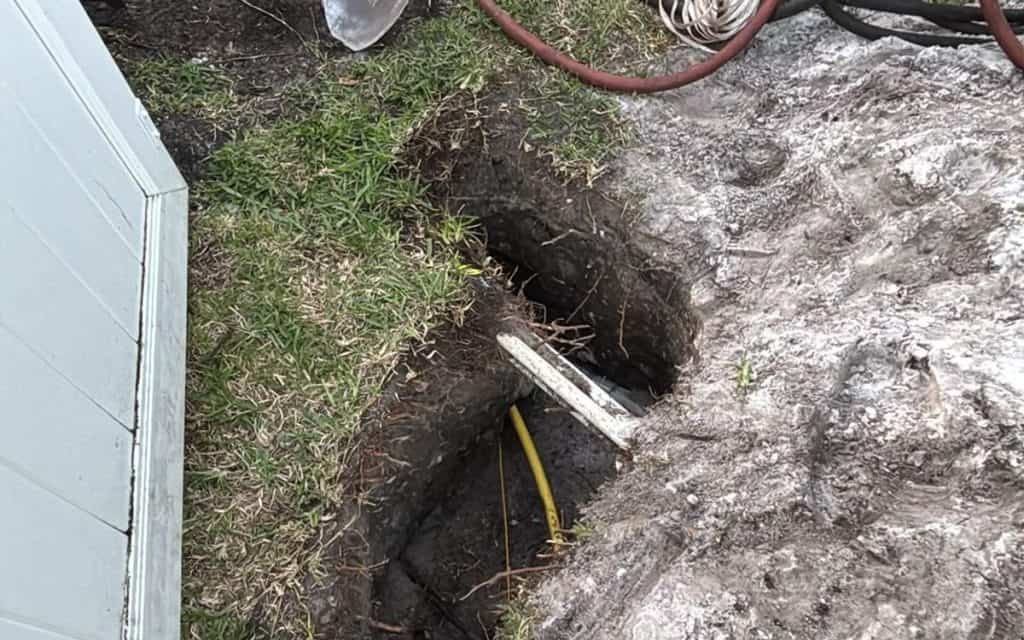
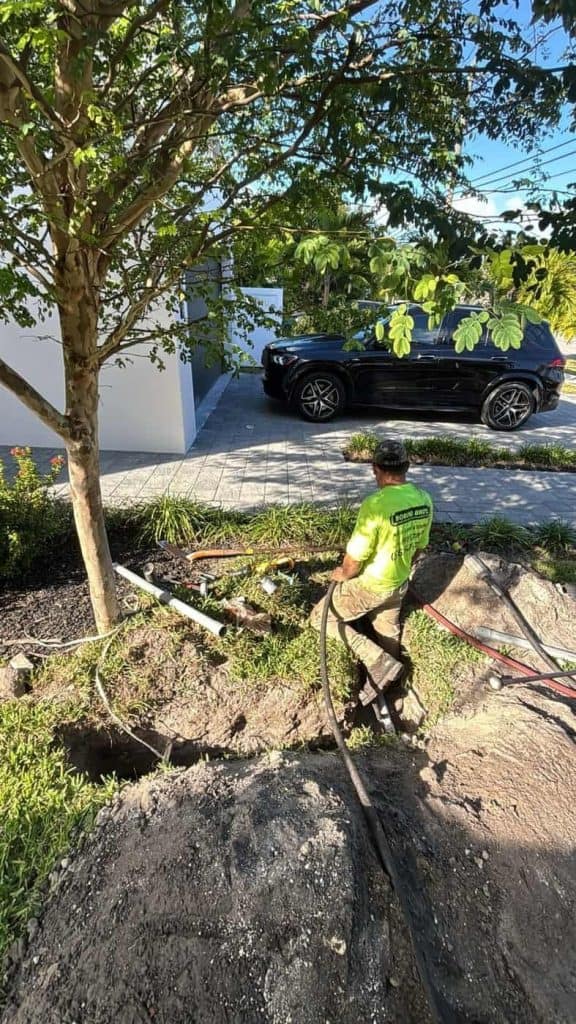
Real bore pits, real duct, real crews. Conduit, fiber and duct bank work our people put in the ground across Florida and Georgia — photographed on site, not stock. For projects north of the state line, review our technology infrastructure coverage in Georgia.
Tell us the footage, the product and the window. You will get a real number from someone who has run the machine, usually the same day.
Four stages, every time — and when open-cut is genuinely the better answer, we trench instead.
Every run starts with an 811 ticket, our own ground-penetrating radar sweep and potholing to verify what is actually down there. Only then is a bore path planned to hold depth of cover and clear existing plant — because GPR catches the non-metallic lines an electromagnetic locator cannot see. When records are incomplete or a site is congested, our GPR utility locating service helps verify subsurface conditions before drilling.
A steerable pilot bore follows the planned profile, tracked by walkover locator, then pre-reaming opens the hole to size for the conduit bundle. Cable boring and small conduit shots often need one pass; larger duct banks are stepped up through successive reams so the hole stays stable.
HDPE conduit, innerduct or a full duct bank is pulled back in one continuous run, with pull tape and tracer wire left in place for the next build. Pull tension is monitored against the conduit and cable limits, because exceeding bend radius or pull rating causes damage that only shows up on test.
Entry and exit pits restored to grade and compacted, then as-built depth and alignment documented for the utility owner and the permit file — so the route is on record for whoever digs next.
Boring is not automatically the right answer. It wins where the surface matters more than the distance, and open trench still wins on long, clear, unobstructed runs. This is roughly how we call it when a contractor asks us which way to go.
Bore it when…
The path crosses pavement, a driveway, a slab, a runway of mature landscaping or anything with a restoration cost attached. The site has to stay open — a plaza that cannot lose its parking, a campus that cannot close a road, an intersection that cannot lose a lane. The crossing is short but expensive to reinstate. There is a permit or a pavement warranty that makes cutting the surface the single most costly line on the job. Or the existing congestion underground means a trench would expose far more than you want to be responsible for.
Trench it when…
The run is long, open, and crosses nothing that costs money to put back — a field, a greenfield pad, a corridor already being excavated for something else. The design needs continuous access along the whole route, for example where multiple laterals branch off. The soil or the depth makes a controlled bore path unreliable. Or the trench is already open for another trade and the conduit can simply ride along with it, which is almost always the cheapest duct you will ever put in the ground.
Who we run this work for, and where the trenchless method earns its keep.
Broadband and last-mile routes placed under live streets for carriers, ISPs and municipal networks — no closures, no cut-and-patch scars. Broadband and last mile routes are bored beneath live corridors, so the build progresses without lane closures or municipal complaints.
Redundant diverse-path conduit between buildings, meet-me rooms and colocation facilities, bored so the campus never goes offline. Diverse paths are physically separated end to end, because two circuits sharing one trench are one backhoe away from being one circuit.
Signal, camera, sensor and street-lighting conduit threaded beneath roads that never stop carrying traffic. Municipal work is coordinated with the traffic department and inspected against city spec before the corridor reopens.
Permitted crossings under tracks, state roads and right-of-way where an open cut was never on the table. Permits, maintenance of traffic and railroad flagging are handled as part of the scope rather than left to the general contractor.
Six things get you a real number instead of a range. If you only have half of them, send what you have and we will tell you what is missing rather than padding the price to cover the unknowns.
Anything we cannot answer from a plan we will come and look at. A walkthrough costs nothing and it is the difference between a quote that holds and a change order.
You will usually reach an owner at Boring Bros — brothers Aaron and Levi Cohen run the company themselves. Every crew on your job is a licensed, insured contractor (Boring Bros LLC, Florida Doc. L21000515203; Georgia Control No. 25100779; certificate of insurance on request). We have run bore-and-trench crews across Florida and Georgia since 2021, backed by 20+ years of trade experience on the crew.
Years In The Trade
Family-Owned
70+ Google Reviews
Insured
It is a trenchless method of installing conduit underground along a planned bore path. A steerable pilot hole is drilled from an entry pit to an exit pit, pre-reamed to size, then the conduit — HDPE, innerduct or a duct bank — is pulled back through in one continuous run. Roads, sidewalks and finished landscaping stay intact because only the two small pits are opened. Bore diameter is sized to roughly 1.5 times the conduit bundle so the pull stays within safe tension, and the finished pathway is proven with a mandrel or proof-pull before anyone schedules the cable.
Almost always, for anything you intend to maintain or upgrade. Conduit lets you pull replacement or additional fiber later without re-excavating, protects the cable from strikes and ground movement, and is standard practice for carrier, municipal and data-center work. Direct burial suits short, low-value, non-critical runs — but it commits you to digging again the next time the route changes.
Optical fiber cabling falls under NEC Article 770, with raceway and burial-depth requirements in Article 300 (and Article 353 for HDPE conduit). Depth of cover depends on the raceway type and what is above it — roadway crossings require more cover than open ground. We bore to the depth the utility owner and the AHJ specify, and document actual as-built depths. Separation from power conductors, bonding and grounding of any metallic elements, and the raceway fill limits in Chapter 9 all apply as well — we build to the drawings the engineer stamps and the AHJ inspects.
Pulling without knowing what is already down there. The second is exceeding the cable’s maximum pulling tension or minimum bend radius on pullback — damage that will not show up until the fiber is tested or, worse, months later. We locate first with 811 plus our own GPR, and size the reamed hole and pull so the cable is never stressed.
Yes. We pull the permits, handle maintenance-of-traffic requirements and coordinate inspections for crossings under state, county and municipal roads, and within utility right-of-way and easements.
Crews run across Florida and Georgia — from our South Florida yard in Hollywood and our Atlanta office. See our service areas for local detail.
Depth is set by whoever owns the surface, not by us. A municipal road crossing is typically deeper than a private drive, and an FDOT right-of-way has its own standard again. We bore to the cover depth on the permit and record the actual depth on the as-built, because the number that matters later is the one that is true, not the one that was drawn.
Yes — that is the main reason road crossings get bored instead of cut. Entry and exit pits sit off the travelled way, usually behind the curb line, and the drill works from the shoulder. Traffic stays on the road. Where a permit requires traffic control we run it to the approved MOT plan, and where it requires off-peak hours we work off-peak.
Whatever size the client requests. Duct size is a design decision that belongs to the engineer or the cabling contractor, not to the drilling crew — tell us the spec and the count and we will bore for it. If you want spare capacity, adding ducts on the same shot is far cheaper than a second mobilisation later.
Always. Public locates go in first, and on congested or built-out sites we add private locating and pothole the crossings to physically see what is there. Old campuses and commercial sites are full of unrecorded duct that no 811 ticket will ever show. Verifying by daylighting is slower, and it is the reason we do not hit things.
Most of our work is exactly that. We bore for network cabling and low-voltage contractors, electrical contractors, general contractors, developers and municipalities — we handle the underground portion and hand back a clean, pull-ready path so your crew can get on with the part you are actually being paid for.
Tell us the footage, the product and the window — we will get you a real number, usually same day.