Serving All Of Florida and Georgia
Missile boring is the fastest way to run a small utility line under a driveway, sidewalk or patio. Our crews bore short crossings from one small pit to another and finish most jobs the same day, anywhere in Florida and Georgia.
A missile is a pneumatic piercing tool driven by compressed air. The crew aims it from a small launch pit, and it hammers a straight path under the driveway or sidewalk until it reaches the catch pit on the other side. There is no drill rig, no slurry and no open cut, because the tool compacts the soil around itself as it travels.
For a short crossing with a small service line or a single conduit, no other method comes close on speed or price. That is why our crews run missile bores almost every working day.
Professional, reliable, clean and great communication.As far as I am concerned they checked all boxes for us. We will definatly be using them again!

Excellent experience, great job Boring under the street.
Great experience and fairly priced. They got the work done in no time and saved me from trenching through 100’ of parking lot in a busy plaza. Would use them again if the need arises
The boring bros team are amazing! Thank you guys for getting my project done ahead of schedule, it’s been a pleasure working with you guys. I will be sure to use you guys on my next projects!
Boring Bros did an excellent job. They were punctual, cleaned up area upon completion and were reasonably priced. We would definitely recommend them.
Very professional and Levi is amazing!!
Work with an underground construction contractor whose crews do this every day.
Modern rigs, locating gear and tooling maintained to keep bores accurate and schedules intact.
Our crews bring more than two decades of hands-on trade experience — running as Boring Bros LLC across Florida and Georgia since 2021.
Missile work is small and quick, but it still deserves real discipline. We clear every shot with utility locates before the tool flies, we aim from a levelled cradle so the bore lands where it should, and we leave the pipe pulled, the pits compacted and the surface looking untouched. See our missile boring service areas across Florida.
Three kinds of short-bore work fill this calendar, and most of them are finished inside a day.
This is the most common missile bore there is. A service line needs to cross a driveway, a sidewalk or a patio, and cutting the concrete would cost more than the rest of the job put together. So we dig a small pit on each side, aim the missile, and bore the crossing in minutes. The concrete above it is never touched.
This is how sprinkler mains get across residential driveways. It is how landscape lighting reaches the beds on the far side, how a gas line reaches the outdoor kitchen without cutting the pool deck, and how power reaches a detached garage without a trench through the pavers.
The setup is light. One truck carries the compressor, the tool and the crew, so a single crossing stays cheap enough that cutting concrete almost never makes sense. Most one-crossing jobs are bored, restored and invoiced the same day.
Most of our missile work is shot for other contractors. Irrigation companies bring us the driveway crossings on nearly every system they install. Landscape and outdoor-living crews use us to get power and low-voltage wiring across finished hardscape. Fence and sign installers need power across entrances, and pool builders need lines out to their equipment pads.
Plumbers and gas contractors send us their small crossings as well. We bore water services and polyethylene gas lines under drives and walks, set them at code depth with tracer wire, and leave them ready for the tie-in and the inspection.
The arrangement is simple: your crew stays on the work you bill for, and the crossing just gets done. One truck can run several shots along a route in a day, which is how a whole irrigation system goes in without a single saw cut.
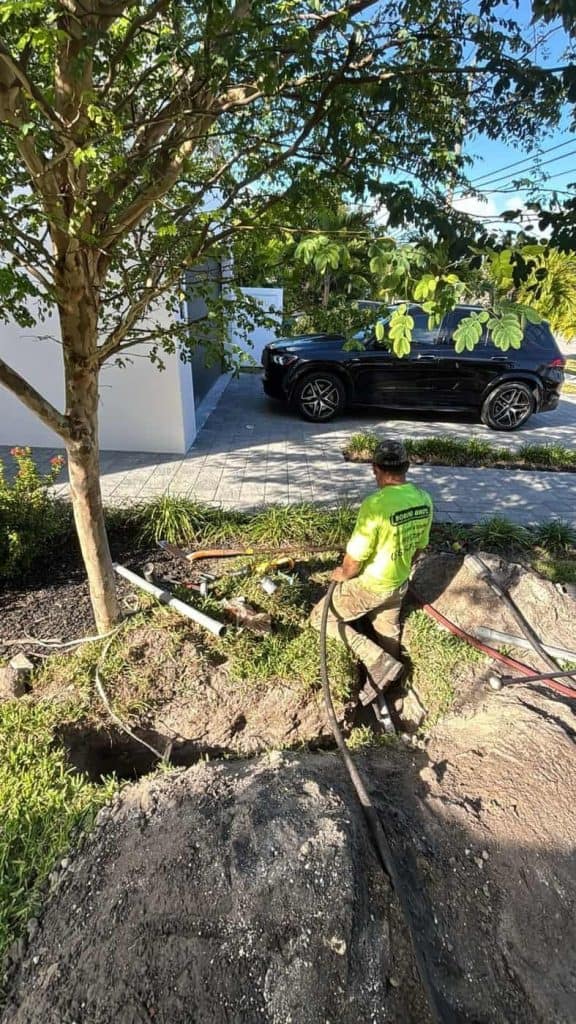
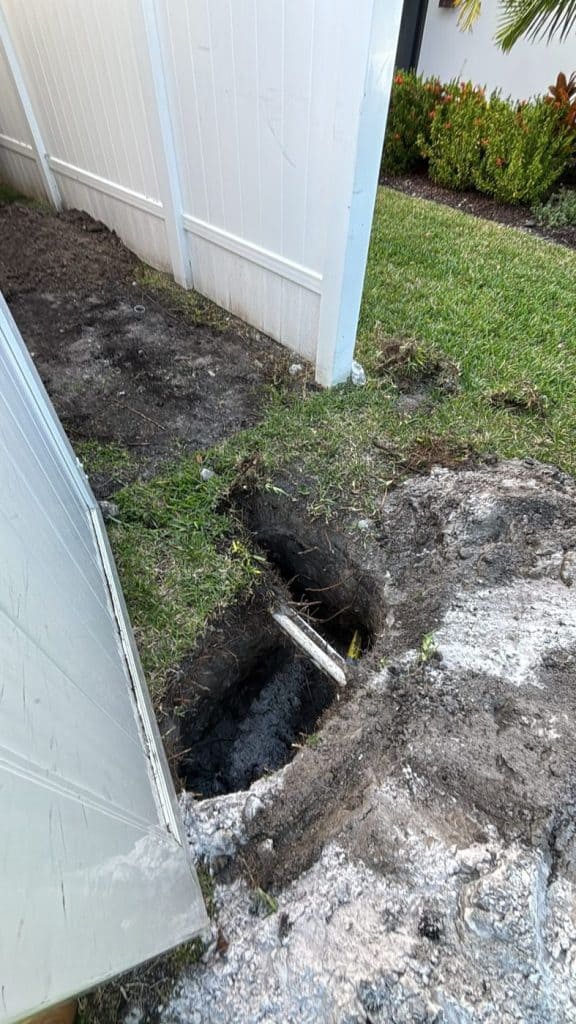
Plenty of crossings sit where no drill rig could ever park. Some are between houses on a zero-lot line. Some are behind a fence in a finished backyard, or inside a courtyard, or down a side yard barely wider than a wheelbarrow. A missile and its air hose fit where machines cannot, and the pits are small enough to dig by hand.
That small footprint matters most on finished properties. Established gardens, paver courtyards, artificial turf and the root zones under mature trees all survive a missile bore, because the only ground we open is two neat pits.
And when a run genuinely needs steering, distance or a bigger pipe than a missile can honestly handle, we say so and bring the drill rig instead. Both machines live in our yard, so the recommendation costs you nothing. For longer, steerable or engineered crossings, see our horizontal directional drilling service.
Missile bores carry the everyday utilities: small products on short runs that need to cross something finished without cutting it.
Mainline and lateral crossings under driveways and walks. This is the single most common missile shot we run, and most systems need several.
Landscape lighting, speaker wire and camera runs that need to reach the far side of finished hardscape without a saw cut.
Small-diameter gas lines and water services set at code depth with tracer wire, ready for the plumber's tie-in and the inspection.
Single electrical or communications conduits, and spare sleeves for the future, carrying power to gates, garages, pads and signs.
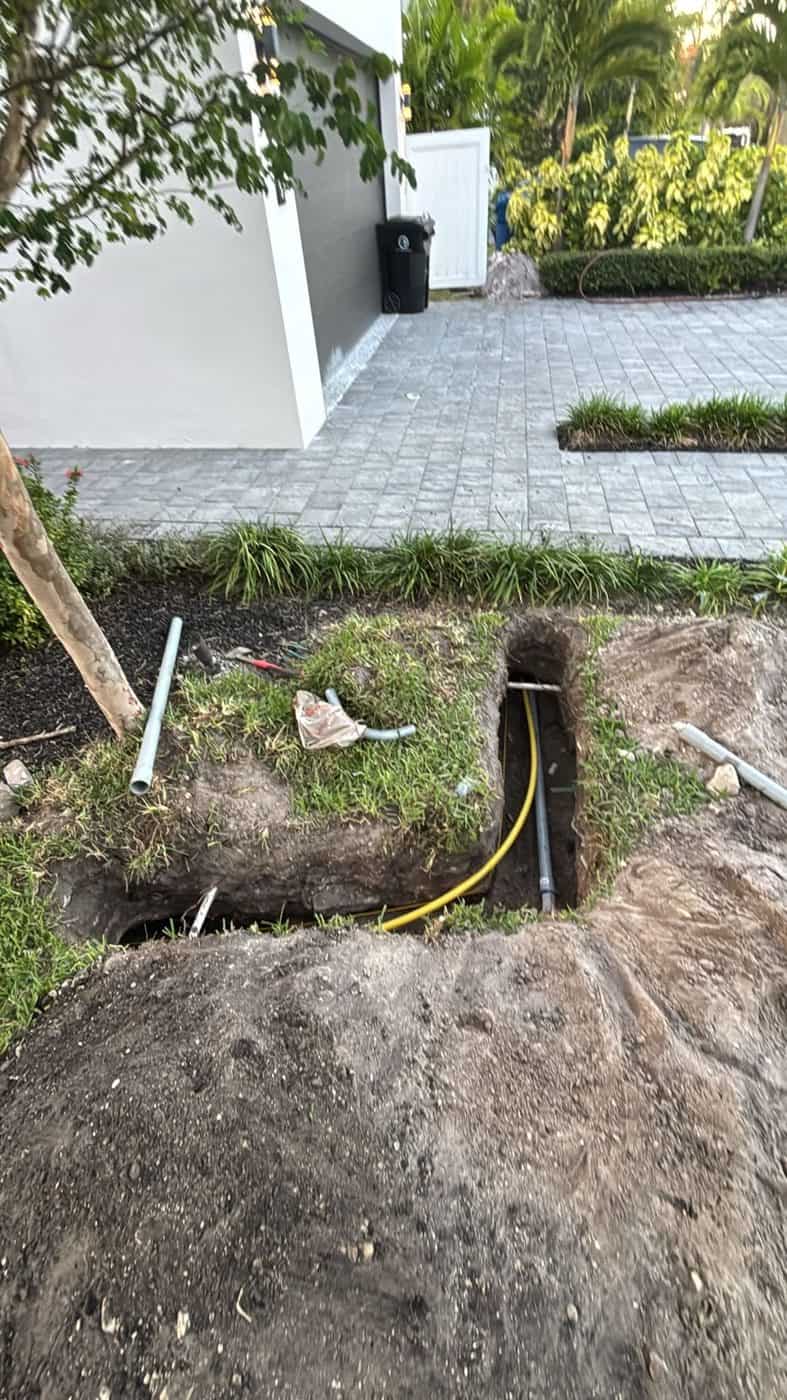
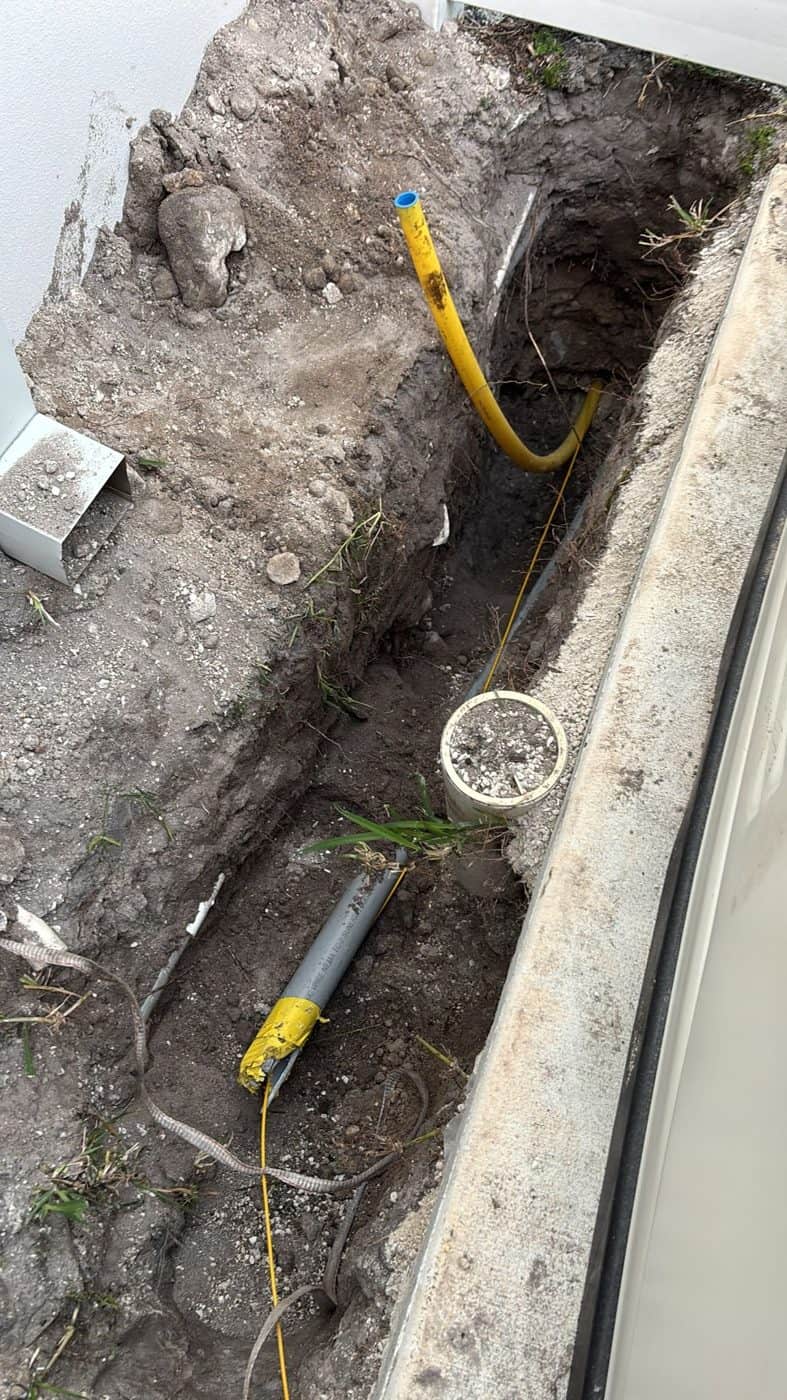
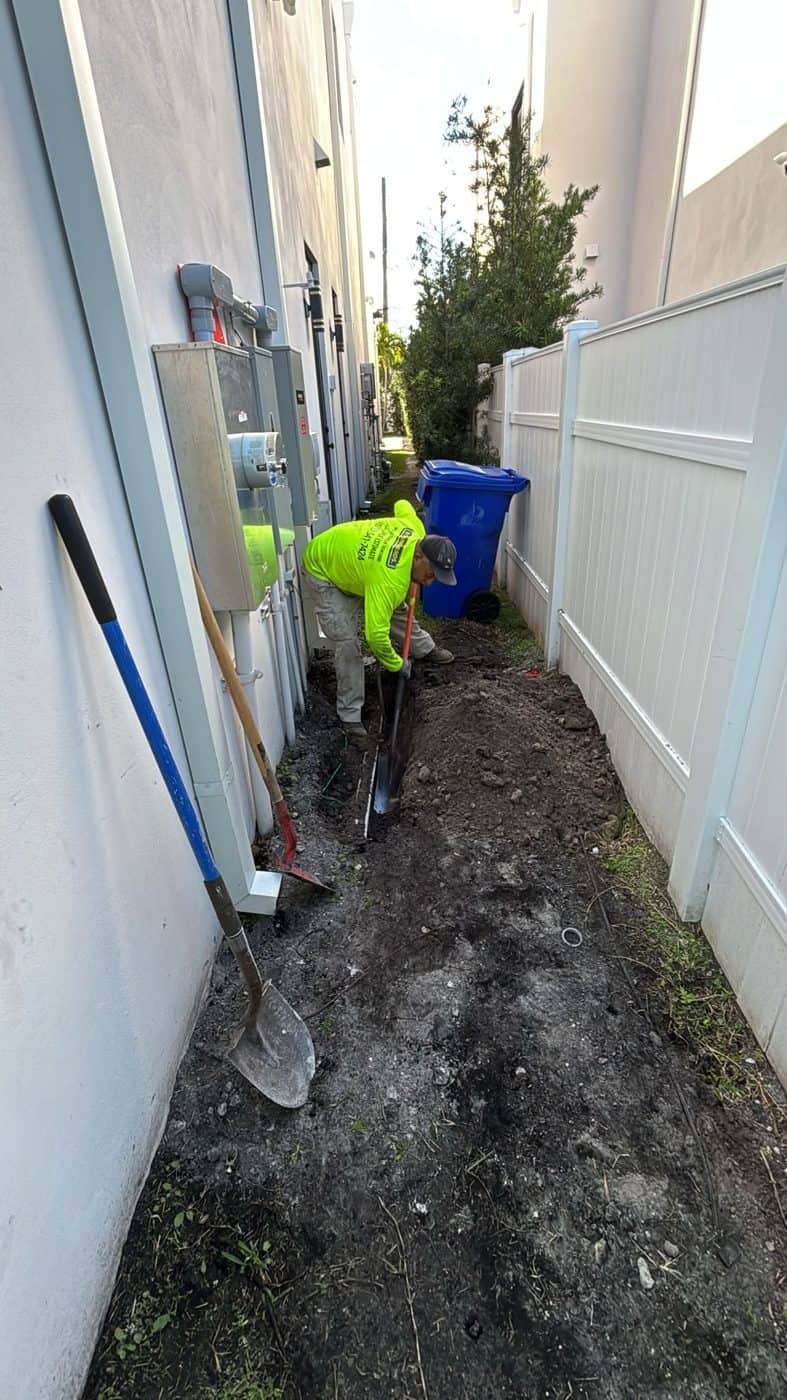
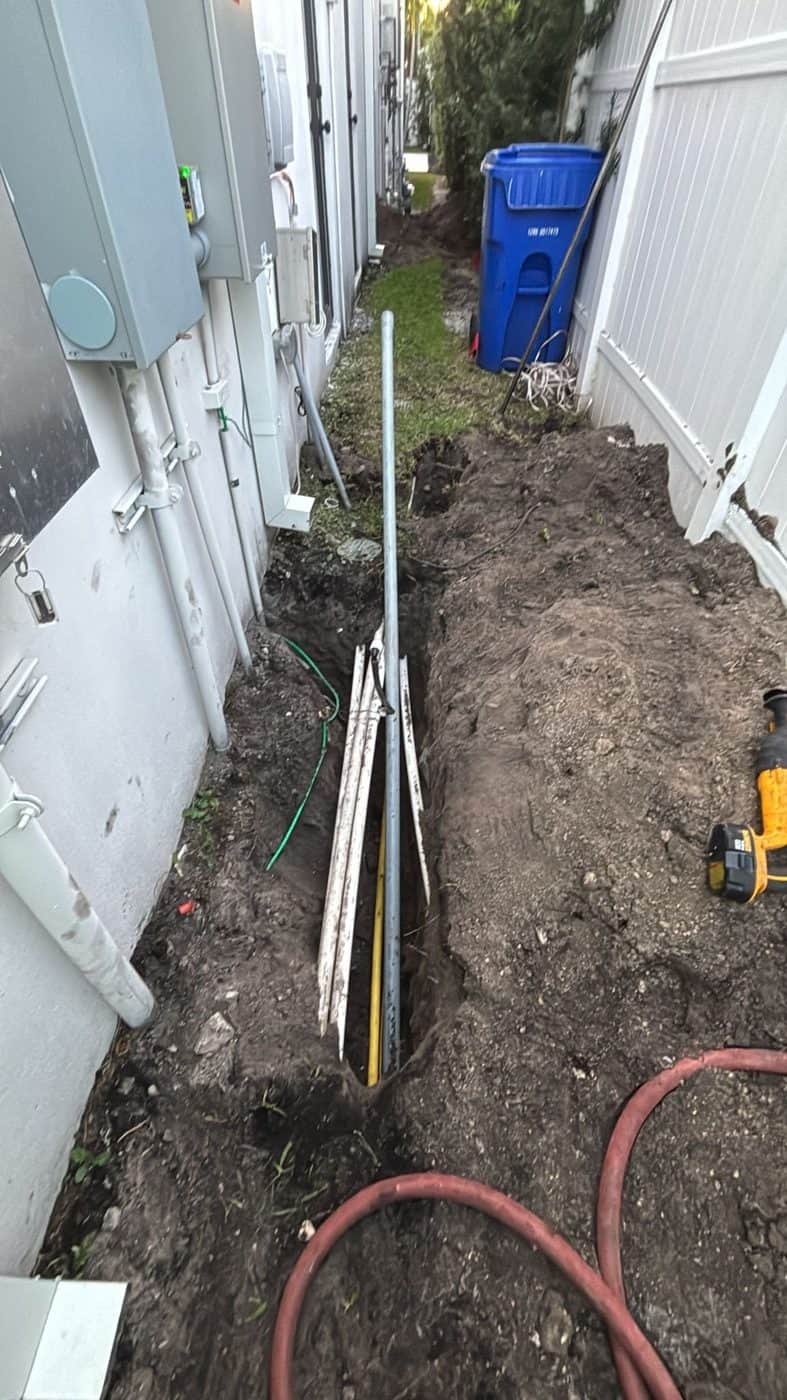
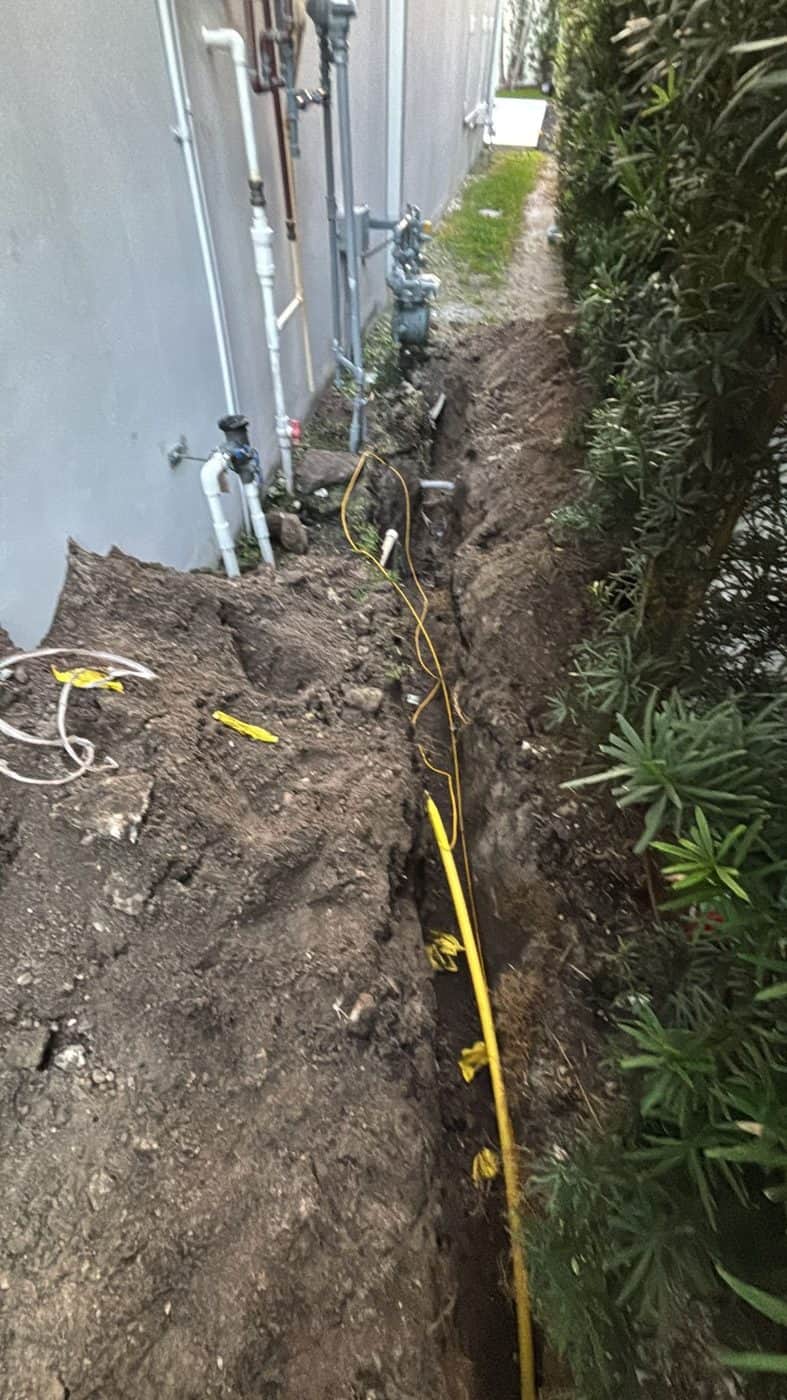
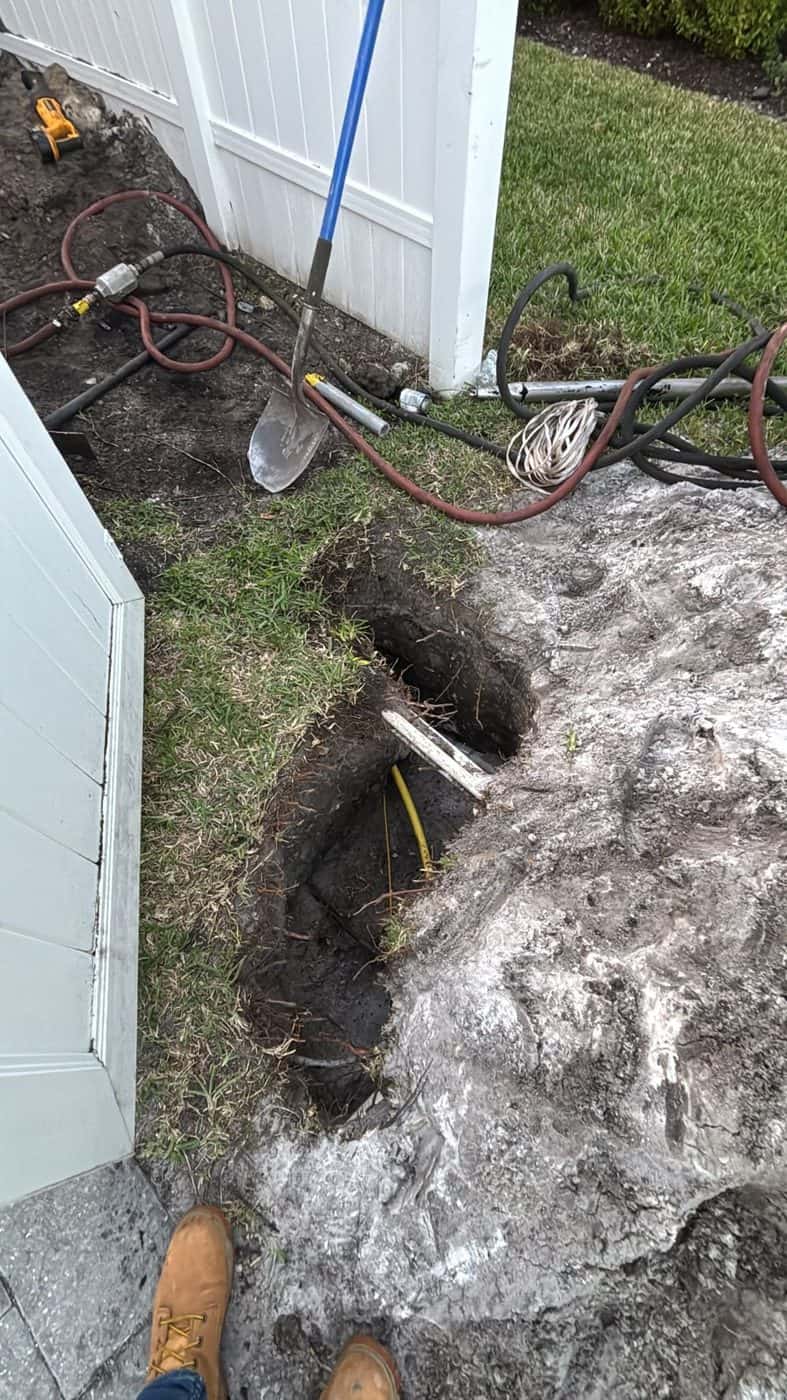
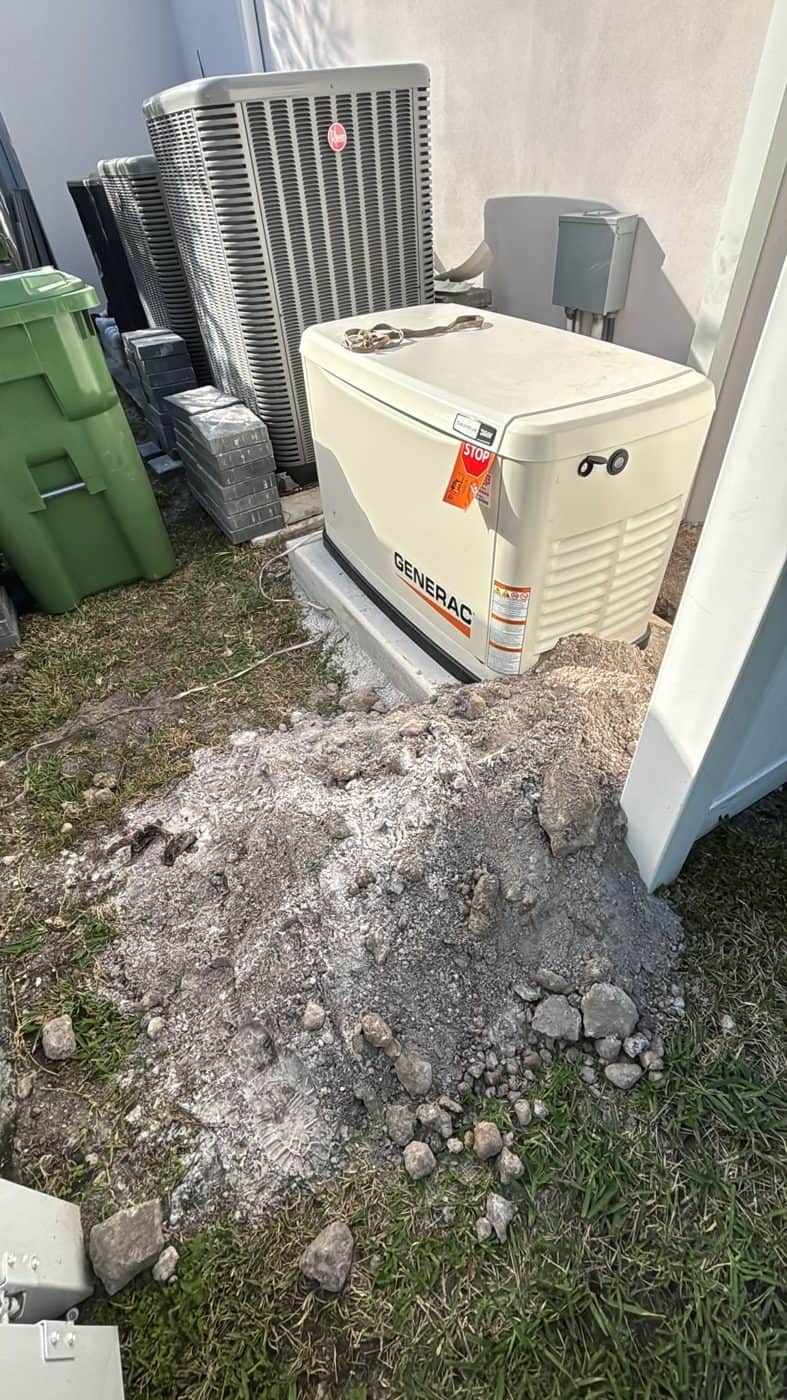
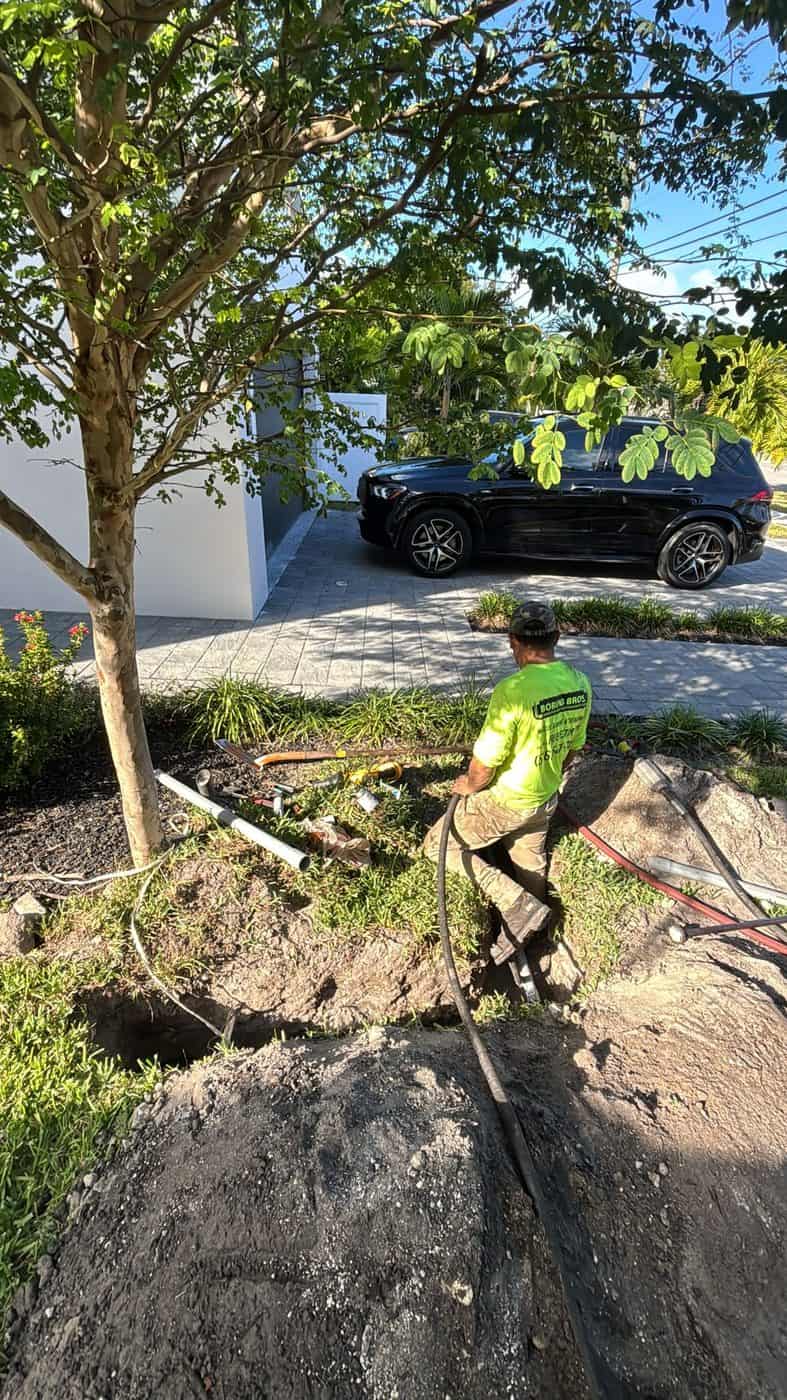
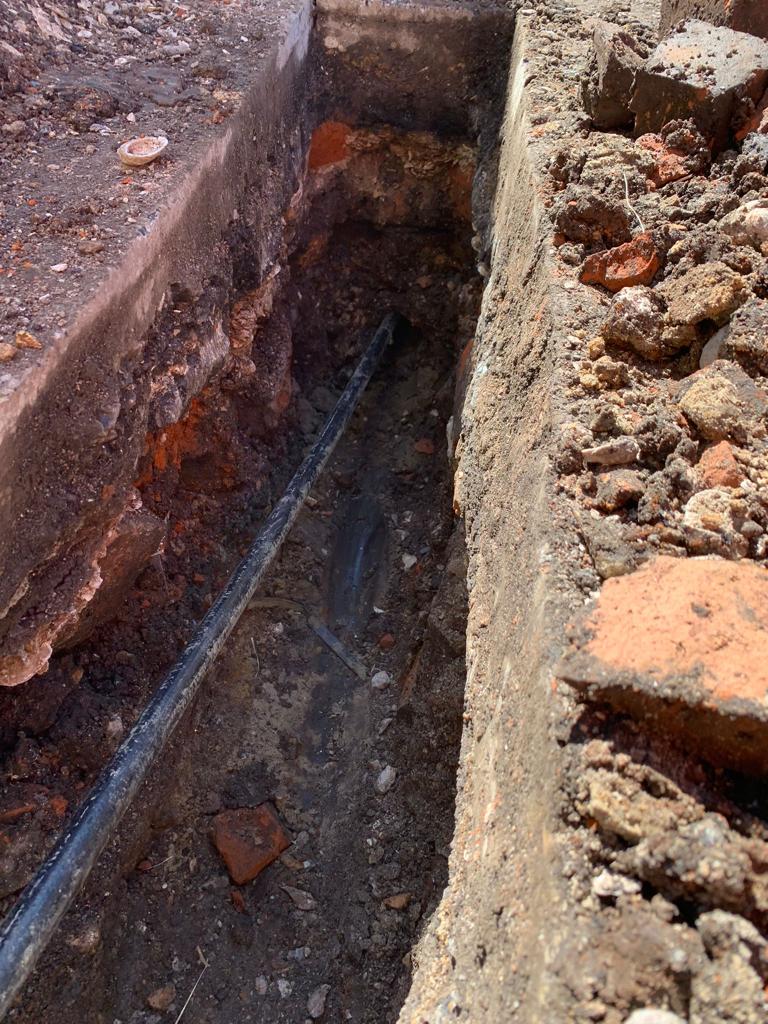
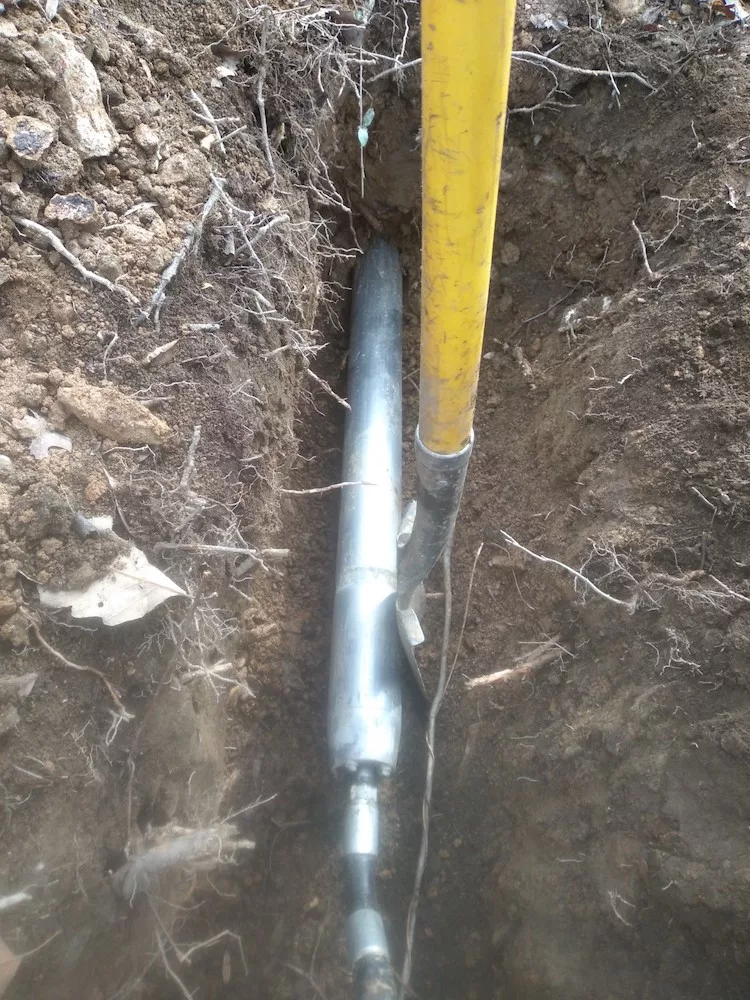
These are our own crossings, photographed on our own job sites across Florida and Georgia. Nothing here is a stock photo. For projects north of the state line, review our missile boring coverage across Georgia.
Tell us what the bore goes under, what is going in it, and how wide the crossing is. Most missile quotes come back within the hour.
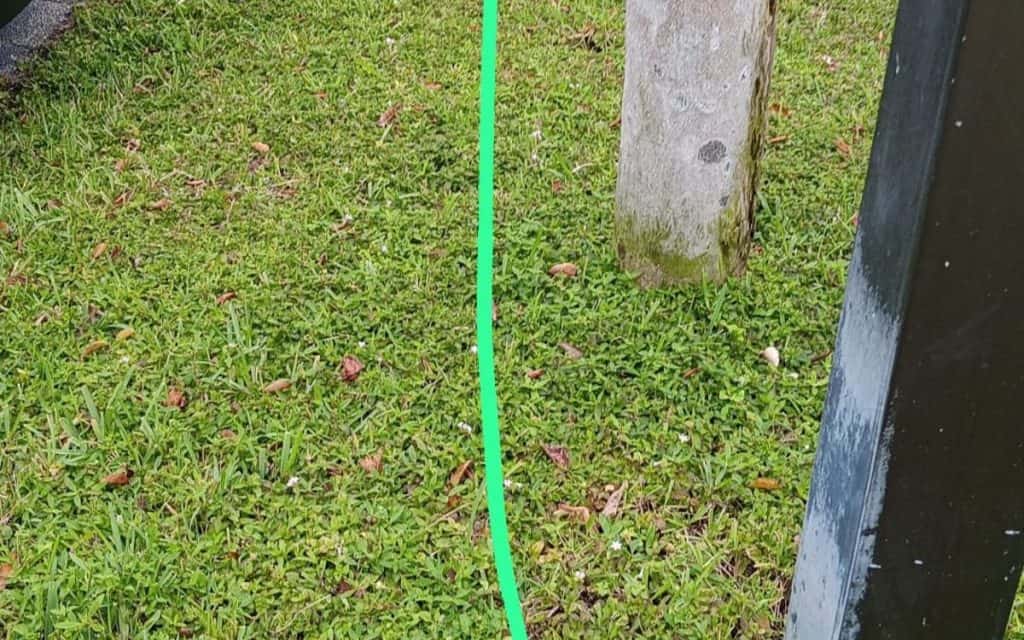
Every shot follows the same four stages, and because the tool cannot steer, the first two carry all the discipline.
An unsteered tool demands more caution than a steered one, not less. Every shot starts with 811 locates, and if anything questionable sits near the path, our own GPR locating sweeps the line before the missile flies. A shot that cannot be verified clear does not get taken.
We dig a launch pit on one side of the crossing and a catch pit on the other, each just big enough to work in. The missile sits in a levelled cradle and is aimed carefully on line and grade. Launch alignment is what accuracy is made of, so it gets measured rather than eyeballed.
Compressed air drives the tool through the ground, compacting soil around the bore as it goes. There is no spoil to haul and no slurry to clean up. Once the tool lands in the catch pit, the service line or conduit is pulled straight into the fresh bore, with tracer wire added wherever code requires it.
The pits are backfilled and compacted, and the sod or surface goes back over them. By the time the truck leaves, the crossing is invisible. On multi-shot jobs the crew simply moves down the route and repeats the process, shot after shot.
We own and run both machines, so this is not a sales pitch for either one. It is the same honest split we apply to every quote.
Missile bore it when…
The crossing is short and straight, like a driveway, a sidewalk or a narrow residential street. The product is small: an irrigation line, a low-voltage run, a water or gas service, or a single conduit. There is room for a pit on both sides, the soil is reasonably uniform, and nothing critical sits close enough to the path to demand steering. On that kind of work the missile sets up faster, shoots faster and costs meaningfully less than a drill rig. That is exactly why we keep missiles on the trucks.
Bring the drill rig when…
The run is long, or it has to hold a designed depth, or it has to steer around utilities or under a road to a permitted profile. The pipe is large, or there are several conduits, or the product is fused HDPE. The ground is congested enough that an unsteered tool would be a gamble no locate can fully retire. Some agencies also require a tracked bore with an as-built profile, and a missile cannot produce one. That work belongs to our directional drilling crews. It is the same company, just a bigger machine.
A small tool with a small price, and finished surfaces left alone. These are the people who use it most.
Every system that meets a driveway needs a crossing. We shoot them by the route-full so installs keep moving without a saw cut.
Water services and gas lines bored under drives and walks, set to code depth, and handed back ready for tie-in and inspection.
Power and communications across entrances and finished frontage, with small pits, straight shots and no demolition on the customer's site.
Grill lines, pool pads, gate power and garden lighting. The backyard projects that should never require breaking a driveway to finish.
Missile quotes are the fastest we do. Four answers usually price the job, and six make the number firm.
Photos of the crossing and both sides usually replace a site visit entirely. Text them over and the number comes back the same day.
Boring Bros is family-run by brothers Aaron and Levi Cohen, which is why most calls are handled by an owner rather than an answering service. Every crew on your job is a licensed, insured contractor (Boring Bros LLC, Florida Doc. L21000515203; Georgia Control No. 25100779; certificate of insurance on request). We have run bore-and-trench crews across Florida and Georgia since 2021, backed by 20+ years of trade experience on the crew.
Years In The Trade
Family-Owned
70+ Google Reviews
Insured
A missile, also called a pneumatic piercing tool or impact mole, is a torpedo-shaped air hammer that drives itself through soil. It compacts the ground around its path instead of removing it. The crew launches it from a small pit, it travels under the obstacle in a straight line, and it lands in a catch pit on the far side. The pipe or conduit is then pulled into the bore it leaves behind.
The difference is steering. A directional drill is tracked from the surface and steered along a planned path. A missile flies straight from however it was aimed, with no tracking and no course correction. That makes it faster and much cheaper on short, simple crossings, and the wrong tool for long, deep or congested runs. We run both machines, so every job gets the honest recommendation.
Short crossings are its home ground: driveways, sidewalks, patios and narrow lanes, typically a few dozen feet. Accuracy depends on launch alignment and uniform soil, and both fade with distance. Once a run gets past the short-crossing range, we quote the directional drill instead of pretending the missile is still the right tool.
Small products: irrigation pipe, polyethylene gas and water services, and single electrical or communications conduits. Larger pipe, bundles of conduit and fused HDPE belong to the drill rig, and we will tell you plainly when a job crosses that line.
Only when the path has genuinely been cleared first, which is why our discipline goes up on missile work rather than down. Every shot gets 811 locates, and anything questionable near the path gets swept with our own GPR before the tool flies. If a shot cannot be verified clear, we re-route it, move it to the steerable drill, or decline it.
No. The tool pushes soil aside and compacts it rather than removing it, and at the proper depth for its size the surface above is unaffected. The only ground we disturb is the two small pits, and both are restored before we leave.
The bore itself often takes minutes. A typical single-crossing job, including pits, the shot, the product pull and restoration, fits comfortably inside a day and often inside a morning. Routes with several crossings run shot after shot on the same setup, which is why multi-bore jobs price so well.
Sandy Florida ground is close to ideal, because it is uniform and compacts cleanly. Georgia clay shoots well too, just more slowly. What the tool genuinely dislikes is rubble, dense roots and buried debris, which can deflect an unsteered path. Where we suspect them, we plan around them rather than shooting blind.
Yes. Small-diameter polyethylene gas lines and water services are routine missile work. They go in at code depth with tracer wire, coordinated with the plumber or gas contractor who makes the tie-ins, and the inspection requirements are built into the job from the start.
Most of our missile calendar is exactly that. Irrigation, landscape, fence, sign, pool, low-voltage, plumbing and gas trades all send us their crossings and keep their own crews on the work they bill for. Quotes come back the same day, and a route of crossings is priced as one mobilisation.
Almost always less, and often dramatically less. Cutting means demolition, disposal, new base, a new pour and a patch that never quite matches. A missile bore means two small pits and about an hour of work. That arithmetic is the reason the method exists.
We work across Florida and Georgia, with our home base in South Florida covering Broward, Miami-Dade and Palm Beach counties. Repeat trade work and multi-crossing routes make up the core of the missile calendar in both states.
There are plenty of benefits that come with opting for Missile Boring. Here are the top 3 benefits:
Tell us the footage, the product and the window — we will get you a real number, usually same day.