Serving All Of Florida and Georgia
Clean, straight open-cut trenches for water, sewer, electric and fiber, serving Florida and Georgia. We excavate to spec, install the product, and restore the surface to grade.
Trenchless methods get the headlines, but most utility footage still goes into the ground through an open trench. The difference between a good trench and a cheap one shows up for years afterward, in settlement, failed compaction and pavement that never sits flat again.
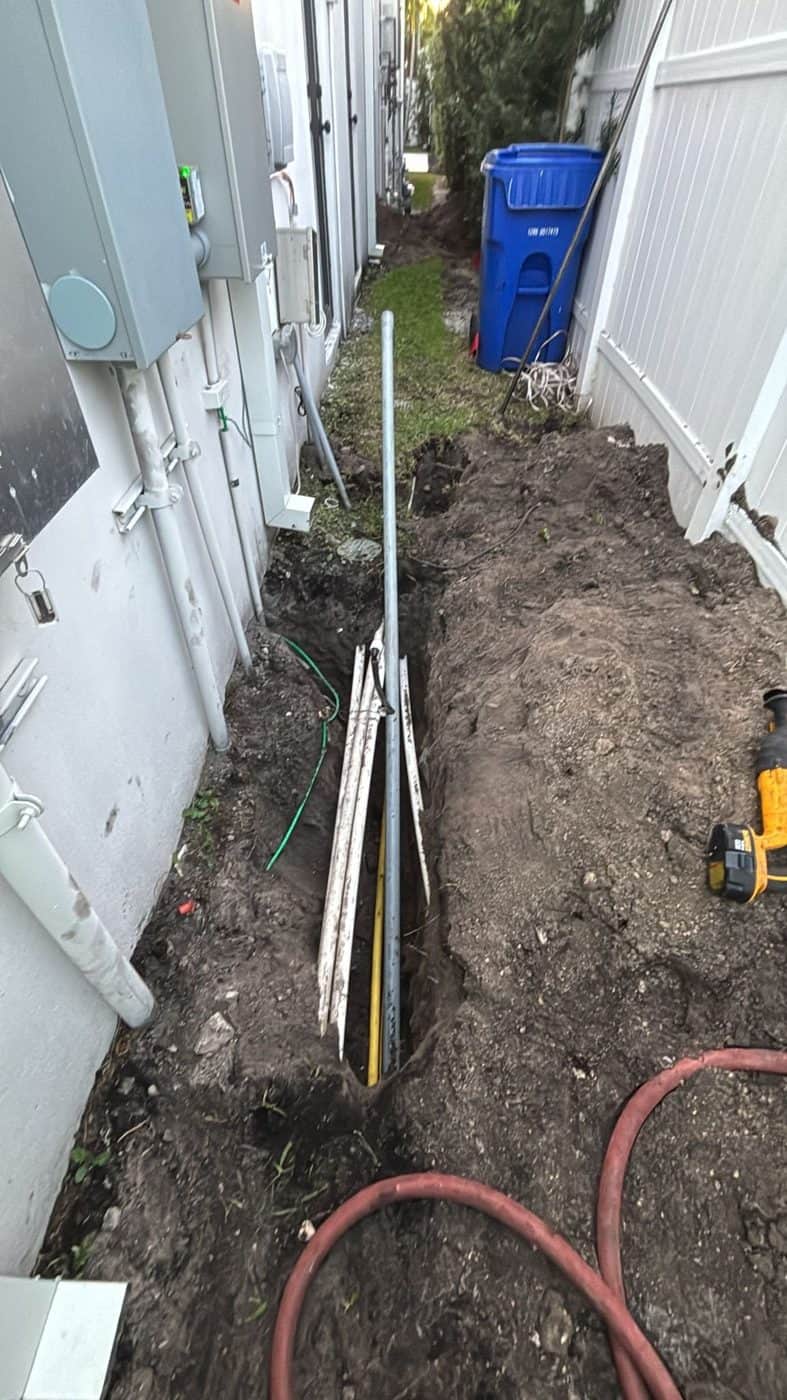
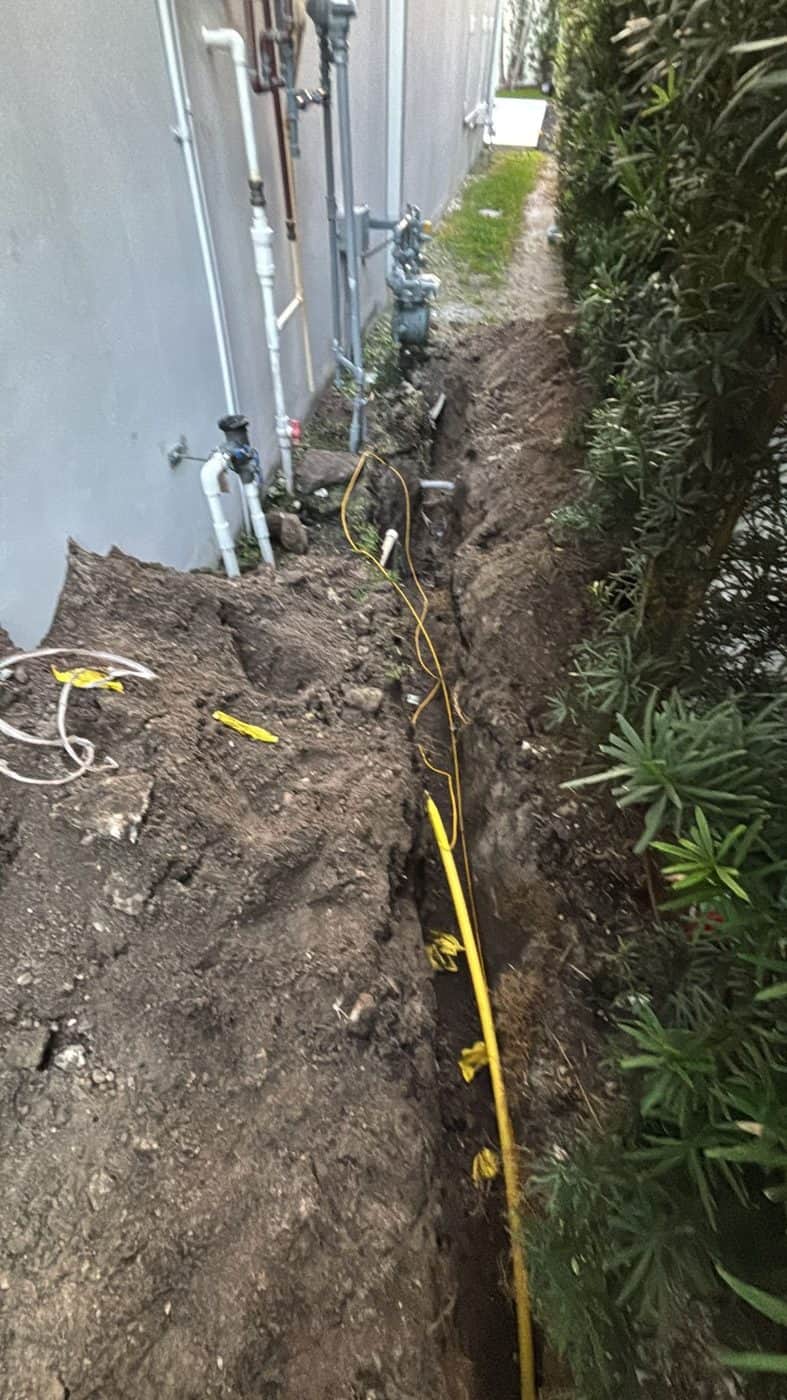
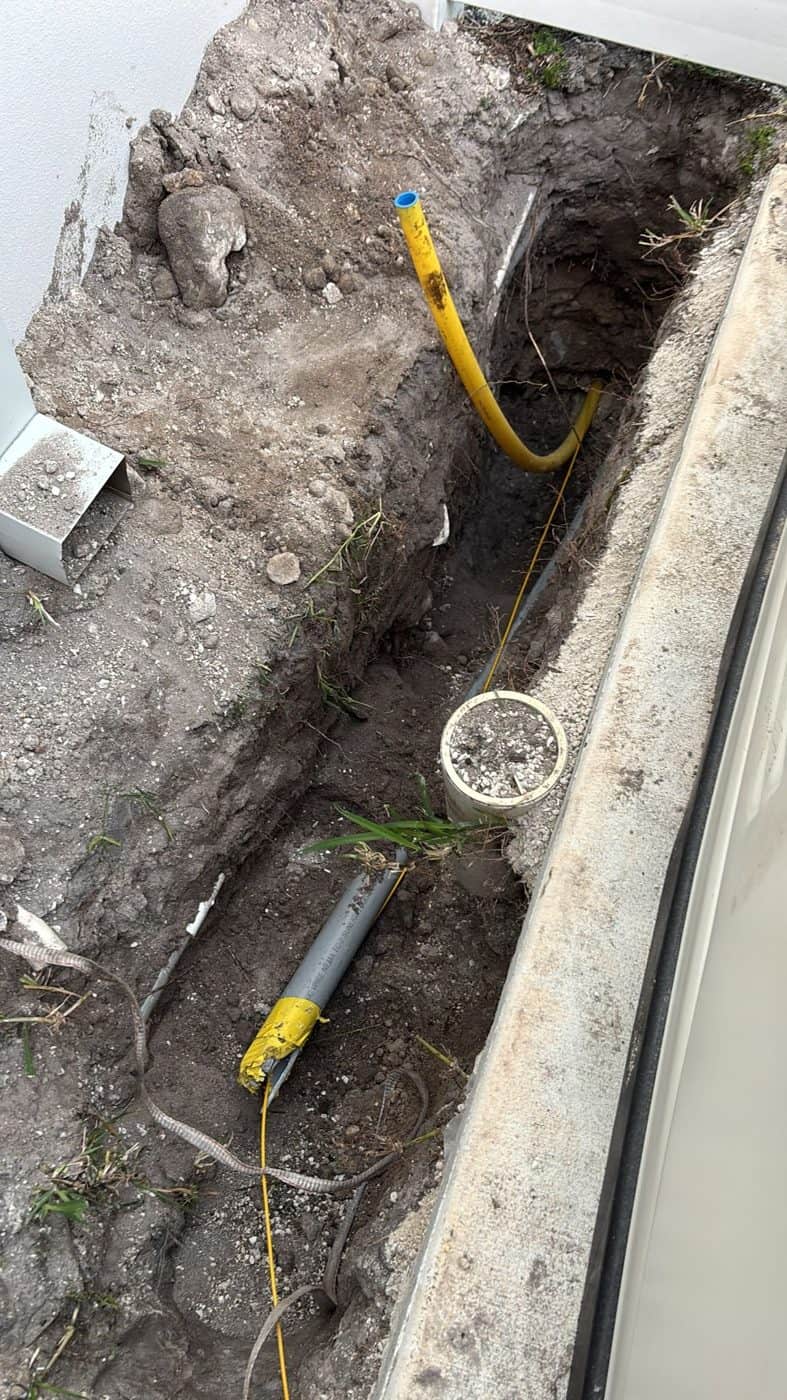
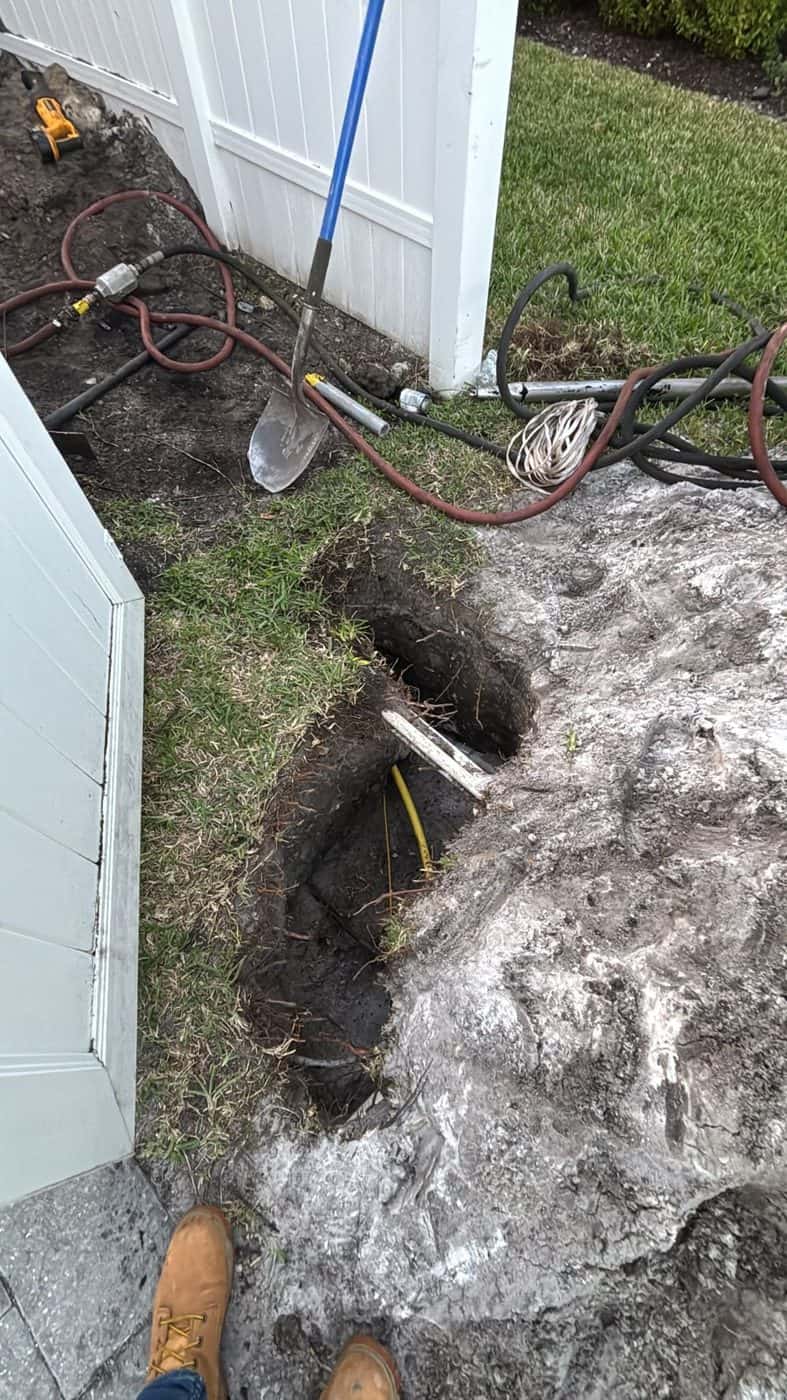
Our trenching crews cut to line and grade, shore whatever the depth requires, bed the product properly, and put the surface back the way the spec says. Electrical contractors, general contractors, developers and property owners across Florida and Georgia hire us because the trench is done once, and done right. Our commercial trenching services cover electrical service runs, water and sewer laterals, and drainage and irrigation lines, each bedded, backfilled in compacted lifts and restored to grade.
Boring Bros were great to work with. They went above and beyond to keep up with on the job scope of work changes as well as helping us out with all the admin and paper work needed to close out the project. Will definitely use again for more work in their area in the future.

Great service!
Have used Boring Brothers for several projects, and they always deliver. They are very professional and caring about your needs. They go that extra mile and make sure everything is satisfactory!
Professional, reliable, clean and great communication.As far as I am concerned they checked all boxes for us. We will definatly be using them again!
Excellent experience, great job Boring under the street.
Great experience and fairly priced. They got the work done in no time and saved me from trenching through 100’ of parking lot in a busy plaza. Would use them again if the need arises
Work with an underground construction contractor whose crews do this every day.
Modern rigs, locating gear and tooling maintained to keep bores accurate and schedules intact.
Our crews bring more than two decades of hands-on trade experience — running as Boring Bros LLC across Florida and Georgia since 2021.
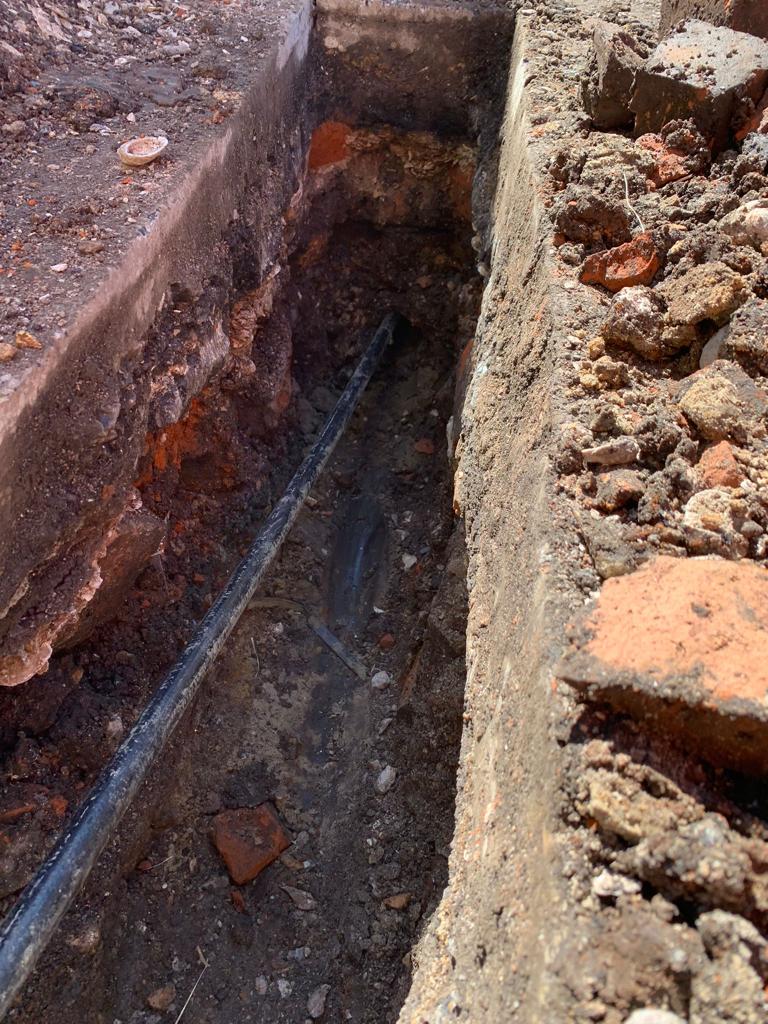
We open the trench, install or bed the product, and close the job with compacted lifts and a restored surface. There are no handoffs between an excavation sub, a pipe crew and a restoration crew, because one contractor owns the trench from the first saw cut to the last pass of the compactor. That is why the surface stays flat after we leave. See our trenching service areas across Florida.
Three kinds of open-cut work fill most of our trenching calendar for contractors and property owners.
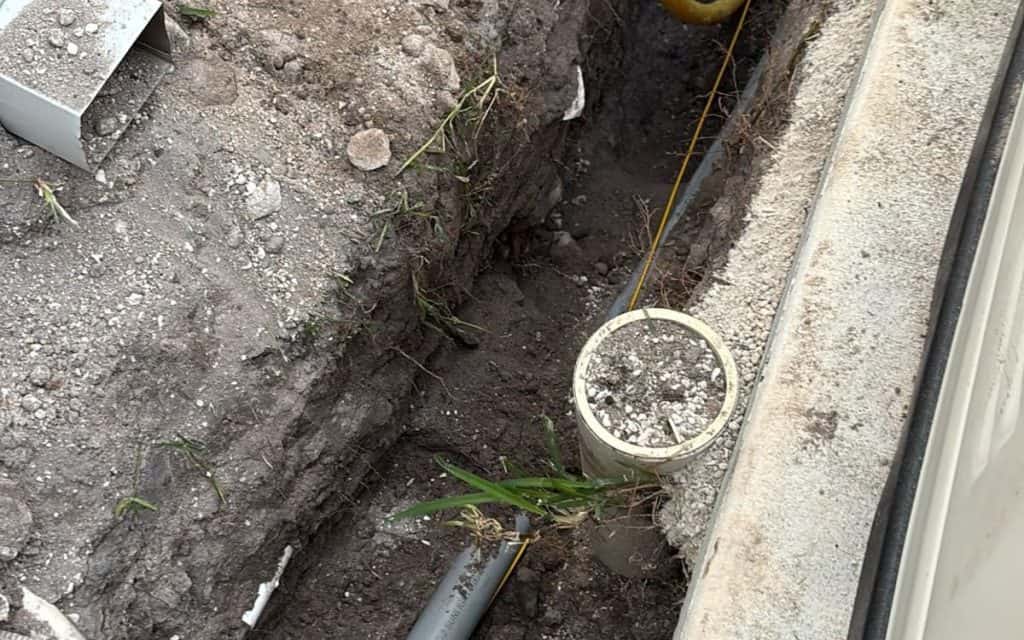
Most of our trench footage is cut for other contractors, and electrical crews top the list. They bring us service laterals, three-phase feeds, parking-lot lighting circuits and duct banks between buildings. We open the trench to the depth and width the design calls for, bed it, and hand it over ready for conduit. If the crew prefers, we place the conduit ourselves and leave a pull-ready path.
Depth of cover follows the code for whatever is going in the ground. When an inspector needs to see the trench open, we schedule that inspection into the dig instead of discovering the requirement afterwards. Tracer wire and warning tape go in with the backfill, so the run can be located later and nobody finds it the hard way.
Some electrical crews trench their own short runs, and that is fine. We take the jobs that outgrow a walk-behind machine: long footage, deep cuts, congested ground near existing services, and schedules that need the trench open and closed inside a working day.
Wet utilities live or die on grade. A sewer service cut half a bubble off slope becomes a callback with a camera in it, so our water and sewer trenches go in on laser grade with proper bedding under the pipe. Services, laterals and site mains are placed, tied in and tested as part of the same scope, not left for someone else to finish.
On new construction we trench the site utilities ahead of the pours and the paving. Water and fire services run from the tap to the building, sewer laterals reach the main, and storm connections go in before the surface does. Each trench is coordinated against the site plan, so it is finished, inspected and closed before the next trade needs that corridor.
When a route crosses something that cannot be cut, such as a road or a finished driveway, we bore that segment and trench the open ground on either side. Because both methods run out of our own yard, each foot of the route gets whichever method it actually needs. For those no-cut segments, our horizontal directional drilling crews keep the surface open and intact.
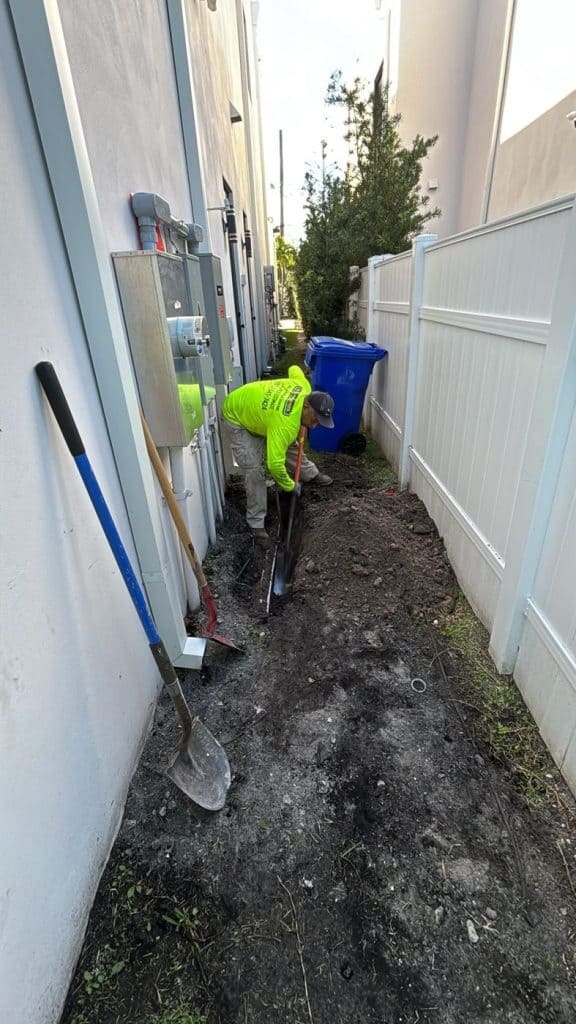
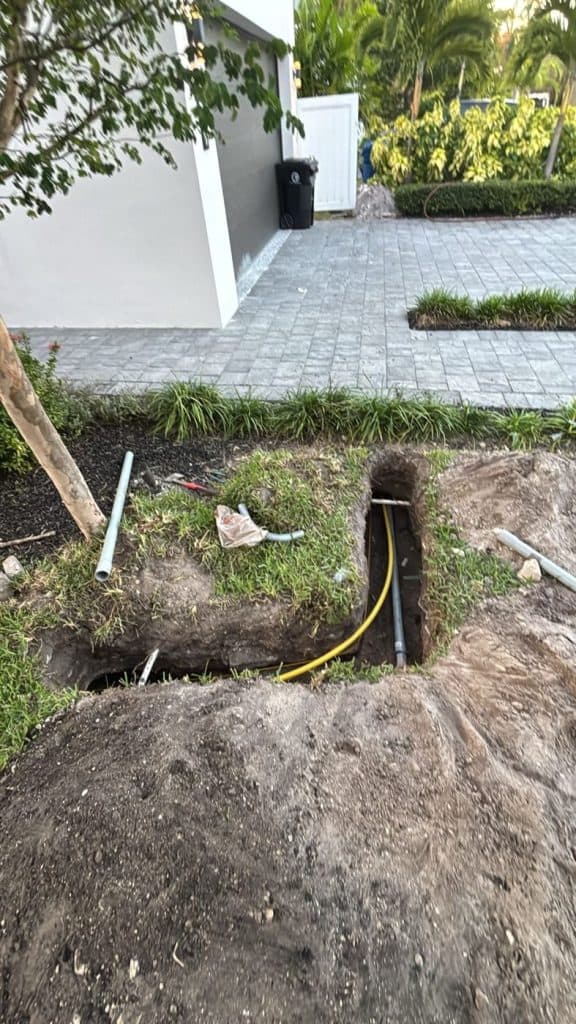
In the wet season, ground in Florida and Georgia has one job: move water somewhere it does no damage. We trench French drains, stormwater laterals, gutter extensions and area-drain runs that genuinely fall toward their outfall. Where the design calls for it, the trench is graded, gravelled and fabric-wrapped properly, not just filled with corrugated pipe that silts up in a year.
The same crews handle irrigation and landscape work. That includes mainline and zone trenching for sprinkler systems, sleeves under paths and driveways, and low-voltage lighting runs cut shallow and tight so an established lawn closes back over them within weeks.
Restoration is quoted with the trench rather than discovered after it. Sod is lifted and relaid, base is compacted in lifts under anything paved, and concrete or asphalt is patched to match. That is the difference between a trench you can find next spring and one you cannot.
Four families of product make up nearly everything we place in an open cut. Each one is bedded, backfilled and documented to its own standard.
Service feeds, three-phase conduit, duct banks and parking-lot lighting circuits, trenched to code depth with tracer wire and warning tape in the backfill.
Services, laterals and site mains set on laser grade with proper bedding, then placed, tied in, tested and inspected as one scope.
Communications duct, camera and access-control runs, and sleeves for future pulls. The trenched side of the pathway work covered on our technology infrastructure page.
French drains, storm laterals, irrigation mainline and landscape sleeves, graded to fall, wrapped where the design requires, and restored so the yard closes over clean.
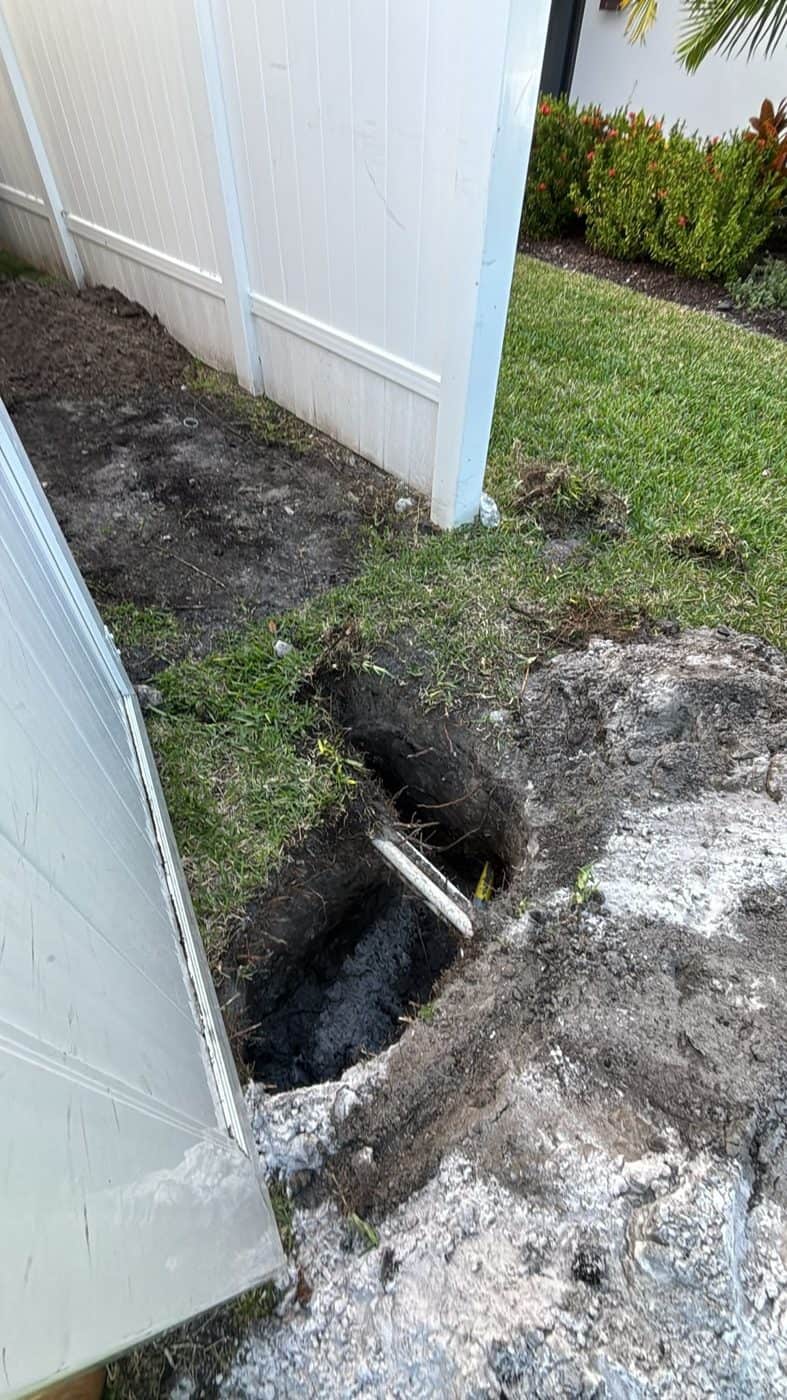
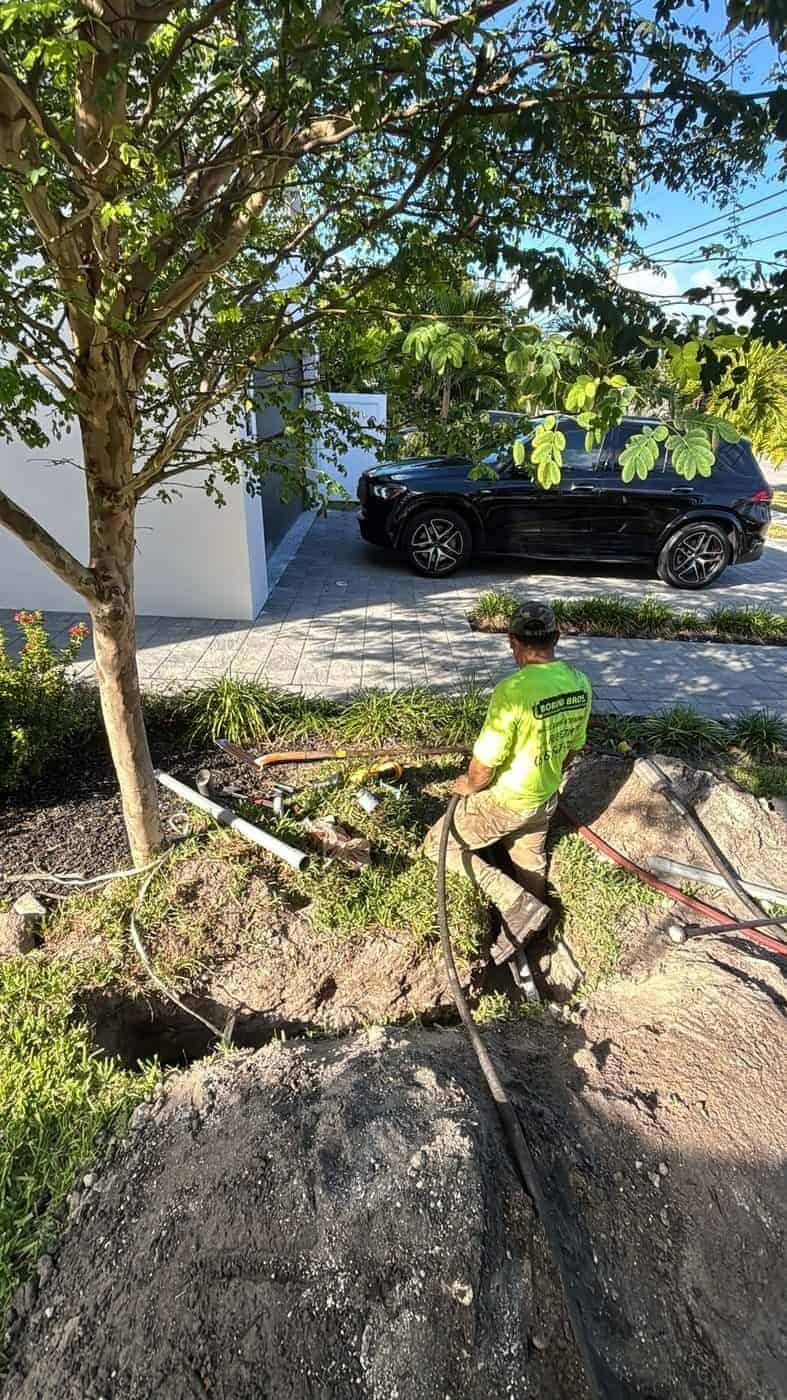
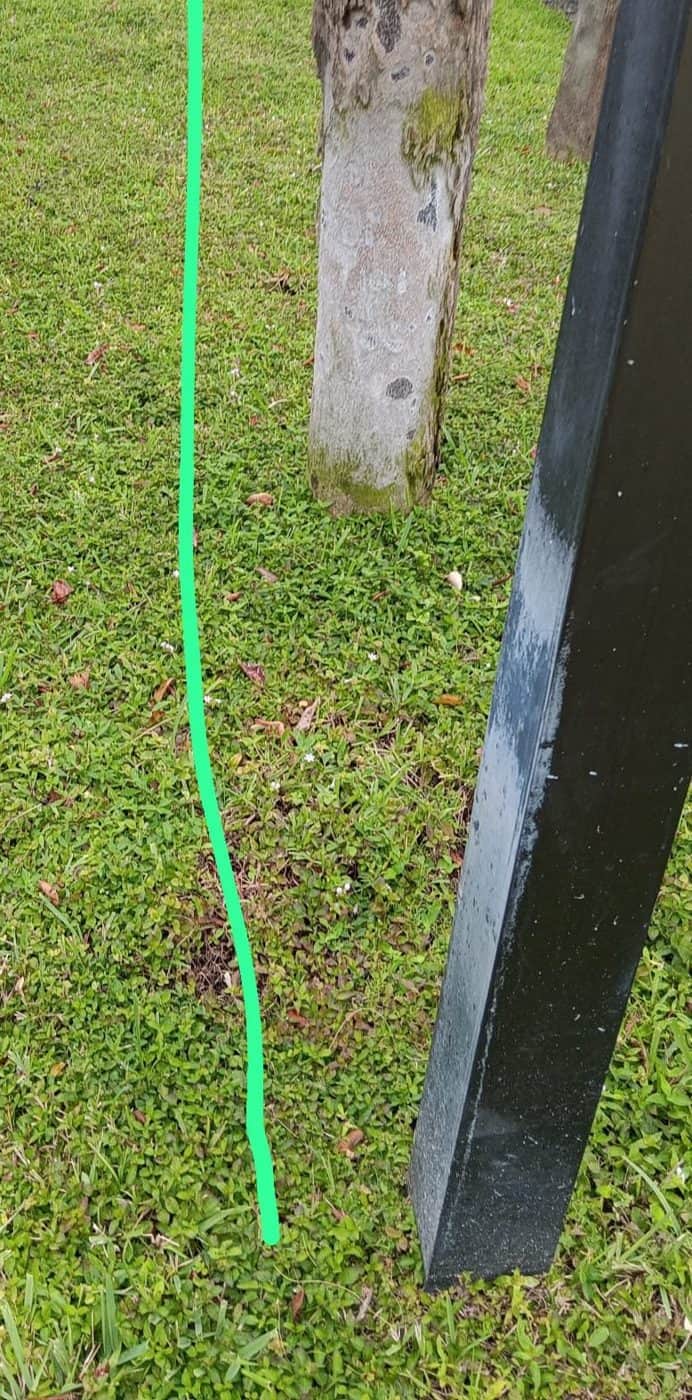
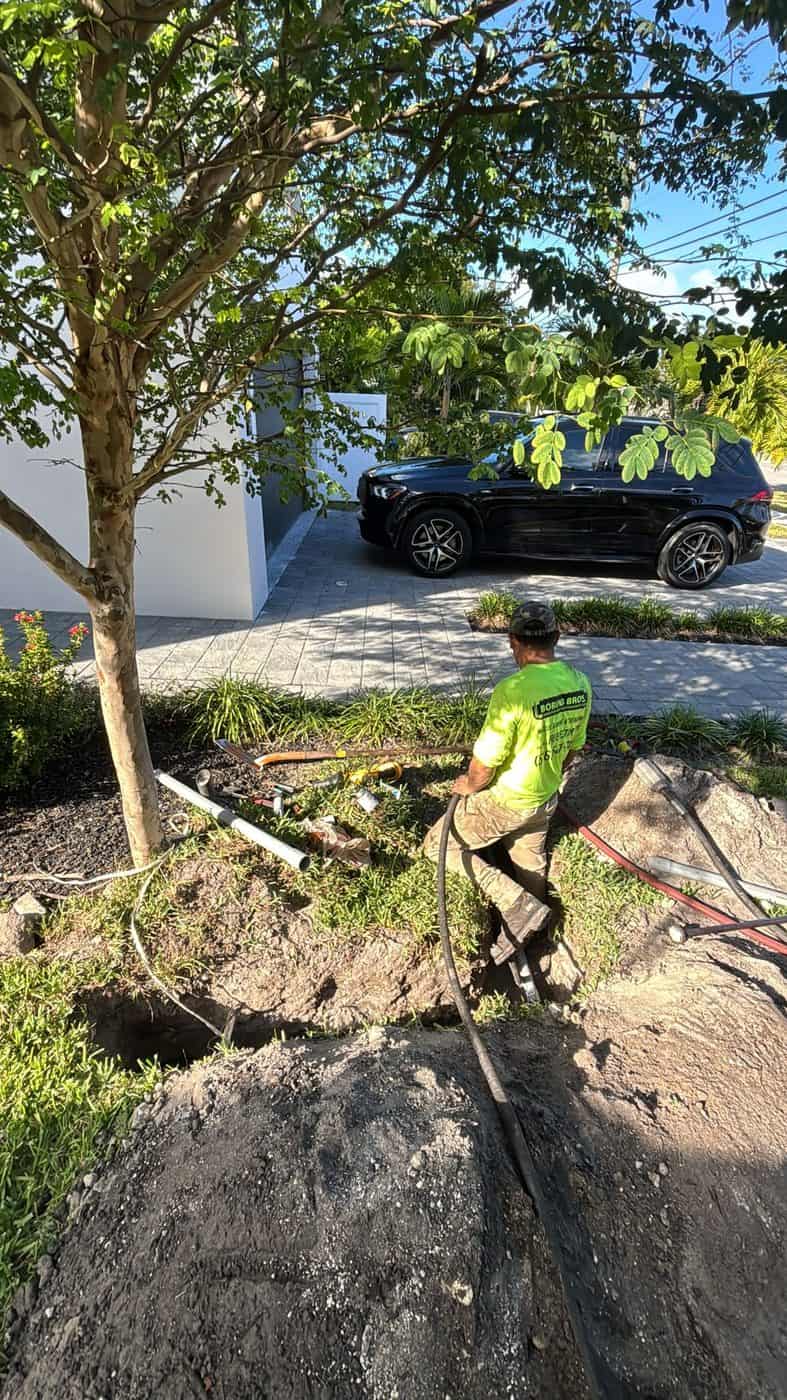
These are our own cuts, our own bedding and our own crews, photographed on job sites across Florida and Georgia. Nothing here is a stock photo. For projects north of the state line, review our trenching coverage across Georgia.
Tell us the footage, the product and the surface above the run. You will get a real number from someone who has run the machine, usually the same day.
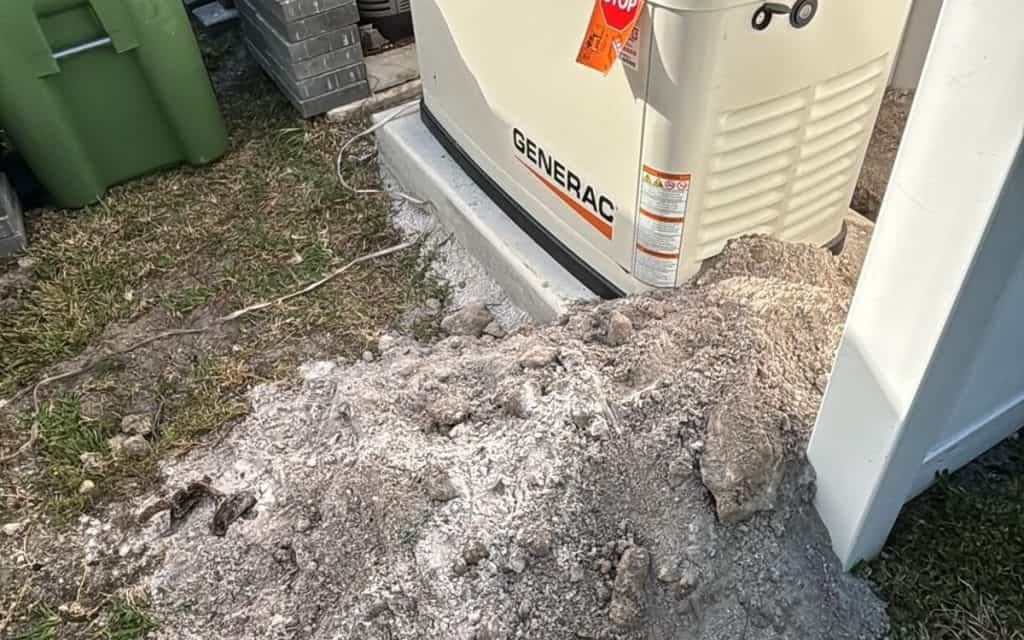
Every trench follows the same four stages. Where the route crosses something that cannot be cut, we bore that segment instead.
The job starts with 811 tickets, and with our own GPR locating wherever the ground is congested or the records look thin. The trench line is painted out against the plan, saw cuts are marked on anything paved, and the crew knows every crossing before the bucket touches ground.
The trench is cut to its designed depth and width, with spoil managed so the site keeps working around it. Past five feet of depth, OSHA protection is not optional, so sloping, benching or shoring goes in to match the soil. Any existing utility that crosses the line is exposed by hand, supported and protected.
Bedding goes under the product, and the product goes in on line and grade. Whatever an inspector needs to see, from cover depth to bedding to tie-ins, is scheduled while the trench is still open. Tracer wire and warning tape are placed on the way up rather than remembered afterwards.
Backfill goes in as compacted lifts, never as one push of the pile. Under pavement, the base is rebuilt to spec before the patch goes down. In turf, the sod is relaid over settled, finished grade. A month later the trench line should be hard to find. That is the standard we hold.
Trenching rigs and drill rigs run out of the same yard here, so nobody is selling you their only tool. The decision usually comes down to one question: what does the surface above the run cost to put back?
Trench it when…
The run is long, open and crosses nothing expensive, like a field, an unpaved corridor or a site still in earthwork. Trenching also wins when the design needs continuous access along the route, such as a run that picks up several laterals along the way, and when the product needs precise laser grade over distance, as sewer does. If a trench is already open for another trade, your product can often ride along in it, and that is the cheapest installation there is. And in soils where a controlled bore struggles, honest open-cut simply beats a struggling drill.
Bore it when…
The path crosses pavement, a finished driveway, mature landscaping or anything else with a real restoration price. Boring also wins when the site has to stay open, because drive lanes, parking and entrances keep working while the bore runs beneath them. It wins when the crossing is short but the surface above it is the most expensive thing on the job, and when the corridor is congested enough underground that opening it would expose more risk than steering past it. We price both methods against your actual footage and recommend the cheaper honest answer.
The clients who bring us back are the ones who have paid for a bad trench before, and remember what the settlement and the callbacks cost.
Long footage, deep cuts and duct banks trenched, bedded and closed while your crew stays on terminations. This is the trade we trench for most.
Site utilities cut ahead of pours and paving, inspected while open, and closed on schedule so the corridor is free when the next trade arrives.
Drainage repairs, irrigation mains and lighting runs across occupied communities, trenched tight, restored clean, and hard to find a month later.
Water, sewer and storm connections built to the spec sheet, compacted in lifts, and documented for the inspector and the as-built file.
Six answers turn a rough range into a firm number. Send whatever you have, and we will tell you which blanks actually move the price.
If the site is easier to show than describe, say so. A walkthrough costs nothing, and it is usually the difference between a quote that holds and a change order.
Aaron and Levi Cohen own and run Boring Bros, so quotes and scheduling typically come directly from an owner. Every crew on your job is a licensed, insured contractor (Boring Bros LLC, Florida Doc. L21000515203; Georgia Control No. 25100779; certificate of insurance on request). We have run bore-and-trench crews across Florida and Georgia since 2021, backed by 20+ years of trade experience on the crew.
Years In The Trade
Family-Owned
70+ Google Reviews
Insured
As deep as the product’s code requires. Electrical, gas, water and sewer each have their own cover standard, and an engineered design can call for more. We cut to the number on the plan and record what was actually built, because the depth that matters later is the true one.
Past five feet, OSHA requires trench protection and we treat that as non-negotiable. We slope or bench where the ground allows it and shore where it does not, keep ladders in the trench, and keep spoil set back from the edge. The soil decides the method, because sandy Florida ground behaves nothing like Georgia clay.
Whichever you need. Plenty of contractors want a bedded, ready trench and nothing else, and that is fine. Just as often we place the conduit or pipe, handle the bedding and tracer wire, coordinate the inspection, and close the trench as one scope. Tell us where your crew stops and ours starts.
Restoration is part of the quote rather than a surprise after it. Sod is lifted and relaid over finished grade. Pavement is saw-cut clean and patched over a re-compacted base. Backfill goes in as compacted lifts so the line does not settle into a ditch six months later. And when a surface is too expensive to cut at all, we bore under that segment instead.
Yes, carefully. 811 locates come first, our own GPR locating covers what the public locates miss, and anything that crosses the trench line is exposed by hand and supported rather than trusted to a paint mark. That discipline is why we are not the crew that hits things.
Most of our footage is cut for electrical contractors, site contractors and GCs who keep their own crews on the product. We open, bed and close on your schedule, so the trench is ready when your crew shows up. That reliability is the reason subs keep us on their list.
Everything from a tight six-inch irrigation cut to wide, deep excavations for duct banks and site mains. The machine follows the job: walk-behind trenchers for shallow narrow runs, excavators for depth and spoil volume, and saws wherever pavement has to be opened cleanly.
Open ground trenches quickly, and daily footage is mostly set by depth, soil and what is in the way. Congested corridors, rock, inspection holds and occupied sites all slow the pace. After a walkthrough we will give you an honest production estimate rather than a brochure number.
Yes. Our drains are graded to actually fall toward the outfall, gravelled and fabric-wrapped where the design calls for it, with the downstream connection built rather than assumed. Standing water usually has a simple cause and a trench-shaped cure, and we will tell you which after seeing the site.
When the path crosses a surface that costs more to restore than the trench costs to dig, such as finished pavement, a busy entrance or mature landscaping. In those cases we bore the crossing and trench the open ground, splitting the route method by method. Because both methods are in-house, the recommendation follows your footage rather than our equipment.
Wherever the trench needs one, such as right-of-way cuts, road shoulders and public easements, we handle the permit and build to its conditions, including any inspections required while the trench is open. On private ground we confirm what the local authority wants before the first cut.
Often, yes. Joint trenching is frequently the cheapest path on new construction: one cut carrying several products, each at its own required depth and separation. The codes govern the spacing between them, and we lay the trench out so every product meets its own standard. If the separations cannot be met in one cut, we say so before digging.
Tell us the footage, the product and the window — we will get you a real number, usually same day.