Serving All Of Florida and Georgia
Gas, water, sewer, electric and communications, installed as one underground scope by licensed, insured crews. We bore where the surface cannot be cut and trench where it can, across Florida and Georgia.
Most projects split their underground work across three or four subcontractors. A gas crew digs one week, an electrical trenching crew digs the next, a wet-utility contractor follows, and a boring outfit handles the crossings. Boring Bros does the whole underground scope as one contractor. We bore where the surface cannot be cut, we trench where open ground allows it, and we coordinate 811 locates and our own GPR sweep before any of it starts.
That means one mobilisation, one schedule, and one company responsible for everything that went in the ground. It is the reason generator installers, GCs and developers keep us on speed dial. As an underground utility contractor, we install gas, water, sewer, electric and communications lines on one schedule, bored or trenched as each segment requires.
The boring bros team are amazing! Thank you guys for getting my project done ahead of schedule, it’s been a pleasure working with you guys. I will be sure to use you guys on my next projects!

Boring Bros did an excellent job. They were punctual, cleaned up area upon completion and were reasonably priced. We would definitely recommend them.
Very professional and Levi is amazing!!
We’ve had the pleasure of working with Aron and his team on multiple boring and trenching projects supporting our ongoing electrical work, and the experience has been excellent every time. Their team is professional, responsive, hardworking, and always willing to go the extra mile to help keep projects moving smoothly and on schedule.From coordination to execution, they have consistently delivered quality work and great communication throughout the process. It’s hard to find reliable contractors in this industry, and Aron’s team has proven to be a dependable partner for our projects.We definitely recommend them to anyone looking for a trustworthy and experienced boring and trenching contractor. Looking forward to continuing to work together on future projects!
We have used Boring Bros LLC for a couple road boring jobs we have had. No muss No Fuss. They did an excellent professional job. They showed up and completed our jobs as scheduled and were neat in the process. We will definitely use Boring Bros for any future boring needs. Thanks guys!
Excellent company to work with. Aaron is professional, responsive & hands on. Highly recommend
Work with an underground construction contractor whose crews do this every day.
Modern rigs, locating gear and tooling maintained to keep bores accurate and schedules intact.
Our crews bring more than two decades of hands-on trade experience — running as Boring Bros LLC across Florida and Georgia since 2021.
Every utility carries its own code, cover depth, separation rules and inspection, and our crews install all of them. The method is chosen foot by foot along the route. Crossings under pavement, driveways and landscaping are bored, open ground is trenched, and plenty of runs use both on the same job. See our underground utility construction service areas across Florida.
Three kinds of work fill most of our utility construction calendar.
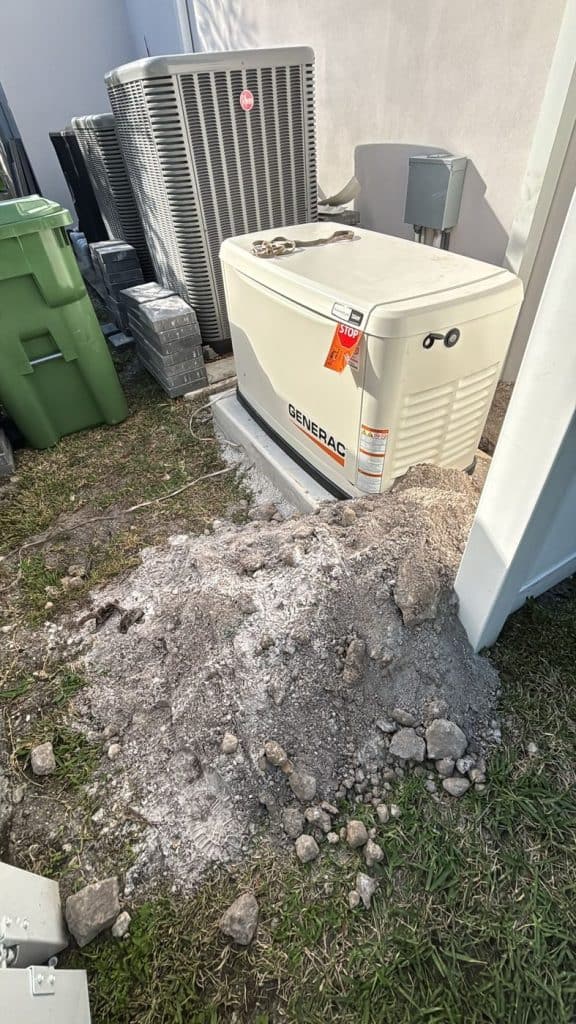
A standby generator needs two underground runs: a gas line from the meter or tank to the generator pad, and electrical conduit from the pad to the transfer switch. We install both as one scope, and we do it constantly. Generator installers across South Florida send us their underground work every week, because it lets their electricians stay on the switchgear while our crews handle the dirt.
The runs are bored under driveways, patios and finished landscaping instead of being cut through them. On an occupied home or business, that difference is the whole job. The gas line goes in at code depth with tracer wire and approved materials, and the conduit is sized to the installer’s spec and left pull-ready.
It does not matter whether the contract belongs to the homeowner, the installer or a GC. The underground portion shows up done, inspected and backfilled, with the surface the way we found it.
Gas is the utility with the least tolerance for shortcuts, so it gets built accordingly. Our crews install natural gas services and distribution lines with approved pipe, code cover depth and tracer wire, and the inspections are scheduled into the work instead of bolted on after it. That covers new runs, replacements of aging steel, and extensions out to new equipment.
When a gas run crosses a road, a driveway or finished ground, it goes in by directional bore with tracked depth and alignment for the whole shot. There is no open cut and no guessing where the pipe sits. Where the corridor is open, we trench it on grade and bed it properly instead.
The work comes from plumbers and gas contractors who do not self-perform excavation, from GCs adding gas to commercial kitchens and equipment pads, and from owners extending service to pools, outdoor kitchens and generators. For designed crossings beneath paved or finished surfaces, review our horizontal directional drilling service.
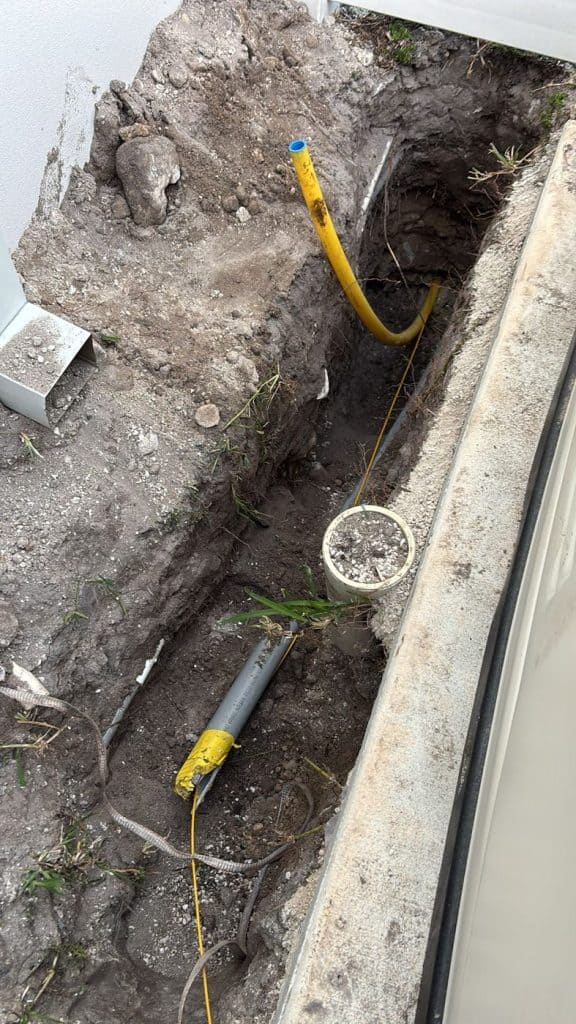
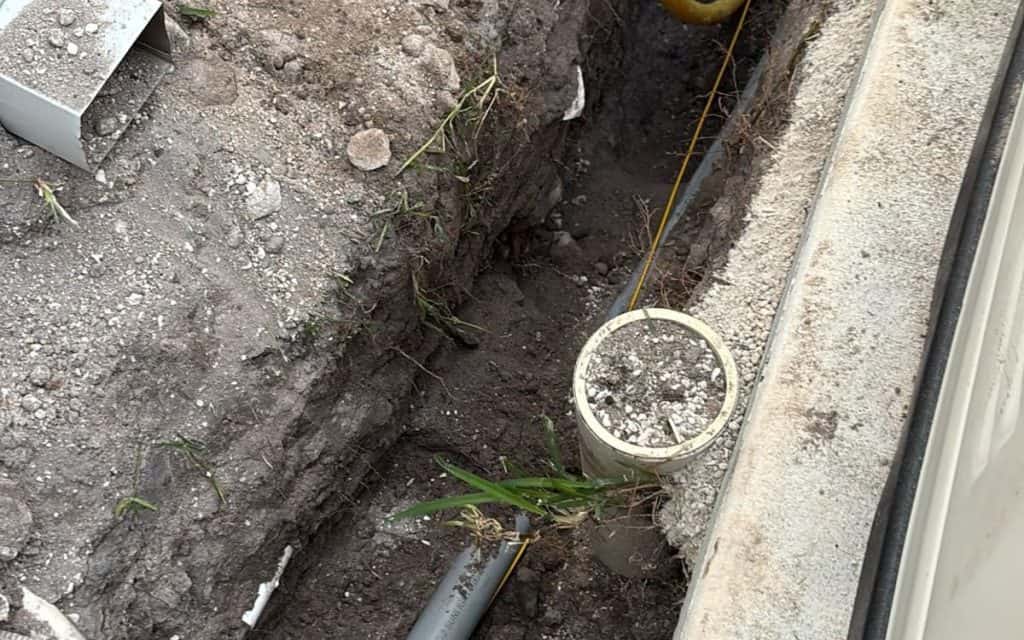
Dry-utility site work is a discipline of corridors. Electrical conduit runs from transformers and switchgear to the buildings, multi-conduit duct banks connect structures, and lighting circuits and communications duct ride the same paths. We place all of it at proper depth of cover, with separation kept between power and communications, and tracer wire and warning tape added on the way up.
The wet side gets the same treatment. Water services, fire lines and sewer laterals go in on grade with proper bedding, then get tied into their mains and tested as part of the scope. Where several products share a corridor, we lay out a joint trench so each utility keeps its required depth and spacing. One cut does the work of four.
Electrical contractors sub us this portion of their jobs for the same reason generator installers do. Our crews handle the underground, their crews stay on the terminations, and the schedule holds because nobody is waiting on a second sub.
This is the full underground utility scope. Each trade’s product is installed to its own code, depth and inspection, and all of it is handled by one contractor.
Services, distribution lines and generator runs, built with approved materials, code cover and tracer wire, and bored under anything that cannot be cut.
Conduit, duct banks, lighting circuits and transformer feeds, placed at depth with proper separation and left pull-ready for the electricians.
Services, fire lines, laterals and force mains, set on grade with proper bedding, then tied in, tested and inspected as one scope.
Fiber and low-voltage duct sharing the same utility corridors, covered in depth on our technology infrastructure boring page.
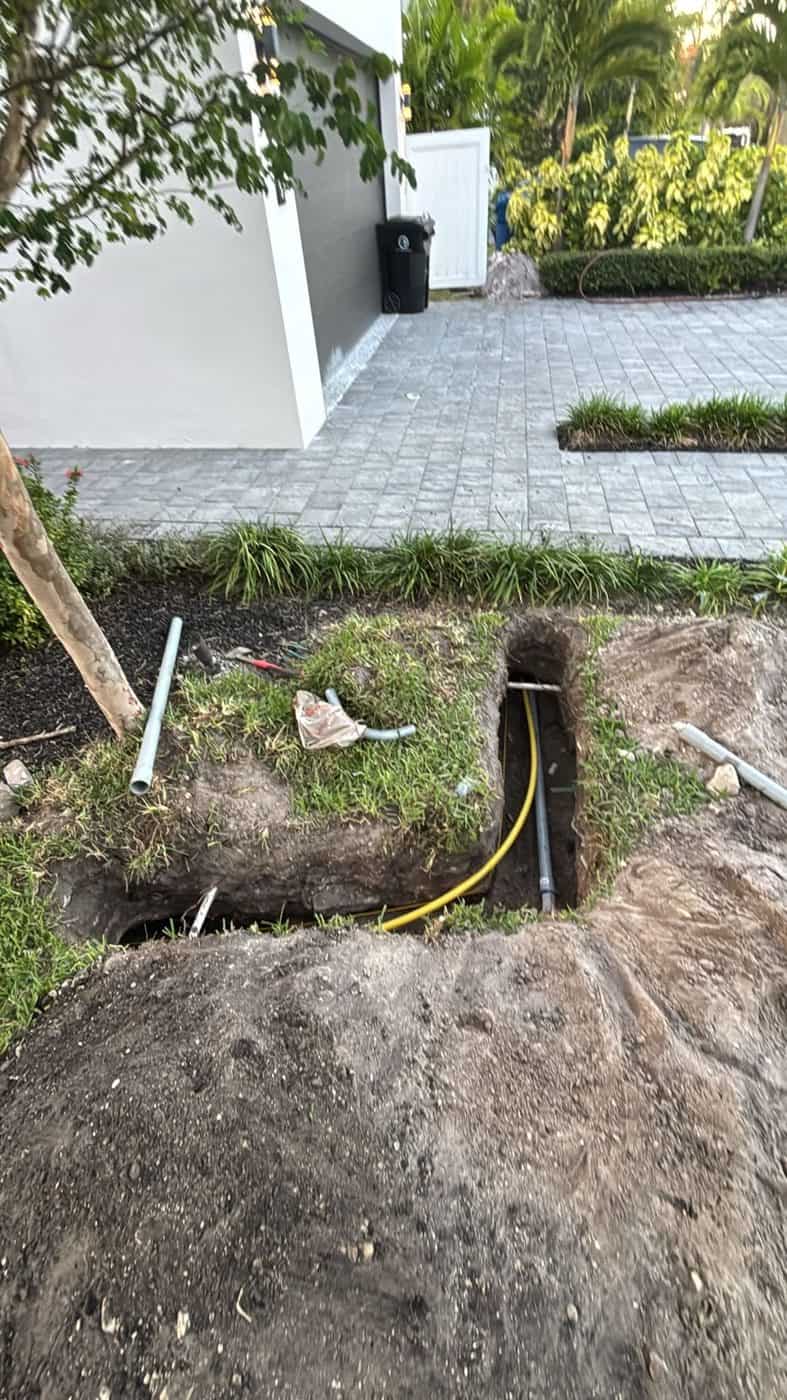
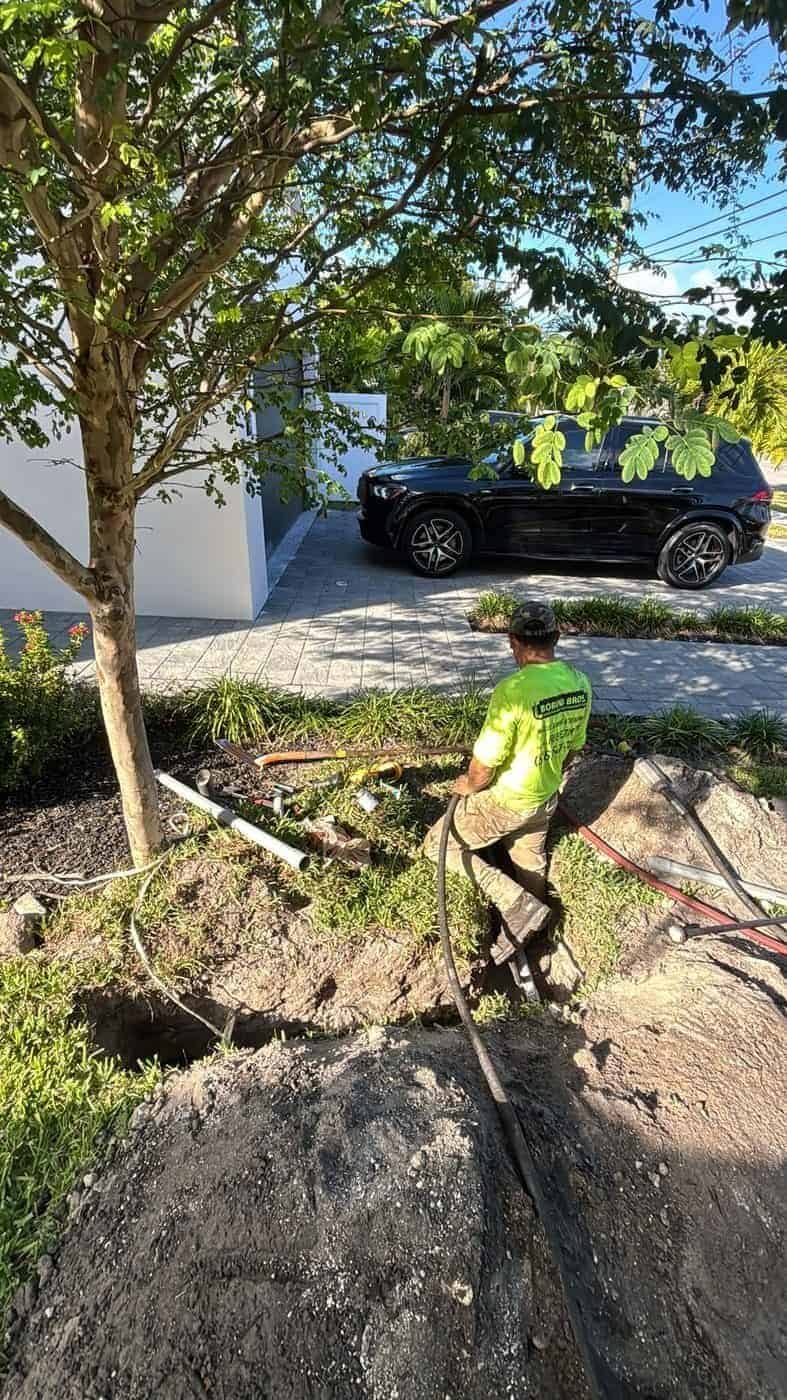
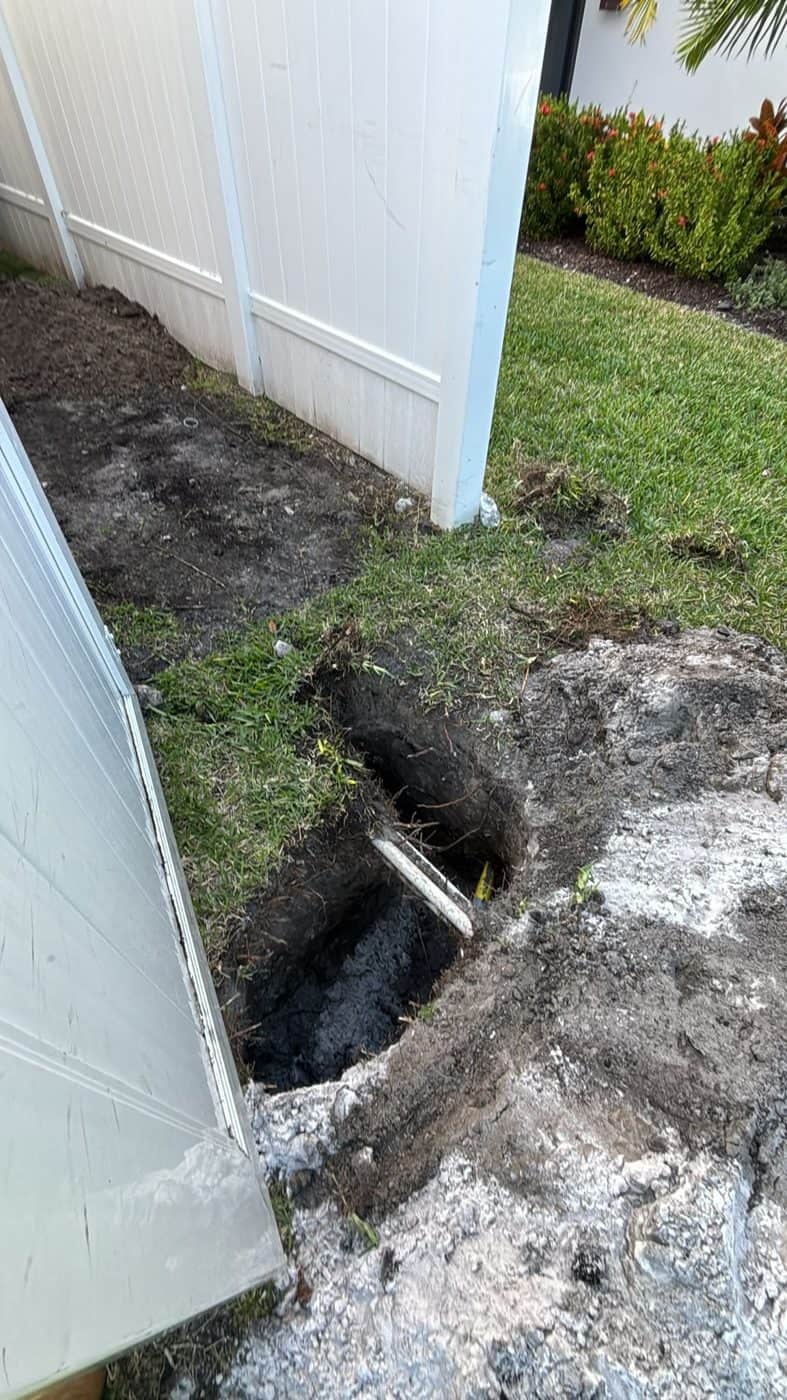
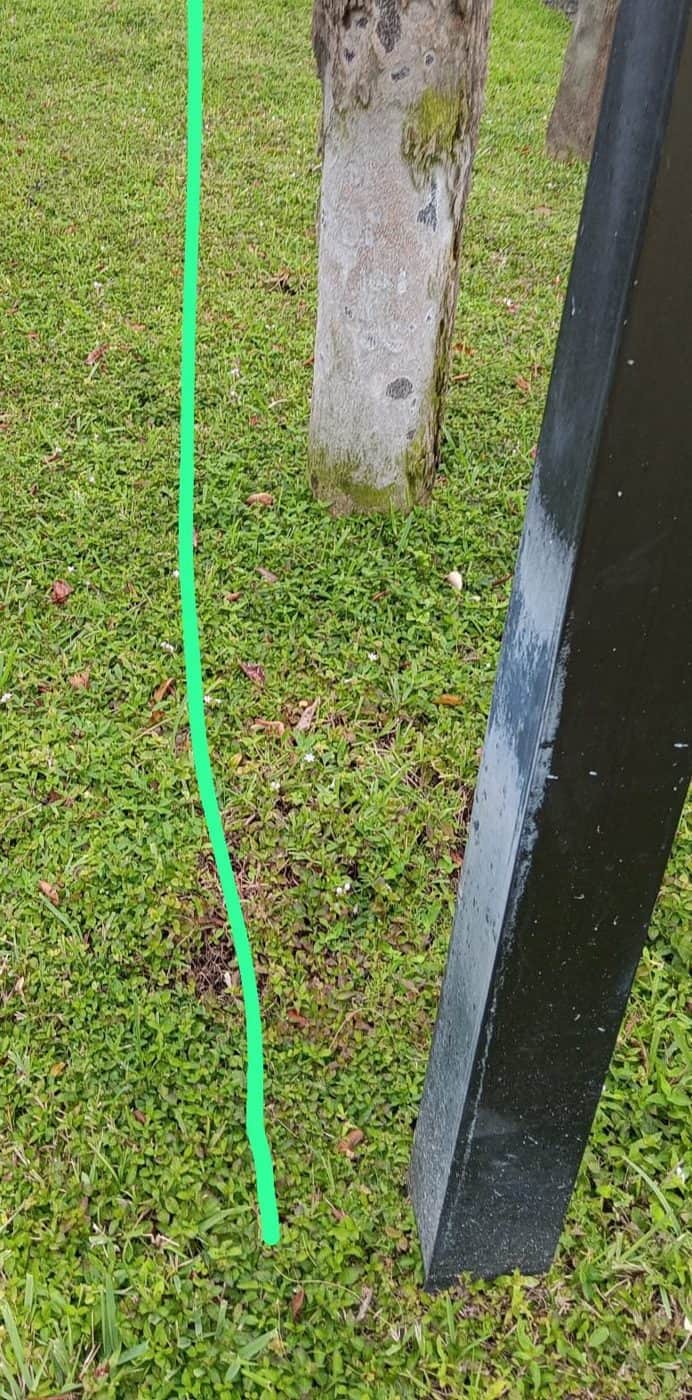
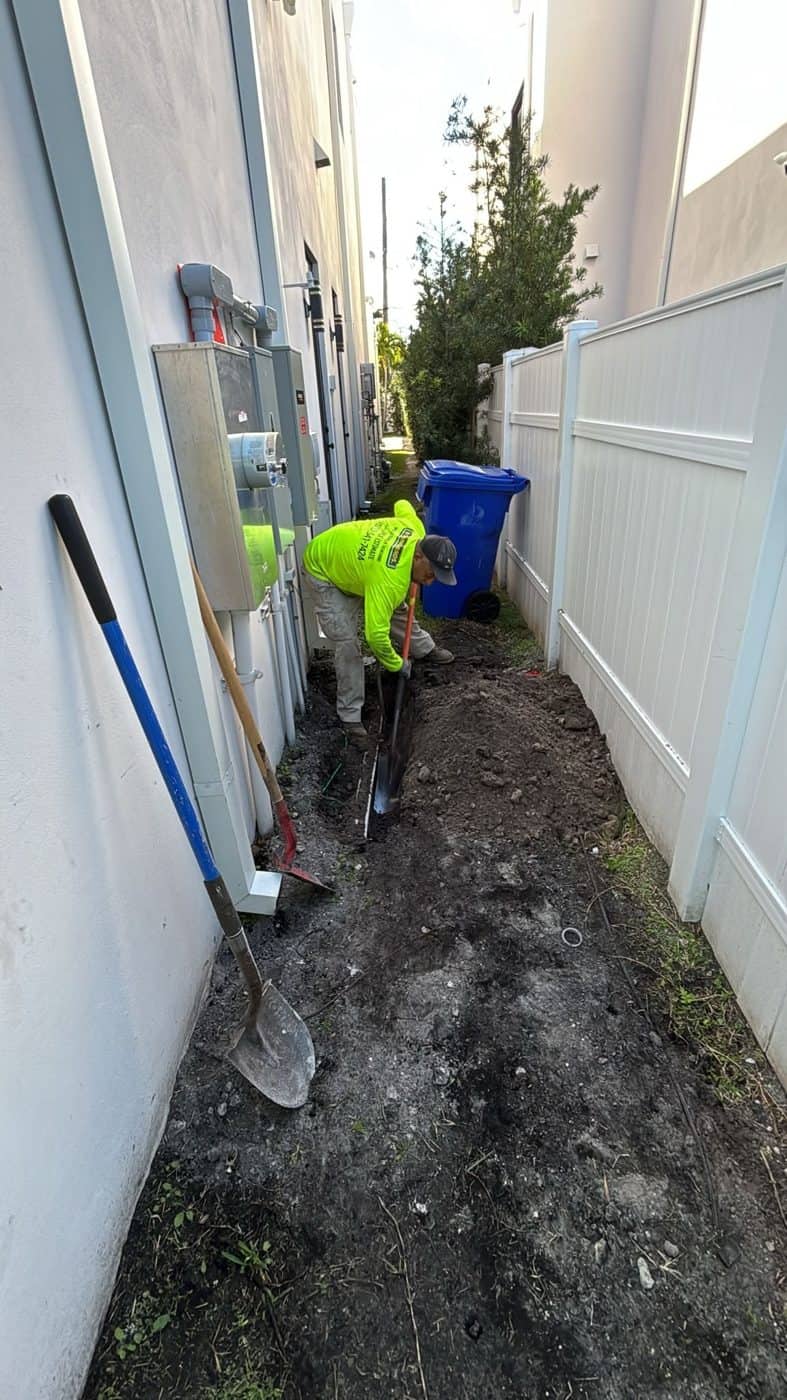
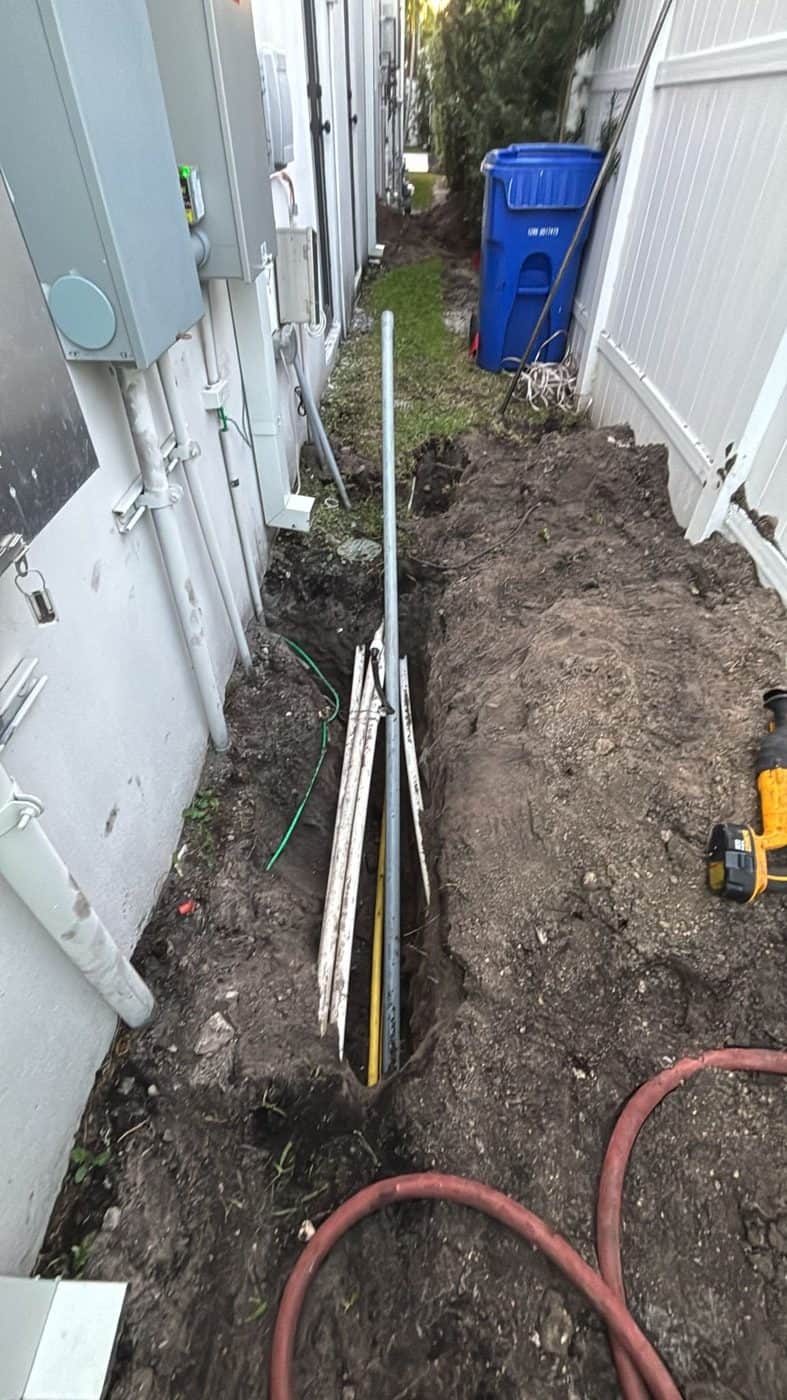
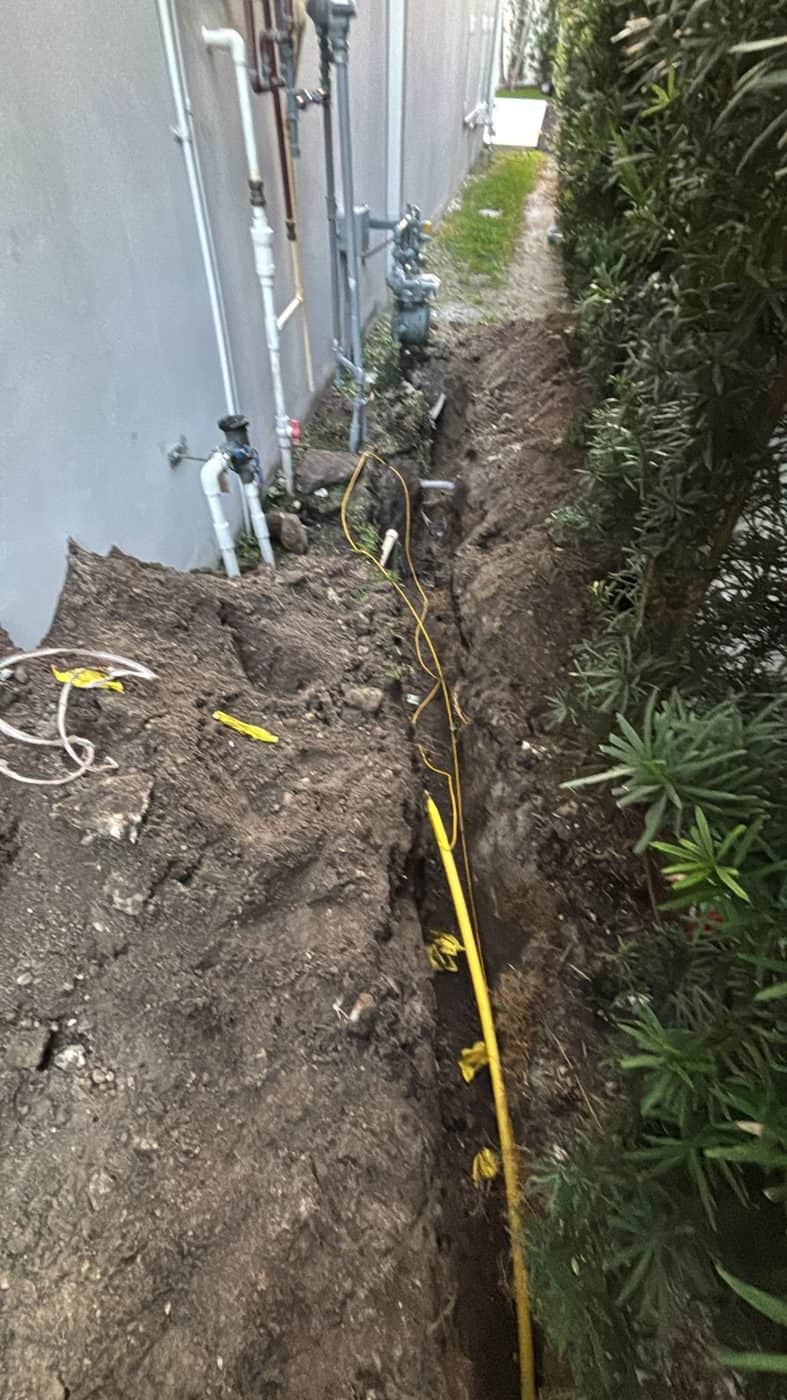
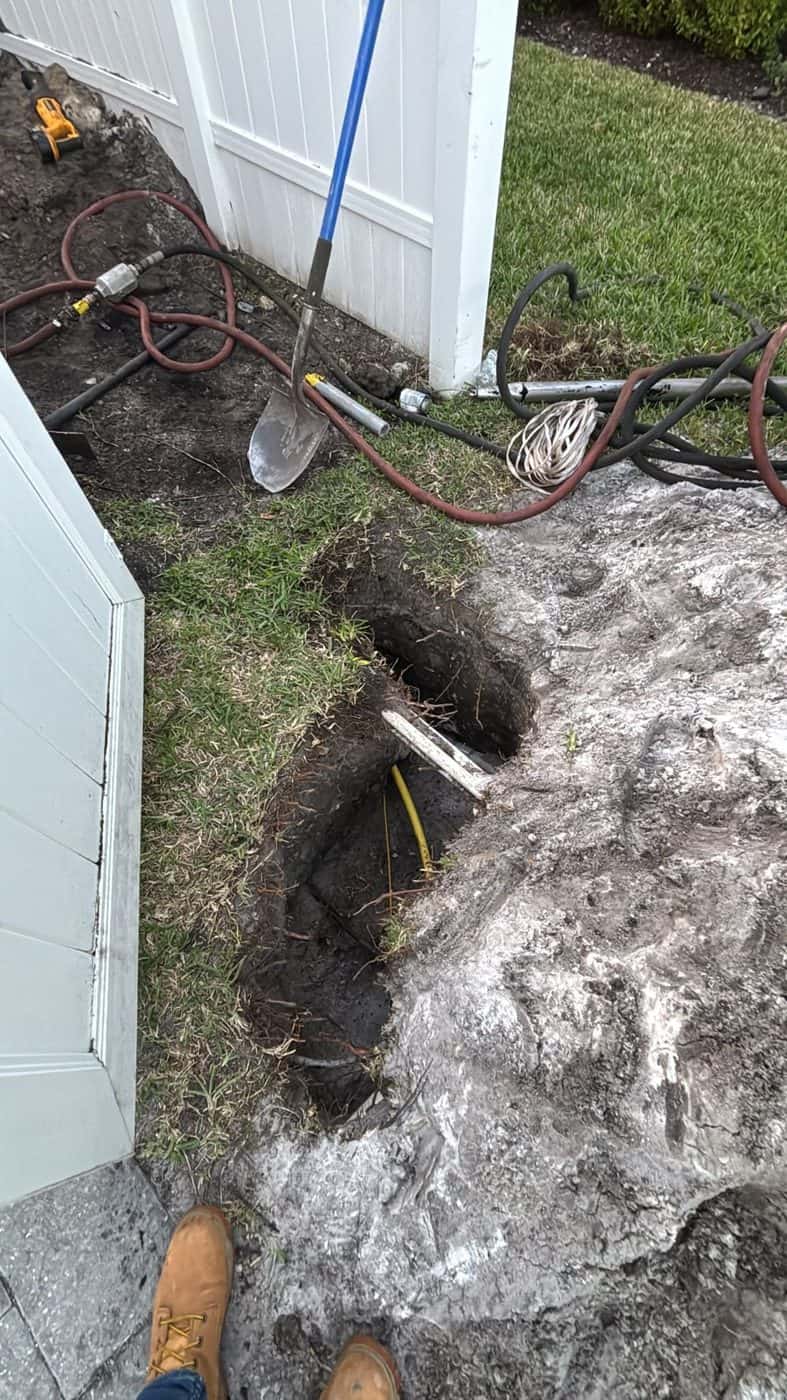
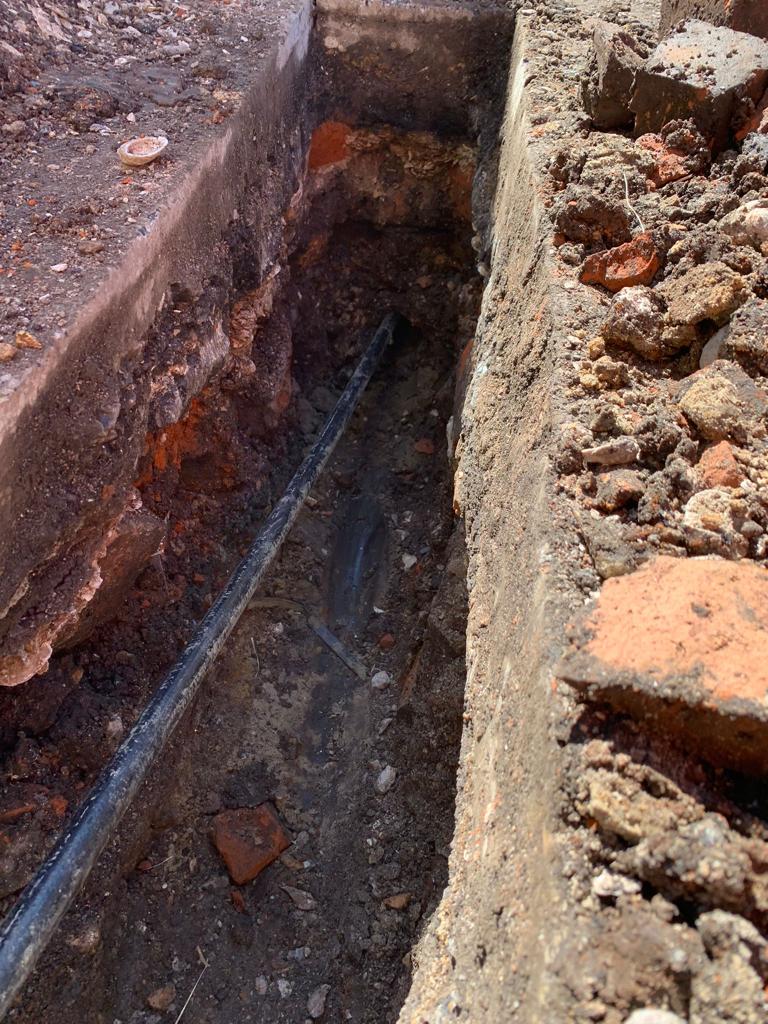
Real pits, real pipe and real duct, photographed on our own job sites across Florida and Georgia. Nothing here is a stock photo. For projects north of the state line, see our underground utility construction coverage in Georgia.
Tell us the utilities, the footage and the site. You will get a real number from someone who has run the machine, usually the same day.
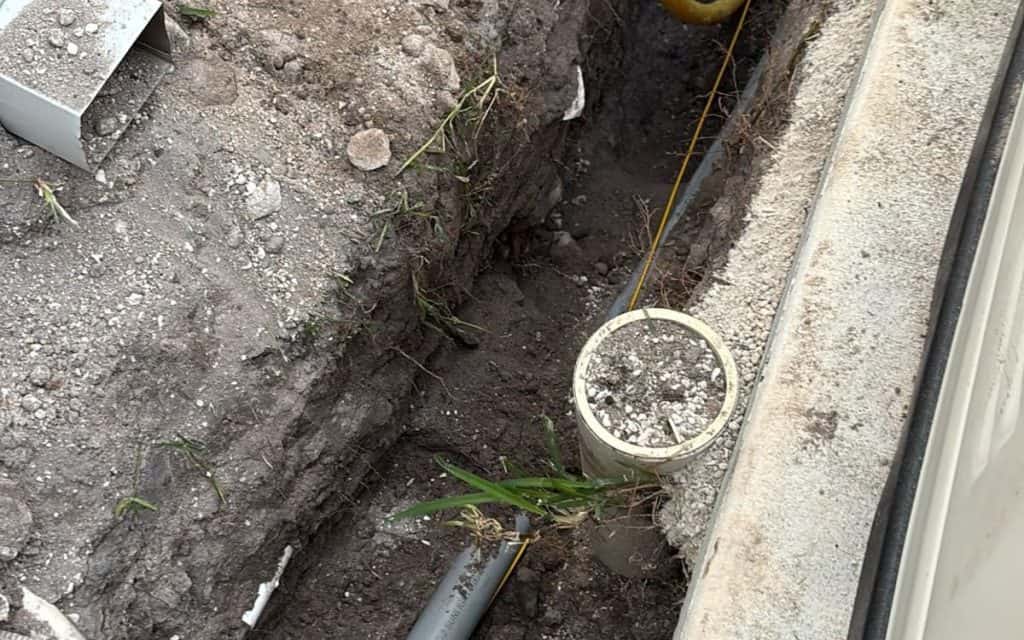
Every install follows the same four stages, whether the route is bored, trenched, or both.
The job starts with 811 tickets, followed by our own GPR sweep wherever the ground is congested. Then the route is walked and split method by method: crossings get bored, open ground gets trenched, and permits go in for anything sitting in a right-of-way.
Drill rigs handle the segments under pavement, driveways and landscaping, while excavators cut the open runs to depth and grade, shored to OSHA wherever the cut demands it. Both crews come from the same yard, so the two methods meet in the middle instead of waiting on each other.
Each product goes in to its own standard. Gas gets code cover and tracer wire, conduit gets pull tape, and wet utilities get bedded on grade. Tie-ins are made, and every inspection that needs an open trench is scheduled while the trench is still open.
Backfill goes in as compacted lifts and the surfaces are restored behind us. As-built depth and alignment are recorded for the owner, the inspector and whoever digs there next. The job is finished when the paperwork matches the ground.
You can split the underground scope across a gas sub, an electrical trenching sub and a wet-utility crew, and plenty of projects do. Here is where consolidating it pays, and where it honestly does not matter.
One contractor wins when…
The utilities share corridors, because a joint trench only works when one crew lays out every product’s depth and separation in a single cut. It wins when the schedule is tight, since sequential digs stack mobilisations and open the same ground twice. It wins on occupied sites, where every extra day of open trench costs tenant goodwill. And it wins whenever the route mixes crossings with open runs, because a contractor who both bores and trenches prices each foot by the right method instead of forcing the whole route through the only machine they own.
Separate subs are fine when…
The utilities genuinely run in separate corridors on a spread-out site, with no shared trench and no sequencing between them. Sometimes a utility owner mandates its own installer, since some gas and power companies self-perform their side of the meter. And a single-trade run with no crossings can go to any competent trenching crew, because there is no coordination worth paying for. We will tell you which situation you are in after one look at the plan.
Our busiest clients are the ones whose own trades stay above ground. They need the dirt side done right, on schedule, every time.
Gas and electric runs from the meter to the pad to the transfer switch. We handle the underground half of every standby install so your electricians never touch a shovel.
Trench, conduit and duct bank placed and inspected while your crew stays on terminations. Most of our calendar is built on this relationship.
Full site-utility packages, wet and dry, sequenced ahead of pours and paving so the next trade always has its corridor.
Service upgrades, generator runs and utility extensions across occupied homes, businesses and communities, with the surface restored behind us.
Six answers turn a rough range into a firm number. Send whatever you have, and we will tell you which blanks actually move the price.
If the job is easier to show than describe, a walkthrough costs nothing. On utility work it is usually the difference between a quote that holds and a change order.
Ask for a number and you will usually get one of the owners, Aaron or Levi Cohen, instead of a scheduling service. Every crew on your job is a licensed, insured contractor (Boring Bros LLC, Florida Doc. L21000515203; Georgia Control No. 25100779; certificate of insurance on request). We have run bore-and-trench crews across Florida and Georgia since 2021, backed by 20+ years of trade experience on the crew.
Years In The Trade
Family-Owned
70+ Google Reviews
Insured
Yes, both, as one scope, and it is some of the most frequent work we do. The gas run goes from the meter or tank to the generator pad, and the conduit goes from the pad to the transfer switch. Both are bored under finished surfaces rather than cut through them. Generator installers send us this work constantly, because their electricians stay on the switchgear while the underground shows up done and inspected.
Yes. Boring Bros LLC is a licensed, insured contractor in Florida (Doc. L21000515203) and Georgia (Control No. 25100779), carrying one and two million dollars in coverage, with a certificate of insurance available on request. Utility work is inspected trade by trade, and we build to the inspection rather than around it.
Each product has its own code cover. Gas, electric, water, sewer and communications all differ, and a right-of-way or an engineered design can require more than code. We install to the governing number for each run and record the as-built depth, because the depth that matters later is the true one.
Often, yes. A joint trench is usually the cheapest path on new construction, with one excavation carrying gas, power and communications at their own depths and spacings. The codes govern the separation between them, and where those separations cannot be met in one cut, we split the corridor and tell you before digging rather than after.
Usually not, because that is what the drill rigs are for. Crossings under driveways, parking, sidewalks and landscaping are bored, and only the open ground is trenched. Where a surface truly has to be cut, the restoration, meaning base, compaction and patch, is quoted with the job instead of discovered after it.
Yes. We pull right-of-way permits for anything in a public corridor, coordinate with the utility owner where they control their side of the meter, and schedule the trade inspections while the trench is open. Close-out includes the as-builts that the inspector and the owner both want.
Both, though mostly the first. Generator installers, electrical contractors, plumbers and GCs sub us the underground portion of their jobs, while owners and property managers hire us directly for upgrades and extensions. Either way, the crew, the standard and the paperwork are the same.
811 locates come first, always. Then our own GPR locating sweeps the actual route, because public locates stop at the meter and miss private and non-metallic lines entirely. Anything that crosses the dig is exposed by hand and verified rather than trusted to a paint mark. That discipline is the reason our machines do not find surprises.
Usually, yes. A failed water service or an aging gas line is often replaced by boring a new path alongside the old one and cutting over at the ends, which takes two small pits instead of a yard-length trench. When the old route is the only viable corridor, we open it as surgically as the site allows and restore behind us.
A generator run or a single service is commonly a one- or two-day job once permits are in hand. Full site packages sequence over weeks alongside the other trades. Quotes usually go back the same day, and permits set the start date more often than our calendar does.
We work across Florida and Georgia. Home base is South Florida, covering Broward, Miami-Dade and Palm Beach counties, and our crews travel throughout both states for commercial and multi-site clients.
The route does. We price each foot by what it crosses: bores under anything expensive to restore, open trench across ground that can be cut, and both on the same run when that is what the site calls for. Because both methods are in-house, the recommendation follows your job rather than our equipment.
Tell us the footage, the product and the window — we will get you a real number, usually same day.